The ERP Solution for the Year” 2025 in Agtech Breakthrough Awards 2025



What is Inventory Kitting?
Inventory kitting refers to the process of grouping multiple individual items into a single unit, which is known as a kit. This grouping is done for sale or use. This method makes inventory management very simple by minimizing the number of individual items that have to be tracked and handled. Let us give you some examples.
● Tractor Maintenance Kits:
If you combine oil, filters, and bolts into one package, then you can make sure that all important components are available easily for routine maintenance. This reduces the downtime.
● Seed Planting Kits:
If you bundle together seeds, fertilizers, and planting tools, this will facilitate your sowing processes, especially during peak planting seasons, and make it efficient.
● Harvest Packaging Kits:
If you make a single kit containing crates, wraps, and other packaging material, this will streamline your post-harvest process. It will guarantee that your produce is packaged and labeled correctly for distribution.
So, What Are The Benefits of Kitting in Agriculture?
Implementing kitting in agricultural operations will reap many advantages for you. Let us have a look at some of them:
Simplified Order Processing:
By collecting and combining multiple items into a single kit, the ordering process becomes more straightforward, and the chances of errors and omissions are reduced.
Reduced Operational Delays During Peak Seasons:
If you have pre-assembled kits that are ready for use, then it minimizes delays during critical periods such as planting and harvesting. This boosts the overall efficiency.
Optimized Inventory Tracking and Space Utilization:
Kitting also reduces the number of individual items that have to be tracked. This way, your inventory management is simplified, and you have more space for storage purposes.
Enhanced Productivity for Farm Workers:
Your farm workers have to spend less time gathering individual items, and they have more time for productive tasks. This increases your overall operational efficiency.
Easier Quality Control of Bundled Products:
If your kits are standardized, then this means that you can maintain consistency in quality. Hence, it is easier to maintain high standards across all your operations.
Types of Agricultural Kits
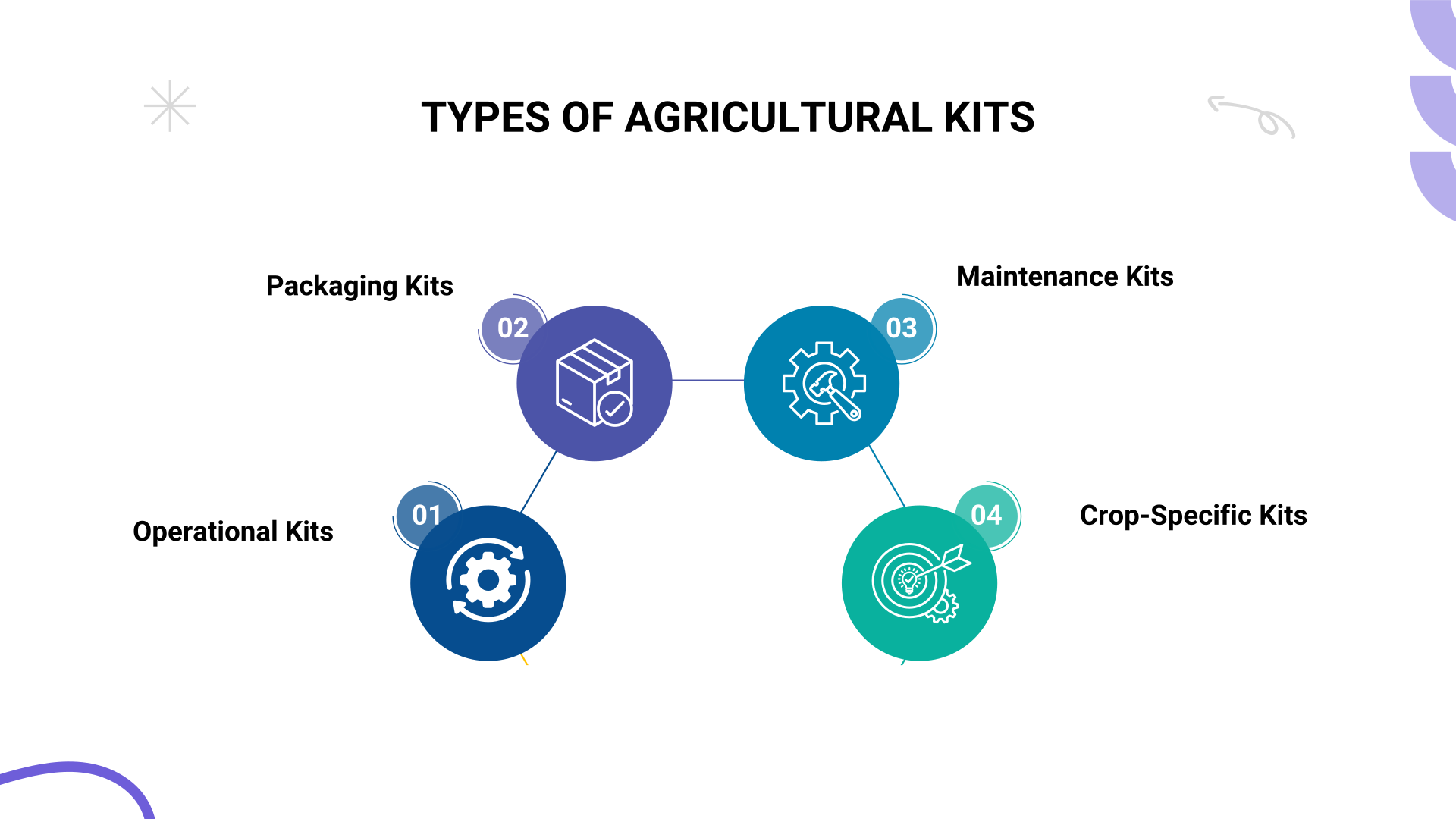 So are all agricultural kits the same? The answer is no, different types of kits serve different functions within your agricultural operations. Here are some important ones:
1. Operational Kits:
Operational kits include essential tools required for your daily farm operations, such as gloves and safety gear. Having this kit ensures that workers can access all necessary equipment quickly.
2. Packaging Kits:
Packaging kits contain containers, labels, and weighing sheets. These kits facilitate efficient packaging and labeling of produce to boost market readiness.
3. Maintenance Kits:
The purpose of maintenance kits is to support the upkeep of machinery and equipment. So that the risk of breakdowns is minimized. These kits contain parts, lubricants, and manuals.
4. Crop-Specific Kits:
These are customized kits for specific crops, such as strawberry packaging kits or almond harvesting kits. These bundles cater to the individual requirements of different agricultural products.
Kitting in Agri Supply Chains
Kitting is not limited only to packaging and maintenance, but rather it plays a key role in boosting the efficiency of your agricultural supply chain. Let us tell you how:
Role in Pre-Harvest and Post-Harvest Logistics:
If you organize all necessary materials into kits, then both pre-harvest preparations and post-harvest processes become more streamlined, and time and labour costs are reduced.
How Co-ops and Distributors Use Kitting to Fulfill Bulk Orders:
Agricultural cooperatives and distributors use kitting to efficiently assemble bulk orders. Hence, this prevents delays and guarantees timely delivery to retailers and end-users.
Integration with Farm Equipment Delivery and Service Packages:
Kitting facilitates the bundling of equipment with necessary accessories and service agreements. Thus, providing complete solutions to farmers.
How Farm Management Systems Enable Smart Kitting
Modern farm management systems, such as AgriERP, facilitate you to achieve effective kitting by providing multiple features and modules.
Tracking Kit Inventory:
These systems monitor the availability of kits and make sure that stock levels are always optimal and stock is replenished as needed.
Auto-Generation of Kits Based on Crop Cycle or Maintenance Schedule:
The system can automatically generate appropriate kits and match resources with operational needs. This is done by analyzing crop cycles and equipment maintenance schedules.
Barcode & QR Code Usage for Tracking Kit Deployment:
Implementing barcode and QR code technology helps in tracking kits accurately throughout your supply chain. This enhances transparency and improves accountability.
Integration with Warehouse and Procurement Workflows:
Its smooth and easy integration with your existing warehouse and procurement processes makes sure that kitting aligns with the overall inventory management strategies.
Conclusion
Inventory kitting in agriculture gives you a smart approach for streamlining your overall operations. It minimizes errors and boosts your farm’s productivity.
By bundling related items into kits, your agricultural businesses can simplify their inventory management, improve order processing, and guarantee that your workers have quick access to all important tools and materials.
By implementing kitting, you can overcome common challenges in your agricultural supply chain, such as operational delays and issues in tracking your inventory.
In addition to this, you can milk upon modern farm management systems like AgriERP to further maximize your kitting process by automation and seamless integration with your existing workflows.
The agricultural industry is moving fast, and in order to survive and thrive, you must adopt innovative practices like inventory kitting to keep up with the pace. By adopting kitting, your agricultural businesses can boost efficiency, reduce waste, and enhance the effectiveness of all your farm operations.
According to Champions, approximately one-third of all food produced globally is lost or wasted, amounting to about 1.3 billion tonnes per year, and if current trends persist, food loss and waste will double by 2050.
This highlights the importance of adopting efficient practices to meet growing demands and prevent losses. Implementing inventory kitting strategies will position your agricultural businesses to seize this opportunity for growth and efficiency gains to achieve long-term success.
But this cannot be done alone, so let us at AgriERP help you achieve successful kitting in agriculture by giving you a comprehensive solution for a safer future!