The ERP Solution for the Year” 2025 in Agtech Breakthrough Awards 2025


What is MRO (Maintenance, Repair, and Operations)?
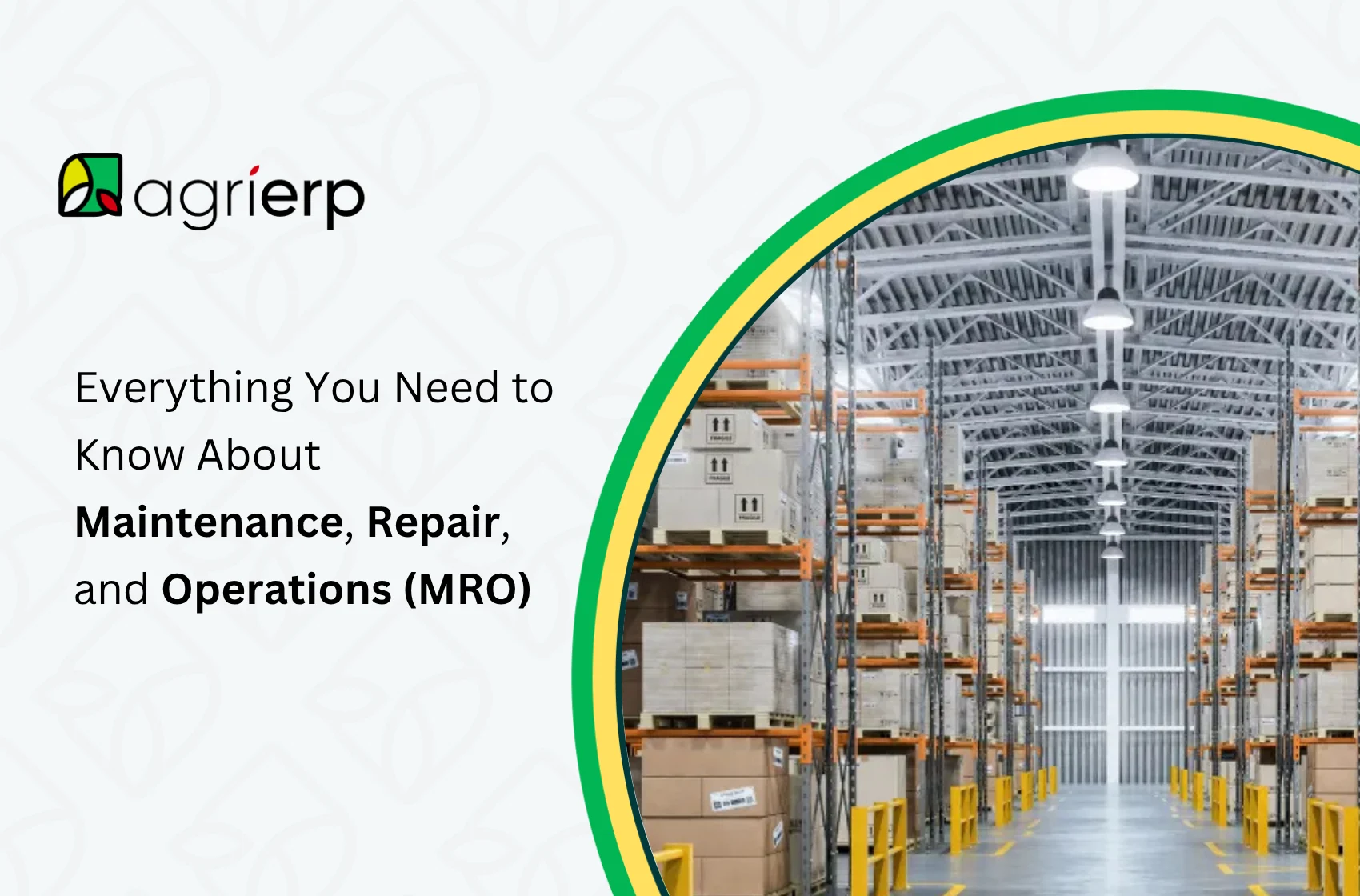
Let us start from the basic. MRO stands for Maintenance, Repair, and Operations. It consists of all the work, parts, and processes that keep your facilities and equipment running smoothly and without breaking down. Although they are not part of the actual farming output.
An example can be that there is a difference between planting crops and changing a tractor’s hydraulic filter. The first one is core production, the other is MRO. MRO supports productivity by avoiding breakdowns, safety risks, and unexpected downtime.
Why MRO Matters in the Agriculture Industry
Agricultural activities are seasonal, and depend heavily on the availability and functioning of equipment during these peak seasons. Everything from tractors, irrigation pumps, and harvesters must function at the optimal level to enable you to maximize the output.
If you miss a maintenance check before harvest, you miss your golden window. That means lost yield and wasted labor time.
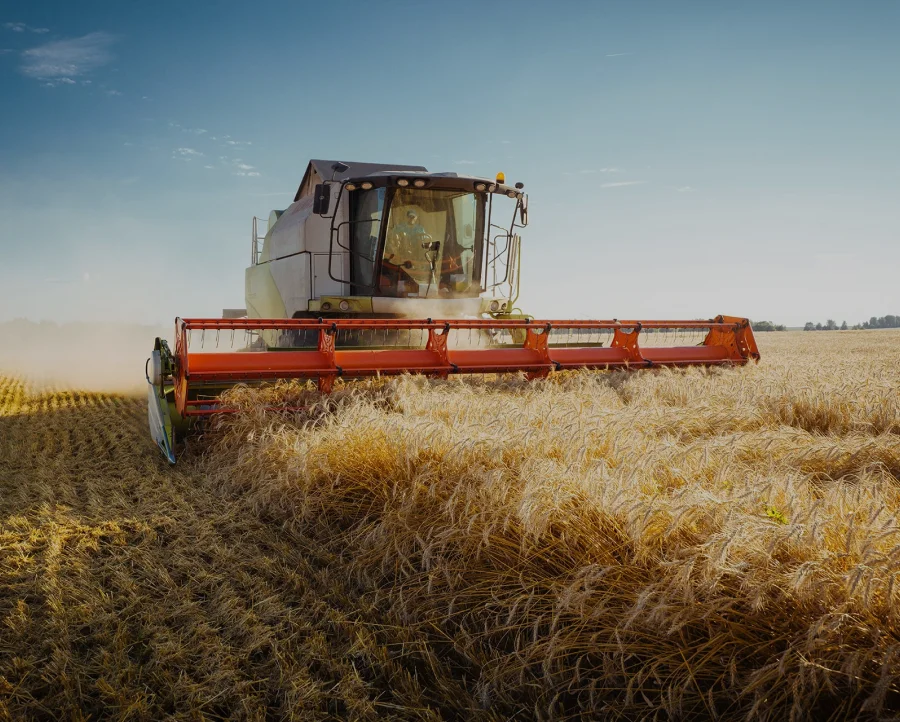
Downtime sets you back. A broken combine during harvest delays everything up and down the line, and your labor team has to sit idle.
In food-grade processing, safety and compliance rely heavily on equipment; broken sanitation pumps or temperature controls can shut down operations.
On top of this all if there is a breakdown, it costs you more. Smart MRO extends the life of your equipment and prevents breakdowns before they happen.
Key Components of an MRO Program in Agriculture
MRO is not just a single term; rather, it involves a lot more. Here is what a powerful MRO setup should look like:
Asset Inventory
Track all your assets, including every tractor, pump, seeder, dryer, and sensor. If you know what you have, and where you have it, it becomes easier to schedule its upkeep and avoid missing parts.
Preventive Maintenance Scheduling
You can set alerts based on usage hours, seasons, or weather. A scheduled belt check before harvest is much better than a late-night emergency fix when you are struggling to meet the timeline.
Repair & Service Logs
You must take a note of every breakdown, repair, part that is replaced, and who fixed it. Over time, you can spot patterns, like a pump that fails every third season, and take preemptive measures.
Spare Parts & Consumables Management
You must manage the spare parts needed and consumables by stocking what you need, when you need it, such as extra conveyor belts, fluids, filters, and bearings. Hence, no overstocking and no last-minute runs to the dealer.
Vendor & Technician Management
Record which technician handled what repair and when. Then compare the costs, performance, and turnaround times easily.
Challenges in MRO for Agri-Manufacturers and Large Farms
Whether you are working on a single site or maintaining equipment across multiple fields or buildings, it is not an easy task. There can be multiple challenges, such as the following:
- Limited visibility into asset life means you might overhaul an assembler that was still working fine and end up ignoring a failing pump.
- Many businesses still rely on paper logs or sticky notes, which are easy to lose or misread.
- Unexpected breakdowns quickly accelerate costs.
- Sometimes the spare parts that you have go missing or get abandoned in a corner.
- Rural areas often lack local technicians, and you can end up waiting for days for service.
These challenges cause friction to your field work and also deplete your profits.
Benefits of an Organized MRO System in Agriculture
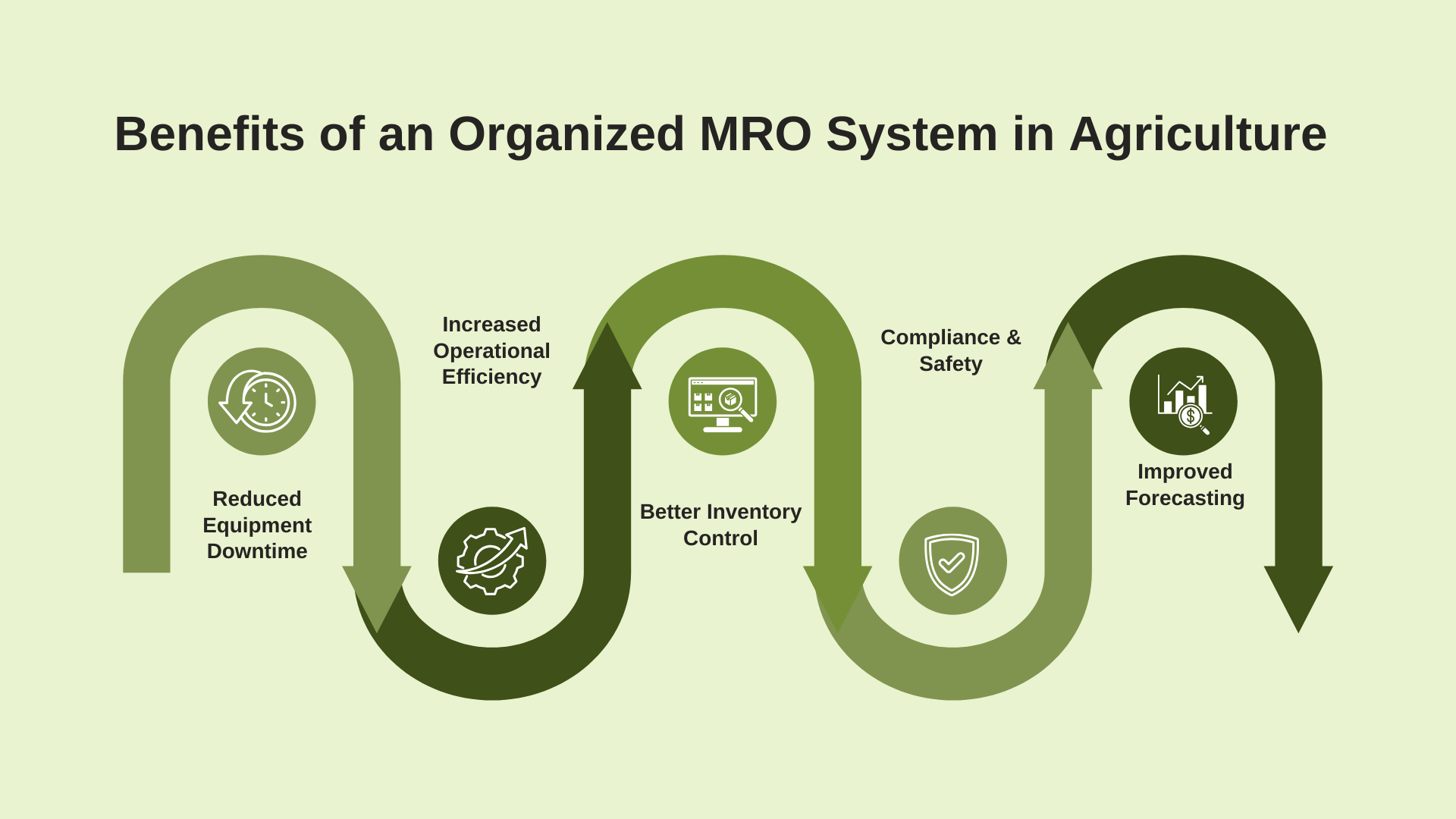 A smart MRO routine turns the tables and boosts your business. Let us see how.
Reduced Equipment Downtime
Pre-scheduled checks and ahead-of-season fixes keep your machinery and gear running when it matters the most.
Increased Operational Efficiency
Your team works from mobile apps rather than from manual logs. Field staff can log all the fixes, parts used, and labor in real time.
Better Inventory Control
You are able to keep spare parts at optimal levels, hence there are no more stockouts or expired parts cluttering your storage areas.
Compliance & Safety
You can easily meet food-grade standards, environmental laws, and workplace laws. No expired pump seals or missed filter changes.
Improved Forecasting
By tracking asset life and repairs, you can forecast replacements before any emergencies occur. Hence, you do more budgeting and not panic buying.
How AgriERP Improves MRO in Agriculture
Since it is exclusively built for agriculture, AgriERP takes MRO to the next level. It puts MRO on autopilot, and rids you of the headache that comes with manually tracking everything.
- Asset Lifecycle Tracking:
Know what you own, where it is, and what it needs next, whether it is repair, replacement, or replenishment.
- Automated Maintenance Alerts:
You can configure alerts by tractor hours, crop season, or days between services.
- Vendor & Parts Integration:
Reorder parts on the go when a check fails; there is no hassle.
- Mobile Access for Field Teams:
You can see alerts, log fixes, attach photos, and use spares, all via phone in the field.
- Microsoft Dynamics 365 Integration:
For larger farms that already use Dynamics, MRO integrates finance, purchasing, and supply chain data.
AgriERP integrates these features together into a single system built for farming, hence increasing visibility, control, and clarity and saving you time and money.
Conclusion
A recent study from Research Gate shows that proactive maintenance strategies result in a 30-50% reduction in downtime, lower maintenance costs, and increased overall equipment effectiveness.
These numbers speak volumes in an industry where timing and efficiency matter the most. A single missed harvest day can wipe out weeks of profit.
Now we know what MRO is in agriculture, why it matters, the vital elements of MRO, and how unstructured processes can hurt your bottom line.
But you always need a reliable partner for MRO, and AgriERP’s MRO tools include inventory tracking, automated alerts, and mobile field access. It brings it all together without adding complexity.
If you are just discovering the value of a streamlined MRO process. Imagine replacing paper logs with real-time alerts on your phone.
Imagine knowing in advance when a harvester needs service and not finding out during peak harvest.
Thus, if you want smoother operations, lower downtime, and better control of your assets, check out AgriERP’s MRO. It is a powerful, solid, and future-forward move toward smarter farm management and healthier margins!