The ERP Solution for the Year” 2025 in Agtech Breakthrough Awards 2025


Key Takeaways
- Crop management is a system, not a task list: it’s the coordinated set of decisions across soil, planting, nutrition, water, pest pressure, and harvest that determines whether a season’s yield matches what the field was actually capable of producing.
- The practices happen in sequence, but the decisions overlap: a nitrogen decision at planting affects pest pressure three months later. That’s why treating each practice area in isolation is where operations leave the most yield on the table.
- Integrated Pest Management replaced spray-by-calendar for good reason: the PAMS framework, meaning prevention, avoidance, monitoring, and suppression, cuts chemical costs and resistance risk compared to routine scheduled applications.
- Precision technology didn’t replace crop management, it changed its resolution: GPS-guided equipment, soil sensors, and variable-rate application let operations make crop management decisions at the sub-field level instead of the whole-field level.
- Record-keeping is what separates crop management from crop guessing: without a record of what worked last season, or on the adjacent field, every decision starts from scratch.
What crop management actually means
What separates a good yield from a great one on two fields planted the same week, with the same seed, in the same soil? The answer almost never comes down to luck or weather alone. Instead, it comes down to the hundreds of small decisions an operation makes across the season. That decision system is what crop management actually is.
Crop management is the coordinated set of agricultural practices an operation applies across a growing season. Its purpose is to maximize yield, quality, and profitability while protecting the soil and inputs an operation depends on for next season. According to the University of Nevada Reno Extension, it begins with seedbed preparation and sowing and continues through crop maintenance, harvest, storage, and marketing. That full-season scope is what distinguishes it from a single practice like fertilization or a single event like planting. In short, it’s the system that connects them.
The practices below aren’t a checklist to complete once. Rather, they’re a set of interconnected decisions, and a decision in one area routinely changes what the right decision is in another. For example, a nitrogen rate an operation sets at planting shapes canopy density three months later. That, in turn, shapes disease pressure, which shapes the fungicide program, which shapes harvest timing. Crop management, in other words, is the discipline of managing that whole chain rather than optimizing one link in isolation.
Soil preparation and seedbed management
Every practice that follows depends on the condition of the seedbed. That’s why crop management effectively starts before the crop does. Three decisions here, tillage approach, soil testing, and residue handling, set the baseline every later input has to work against.
Why the field starts working before the seed goes in
Seedbed preparation sets the physical and chemical conditions the crop will grow in for the rest of the season. Mistakes here are expensive to correct later. Tillage, or the deliberate choice to avoid it, determines soil structure and water infiltration. It also determines how much of last season’s residue carries forward as organic matter or as disease inoculum.
What a soil test actually changes
A soil test an operation runs before planting shows what the field has and what it needs. In fact, it’s the single highest-leverage crop management decision an operation makes before the season starts. Nutrient levels, pH, and organic matter content from that test determine the lime, fertilizer, and amendment program for the whole season. Skipping the test doesn’t save the cost of the fertilizer. It just means the fertilizer program is a guess instead of a plan.
Reduced tillage and residue management
No-till and strip-till systems have grown for a reason beyond fuel savings. Specifically, reduced tillage preserves soil structure, increases water infiltration, and builds organic matter over multiple seasons in a way that conventional tillage works against. The tradeoff is that residue management, meaning how much of the previous crop’s stubble stays on the surface, becomes its own decision. It comes with its own equipment and timing requirements.
Planting and crop establishment
Planting is the season’s highest-consequence single event, since almost every decision here locks in for the rest of the crop’s life. Timing, variety, and the early scouting that follows emergence are what often decides a strong or weak season.
Timing decisions that don’t have a do-over
Planting date, seeding rate, and row spacing are decisions an operation makes once per season. There’s no opportunity to revise once the seed is in the ground. Planting too early into cold, wet soil risks poor emergence and seedling disease. On the other hand, planting too late shortens the growing window and can push maturity into unfavorable fall weather. The right window is variety-specific, soil-specific, and shifts from field to field even within the same farm.
Variety selection as a crop management decision, not just a purchasing decision
Variety and hybrid selection determines the disease resistance package, maturity length, and yield potential the operation is working with all season. Take a variety an operation chooses purely on seed cost, without matching it to the field’s disease history and the operation’s harvest timing needs. That single choice sets up problems that no amount of in-season management can fully correct.
Stand establishment and early scouting
The first scouting pass after emergence checks stand count against the target population. It also flags early pest or disease pressure while it’s still cheap to address. A replant decision can sometimes correct a weak stand an operation spots at emergence. Once flowering starts, though, nothing can fix that same weak stand at all.
Nutrient management
Fertility is the crop management practice most operations already do, and the one where poor timing quietly wastes the most money. Getting the rate right matters less than getting the timing right. A nutrient the plant can’t use yet risks disappearing before the plant needs it.
Matching the program to what the crop actually removes
Fertility programs work best when they start from what the crop removes from the field. A flat rate that ignores yield target or soil test result rarely does the job as well. Nitrogen, phosphorus, and potassium each have different mobility, different timing sensitivity, and different loss pathways. As a result, a single blended application rarely serves a full-season crop as well as split applications timed to growth stages.
Timing nitrogen to the crop’s actual demand curve
Nitrogen demand isn’t flat across a season. Most row crops pull the bulk of their nitrogen during a specific vegetative window. Applying the full season’s nitrogen before that window opens increases the risk of leaching or volatilization loss before the plant can use it. Split applications, with a portion at planting and the balance side-dressed during peak demand, are standard practice on high-management row-crop operations for exactly this reason.
Micronutrients and the diminishing-returns problem
Once an operation addresses nitrogen, phosphorus, and potassium, micronutrient deficiencies such as zinc, boron, or sulfur can become the limiting factor. This happens even when an operation correctly applies the primary nutrients. Tissue testing during the season catches these before they show up as visible deficiency symptoms, at which point the operation has already lost some yield.
Irrigation and water management
Water is the input that most directly limits yield, and it’s also the one most operations manage least precisely. Getting the timing right across the season matters as much as getting the total volume right. Drainage, meanwhile, is the half of the water conversation that’s easy to overlook.
Matching water delivery to growth stage
Crop water demand changes dramatically across a season, and the growth stages where water stress does the most damage aren’t evenly distributed. For most crops, the reproductive and grain-fill or fruit-fill windows are the highest-consequence periods for water stress. Consequently, an operation can’t recover a deficit during those windows later in the season, even with full irrigation afterward.
Irrigation scheduling methods
Soil moisture sensors, evapotranspiration-based scheduling, and canopy temperature monitoring have all replaced calendar-based irrigation on operations with the equipment to support them. Calendar-based irrigation, meaning watering on a fixed schedule regardless of actual soil moisture or weather, causes problems either way. It tends to over-water in wet stretches or under-water during heat spikes.
Drainage as the other half of water management
Water management isn’t only about adding water. Fields with poor drainage suffer from waterlogged root zones after heavy rain. That cuts off oxygen to roots and can be as damaging as drought stress. Tile drainage and field grading, therefore, are long-term investments that pay off across every subsequent season rather than a single-year fix.
Pest, weed, and disease management
Pest pressure is the practice area where crop management most visibly shifted over the past few decades. Specifically, it moved from routine calendar-based spraying to a monitoring-driven system that avoids unnecessary chemical use in the first place.
Why Integrated Pest Management replaced spray-by-calendar
IPM’s four components, prevention, avoidance, monitoring, and suppression, go by the acronym PAMS. According to NC State’s Crop and Soil Sciences program, growers should use tactics from at least three of the four PAMS components to qualify as practicing IPM. The underlying logic is that prevention and avoidance often make suppression unnecessary. Spraying on a fixed calendar regardless of actual pest presence, in contrast, wastes money on unnecessary applications. It also accelerates the resistance problem that eventually makes a chemical class useless.
Monitoring as the practice that makes IPM work
Hand scouting and drone scouting programs both generate the field-level pest and disease records that suppression decisions rely on. Without that record, suppression defaults back to calendar-based spraying, which is exactly the practice IPM exists to replace. Consistent scouting records also reveal patterns across seasons, such as a field with a recurring nematode problem, that a single season’s data would never surface.
Resistance management across the rotation
Repeated use of the same herbicide, insecticide, or fungicide mode of action selects for resistant pest populations over time. This happens no matter how well an operation executes the individual application. Rotating chemical classes and combining chemical control with cultural practices, such as crop rotation and resistant varieties, keeps a chemical tool useful for years.
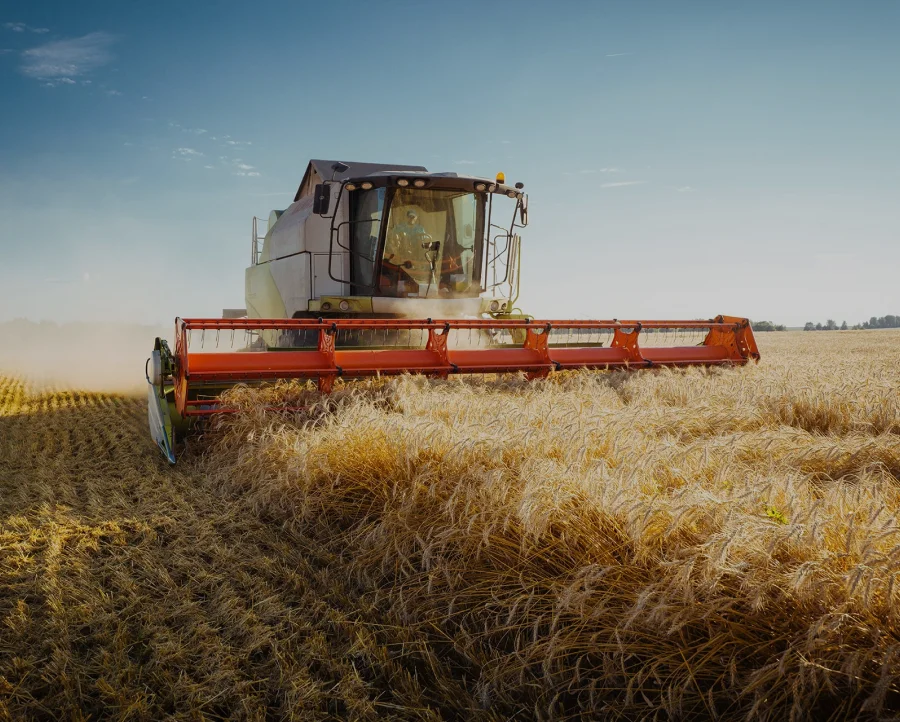
Harvest timing and post-harvest handling
The season’s work only pays off if the crop makes it from the field to the buyer in the condition it actually grew in. That outcome depends as much on timing and handling as it does on anything an operation does earlier in the season.
Harvest windows are shorter than they look on paper
Every crop has a quality window at harvest, and operations often measure that window in days rather than weeks. Waiting too long risks shatter loss, lodging, or quality downgrades. Meanwhile, harvesting too early costs yield and can hurt storage quality. Weather, equipment capacity, and labor availability all compete against the biological window. Consequently, harvest scheduling is one of the highest-stress decisions in the entire crop management cycle.
Post-harvest handling determines what the season’s yield is actually worth
Post-harvest handling practices such as drying, storage, and transportation are what determine whether the crop reaches the buyer in the condition that was actually grown in the field. A strong season in the field can still lose significant value here. Rushed drying, poor storage temperature and humidity control, or rough handling between the field and the buyer can all introduce damage or contamination. In short, crop management doesn’t stop at the combine, and the record trail shouldn’t either. Bin-level inventory, moisture readings, and pile management through the storage season are what AgriWMS tracks once the crop leaves the field.
How precision technology changes crop management
Precision agriculture didn’t replace the practices above. Instead, it changed the resolution at which operations apply them. GPS-guided equipment, yield monitors, soil sensors, and variable-rate application let an operation vary planting, fertility, and irrigation decisions at the sub-field level. That’s instead of applying one flat rate across an entire field regardless of how the soil actually varies within it.
Drone and satellite imagery, particularly NDVI-based vegetation indices, let scouting programs cover far more acreage per hour than a person walking rows. They also catch stress patterns before they’re visible to the eye on the ground. That said, the tradeoff is that imagery flags where to look, not what the problem is. Ground-truthing an imagery alert with an actual field visit, therefore, is still part of the workflow rather than a step technology has eliminated.
Data volume is the part of precision agriculture that catches most operations off guard. A single season of yield-monitor, soil-sensor, and imagery data across even a moderate-sized operation generates a lot of records. In fact, it’s more than a spreadsheet or a paper file can reasonably track season over season. That’s less a software problem than a decision-quality problem. After all, the value of last season’s data is in comparing it against this season’s decisions. That comparison only works if an operation structures the records from both seasons the same way. They also need to stay retrievable when the operation needs to make the next planting decision. The 7 signs your farm has outgrown spreadsheets piece covers the specific moment this record-keeping strain shows up, well before most operations expect it.
Where AgriERP Fits Into Crop Management
Crop management runs on decisions, and every decision above is only as good as the record behind it. AgriERP, running on Microsoft Dynamics 365 Business Central, gives an operation one place to capture planting dates, input applications, scouting observations, and harvest results by field. As a result, next season’s nitrogen rate or variety pick reflects what actually happened last season, not what someone remembers happening.
The operation this isn’t built for is the single-field or single-crop operation. There, one person makes every crop management decision and never needs to hand that decision off to anyone else. A notebook, a spreadsheet, or a good memory works fine at that scale, and a records platform would add overhead without adding much value. The operation this is built for is different. There, the agronomist, the equipment operator, and the person settling accounts with a lender or a buyer all need to see the same field history. And the team needs to pull up last season’s decisions in seconds, not rebuild them from memory when this season’s planting window opens.
Try It With Your Own Data
The AgriERP Farm App is where operators log field-level events from the cab or the truck as they happen. The Quality module is where scouting results and action-threshold decisions tie back to the specific field and crop year they belong to. Book a working session with the AgriERP team, and bring one field’s records from last season. Watching that field’s history come back in seconds instead of minutes is what tells you whether the fit is real.
Frequently Asked Questions
What are the main practices involved in crop management?
The core practices are soil preparation and seedbed management, planting and crop establishment, nutrient management, irrigation and water management, pest and disease management, and post-harvest handling. Each practice area involves its own set of timing-sensitive decisions. The practices, in turn, interact with each other across the season rather than operating independently.
What is the difference between crop management and crop production?
Crop production typically refers to the physical activities of growing a crop from planting to harvest. Crop management, by contrast, is the broader decision system that governs those activities. It covers the planning, monitoring, and record-keeping that determines which production decisions an operation makes and when. In short, crop production is what happens in the field, while crop management is the decision-making layer that directs it.
What is Integrated Pest Management and how does it relate to crop management?
Integrated Pest Management, or IPM, is the pest and disease control component of crop management. Its four tactics, prevention, avoidance, monitoring, and suppression, go by the acronym PAMS. IPM replaces routine calendar-based spraying with monitoring-driven decisions. As a result, it reduces chemical costs and slows the development of pesticide resistance compared to fixed-schedule applications.
How does precision agriculture change crop management?
Precision agriculture applies crop management decisions at a finer resolution than whole-field averages. It uses GPS-guided equipment, soil sensors, yield monitors, and variable-rate application to vary seeding rate, fertility, and irrigation within a single field. Those decisions follow how the soil and crop conditions actually vary across it. In other words, it doesn’t replace the underlying crop management practices, it changes the scale at which operations apply those practices.
Why is record-keeping considered part of crop management?
A crop management decision that skips the record of what happened in previous seasons starts from scratch every year. That means an operation can’t learn from its own history. Consistent records of planting dates, input applications, scouting results, and yield outcomes are what let an operation identify patterns. A field with a recurring pest problem is one example. A variety that consistently underperforms in wet years is another. Both are exactly the kind of patterns a single season’s data would never reveal on its own.
What is the most important crop management decision of the season?
There’s no single most important decision, since the practices interact across the season rather than ranking independently. Soil testing before planting has the widest downstream effect, since it shapes the fertility program for the entire season. Variety selection, meanwhile, has the longest-lasting effect since it sets the disease resistance and maturity window the whole season operates within. The practical answer is that skipping any one practice area to focus on another usually costs more yield than it saves in time or money.