The ERP Solution for the Year” 2025 in Agtech Breakthrough Awards 2025



Every successful growing season starts long before a seed goes into the ground. How you prepare a field for planting determines germination rates, root development, nutrient availability, water infiltration, and ultimately — yield. Skip or rush through field preparation, and you’re managing the consequences of that decision all season long.
This guide walks through every critical step of field preparation: from initial soil assessment and plowing and harrowing techniques to soil fertility management, drainage, and organic field prep — with practical guidance for commercial farm operators managing diverse field farming operations.
Why Field Preparation Matters More Than Most Farmers Think?
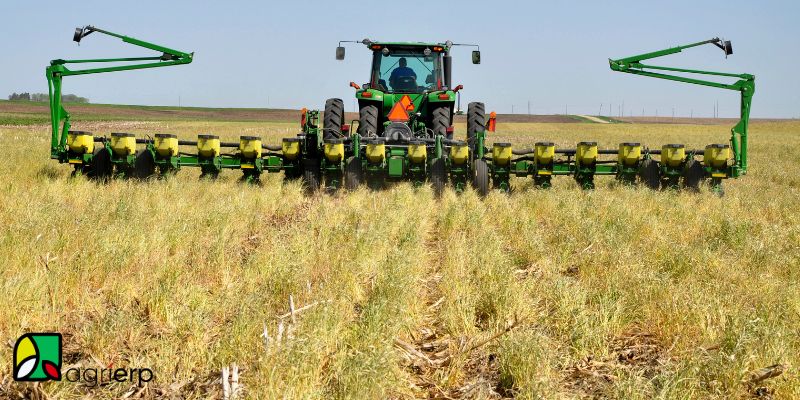
Field preparation is not just physical labor — it’s the foundation of your crop’s entire growing environment. The structure, chemistry, and biology of the soil at planting time directly influence how well roots can penetrate, how efficiently nutrients are taken up, and how the crop responds to weather stress through the season.
Farms that treat land preparation for planting crops as a systematic, data-informed process consistently outperform those that rely on habit and routine. Knowing your soil — its texture, pH, compaction profile, organic matter level, and drainage characteristics — before you start any mechanical work is what separates strategic field preparation from simply going through the motions. This kind of field-level intelligence feeds directly into your crop management and farm operations planning.
Step 1: Soil Testing and Assessment
No field preparation program should begin without a current soil test. Testing tells you where you actually stand, not where you assume you are — and assumptions about soil fertility are one of the most expensive mistakes in field farming.
A comprehensive pre-season soil test should cover:
- pH: Most crops perform best between 6.0 and 7.0. pH outside this range locks up nutrients regardless of how much fertilizer you apply.
- Macronutrients: Nitrogen, phosphorus, and potassium levels relative to crop removal and target yield.
- Micronutrients: Zinc, boron, manganese, and others that become deficient in specific soil types and crop sequences.
- Organic matter: A key indicator of soil biological activity, water-holding capacity, and long-term fertility.
- Cation exchange capacity (CEC): Determines how well your soil holds onto nutrients and responds to fertilizer applications.
Soil test results by field — not across your whole farm — give you the precision needed to make targeted amendment decisions. Farm analytics platforms that store and trend soil test data over multiple seasons help reveal whether your soil preparation for planting program is building or depleting long-term fertility.
Step 2: Drainage and Leveling
Before any tillage, address drainage and field leveling. Poorly drained soils delay planting, promote anaerobic conditions that damage root systems and soil biology, and create the wet spots that show up as yield drags every season.
Surface drainage improvements — grading, precision leveling, or shaping beds and crowns — reduce ponding and accelerate field dry-down after rain. Subsurface drainage through tile systems addresses the deeper waterlogging that surface work cannot fix. In field farming operations where planting windows are tight and soil trafficability is critical, drainage investment pays back faster than almost any other capital improvement.
Precision land leveling also directly improves irrigation uniformity and reduces runoff losses, connecting to your broader farm water management strategy.
Step 3: Plowing and Harrowing Techniques
Primary and secondary tillage are the mechanical core of the field preparation steps. Understanding when and how to apply each field preparation technique makes the difference between a well-structured seedbed and one that creates more problems than it solves.
Primary Tillage: Plowing
Plowing breaks up compacted soil, incorporates surface residues and amendments, and aerates the root zone. The main approaches include:
- Moldboard plowing: Inverts the soil profile, buries surface residue, and creates a deep, loose seedbed. Effective for heavy residue, but can disrupt soil structure with repeated use.
- Chisel plowing: Fractures and loosens soil without full inversion, leaving more residue on the surface — better for erosion control and organic matter preservation.
- Subsoiling/deep ripping: Breaks through compacted subsoil layers without disturbing the upper profile. Critical on fields where tillage pan has developed from repeated shallow plowing.
Tilling the fields when the soil is too wet creates compaction and clod formation; tillage in dry, brittle conditions shatters structure without creating useful tilth. Always match tillage depth and timing to soil moisture conditions.
Secondary Tillage: Harrowing
Harrowing techniques follow primary tillage to refine the seedbed — breaking down clods, leveling the surface, and incorporating pre-plant fertilizers or amendments. Common implements include:
- Disk harrows: Break clods and incorporate residue or amendments.
- Field cultivators: Versatile secondary tools that work the top several inches without significant inversion.
- Rotary tillers: Create a fine, uniform seedbed — ideal for small-seeded vegetable crops.
- Finishing harrows and land rollers: Final refinement tools for accurate seed placement.
Over-tillage destroys aggregate structure, increases erosion risk, and adds unnecessary cost. The goal is the minimum passes needed to achieve a firm, level seedbed with good seed-to-soil contact.
Step 4: Soil Preparation for Planting — Amendments and Fertility
Soil preparation for planting is where your fertility program is established. Pre-plant applications of lime, organic matter, and base fertilizers set the nutritional foundation that in-season applications will build on.
Lime and pH Correction
If soil testing shows pH outside the optimal range, lime or sulfur must be incorporated before planting. pH correction is slow — lime applied at planting may take 6–12 months to fully react, which is why pre-plant application, ideally the season before, is the standard best practice for field preparation.
Organic Matter and Compost
Incorporating compost, manure, or cover crop residues builds soil organic matter over time — improving water-holding capacity, soil structure, and biological activity. When preparing soil for crops with high organic matter demands — brassicas, leafy greens, root vegetables — this step often has more impact on yield than any in-season input. For vegetable farm operations, organic matter management is a primary driver of long-term productivity.
Soil Fertility Management
Soil fertility management for pre-plant applications focuses on phosphorus and potassium — nutrients best incorporated rather than surface-applied. Starter fertilizers placed near the seeding zone support early establishment, particularly in cool soils where nutrient availability is reduced.
Tracking amendment applications by field — type, rate, date, and cost in your farm operations management system ensures accurate cost-of-production accounting and the records needed for food safety audits and sustainability certification.
Step 5: Field Preparation for Organic Farming
Field preparation for organic farming follows the same physical steps as conventional preparation but operates under specific constraints: no synthetic fertilizers, no prohibited pesticides, and a requirement to build fertility through biological means.
Key differences in field preparation techniques for certified organic production include:
- Reliance on compost and manure: Application timing and rates must comply with organic certification standards, including manure application windows relative to harvest.
- Cover cropping as a fertility strategy: Legume cover crops are the primary nitrogen source in most organic rotations. Terminating them at the right growth stage is critical to nitrogen availability for the following crop.
- Mechanical weed management: Seedbed preparation using stale seedbed techniques minimizes weed seed germination without herbicides — a standard best practice for field preparation in organic systems.
- Biological soil health focus: Organic field preparation prioritizes reduced tillage, diverse rotations, and organic matter additions — practices aligned with broader farm ESG and sustainability commitments.
Step 6: Tools for Preparing a Field
The right tools for preparing a field depend on your farm’s scale, soil type, crop mix, and tillage philosophy:
- Tractors and drawbar power: Match horsepower to implement requirements to avoid poorly executed passes.
- Primary tillage implements: Moldboard plows, chisel plows, subsoilers for initial soil opening and residue management.
- Secondary tillage implements: Disc harrows, field cultivators, rotary tillers, and finishing tools for seedbed refinement.
- Planting equipment: Precision planters and drills that place seed at uniform depth and spacing.
- Soil amendment applicators: Lime spreaders, manure spreaders, and fertilizer applicators for pre-plant nutrition.
- GPS and precision ag tools: Variable rate controllers and soil EC mapping for precision field preparation matched to soil variability.
Tracking equipment usage, maintenance schedules, and fuel costs by field within your farm management platform gives you the data to evaluate which preparation passes are earning their cost.
Best Practices for Field Preparation: Putting It All Together
The best practices for field preparation across all farm types share a common thread: preparation is systematic, data-driven, and connected to the broader crop management plan.
- Test before you till. Soil testing every 2–3 years by field gives you the information for targeted, cost-effective decisions.
- Match tillage to soil conditions. Tillage under poor moisture conditions destroys structure and creates long-term productivity problems.
- Minimize passes. Every additional tillage pass costs fuel, time, labor, and soil structure. Strip-till and no-till systems are increasingly common for this reason.
- Document everything. Tillage dates, amendment applications, soil test results, and equipment used by the field creates the operational record that drives continuous improvement.
- Plan around planting windows. Work backward from your target planting date, accounting for each preparation step and field dry-down time.
For farms managing multiple field types and crop enterprises, coordinating field preparation schedules across the operation prevents bottlenecks and ensures every field is ready when planting windows open.
How AgriERP Helps You Manage Field Preparation?
Effective field preparation generates a significant amount of operational data — soil test results, tillage activity logs, amendment applications, equipment usage, and input costs by field. Most farms capture some of this information, but few connect it in a way that drives better decisions season after season. That’s exactly where AgriERP adds value.
AgriERP’s crop management and farm operations tools allow you to:
- Record and track soil test data by field across multiple seasons, so you can see whether your soil preparation for planting program is building or depleting long-term fertility.
- Log tillage and amendment activities with dates, rates, equipment, and costs — giving you an accurate cost-of-production record for every field and crop enterprise.
- Plan field preparation schedules against planting calendars, ensuring each field preparation step is sequenced correctly, and no field falls behind the planting window.
- Track input inventory — fertilizers, lime, compost — so procurement decisions are based on actual field requirements rather than estimates.
- Generate compliance and audit records automatically from data captured during normal operations, supporting food safety certification, organic certification, and sustainability reporting.
The agriculture analytics solution surfaces field-level performance trends — connecting soil fertility management decisions to yield outcomes over time — so you can continuously refine your approach based on evidence, not intuition. For farms operating across diverse farm types with different soil profiles and crop requirements, this unified visibility across the operation is what turns good agronomic judgment into consistently excellent results.
Conclusion
How to prepare a field for planting is not a single task — it’s a coordinated sequence of decisions and operations that determines the productivity ceiling for your entire crop. From soil preparation for planting and plowing and harrowing techniques to soil fertility management and field preparation for organic farming, every step contributes to the environment your crop will grow in for the full season.
The farms getting the best results treat field preparation steps as a managed process: tested, documented, optimized by field, and connected to the broader crop and financial management plan.
AgriERP gives farm operators the tools to plan, track, and analyze field preparation activities alongside the rest of their farm operations — turning pre-season groundwork into a data asset that improves outcomes year after year.
If you’re looking to bring more structure to your field preparation and farm operations, AgriERP is worth exploring.