The ERP Solution for the Year” 2025 in Agtech Breakthrough Awards 2025


Key Takeaways
- California’s pistachio harvest season runs late August through October, peaking in September and triggered by hull split across the Central Valley growing regions.
- The window is short and unforgiving. Hull degradation begins within hours of shaking, so intake, grading, and hulling decisions happen under real-time pressure.
- Handlers face five operational challenges simultaneously: receiving throughput, aflatoxin segregation, hulling capacity, grower settlement complexity, and export documentation.
- Real-time lot-level visibility across intake, quality testing, and grower deliveries separates operations that stay ahead from those that spend harvest season scrambling.
- An ERP built for agriculture, like AgriERP, gives handlers the connected data layer they need to manage every stage of the pistachio harvest window without spreadsheets and manual reconciliation.
The Six Weeks That Define Your Year
If you run a pistachio handling or processing operation, you already know what September feels like. Trucks backed up before the first weigh ticket prints. A grower on the phone asking why his load hasn’t posted. Lab results sitting on someone’s desk while a suspect lot waits in the yard. And somewhere in the back of your mind, the clock running on every bin that came in this morning.
The pistachio harvest season gives you roughly six weeks to receive, hull, grade, and move a crop that took all year to grow. What makes it hard is not the volume alone. It is that every decision compounds. A wet week in the field pushes shaking back, which extends the time between tree and huller, which is exactly where grade loss and aflatoxin risk build. An early heat spike moves hull split faster than expected and compresses the window you had planned around.
This guide covers the California pistachio harvest timeline from the grower’s first hull split check through hulling, drying, and storage. More importantly, it covers the five operational challenges that show up every season at the receiving end and what the operations that come out ahead do differently.
When Is Pistachio Harvest Season in California?
California produces approximately 99% of the U.S. pistachio crop, making the state’s harvest window a major event for the entire industry. That window runs from late August through October, with the peak typically falling in September. The timing shifts by variety, growing region, and annual weather, but the trigger is always the same: hull split.
The California Pistachio Harvest Timeline
Understanding the pistachio harvest season means understanding the full sequence from orchard to huller.
Stage 1 — Hull Split Monitoring (August)
Hull split is the moment the outer green hull separates from the shell beneath, indicating that the nut has reached maturity. According to the UC Davis Postharvest Research and Extension Center, the ideal harvest window opens when 70 to 80% of fruits meet maturity criteria. Those criteria include hull color shifting from green to creamy pink, shell dehiscence increasing, and kernel moisture declining. Growers and their agronomists watch these indicators from early August onward. The decision of when to schedule the shaker is rarely simple. Move too early and payable yield drops. Wait too long and quality deteriorates fast. UC Davis research confirms that summer heat accumulation is the greatest predictor of split nut percentage. That is why growers track growing degree days closely rather than relying on calendar dates alone.
Stage 2 — Mechanical Shaking (Late August through September)
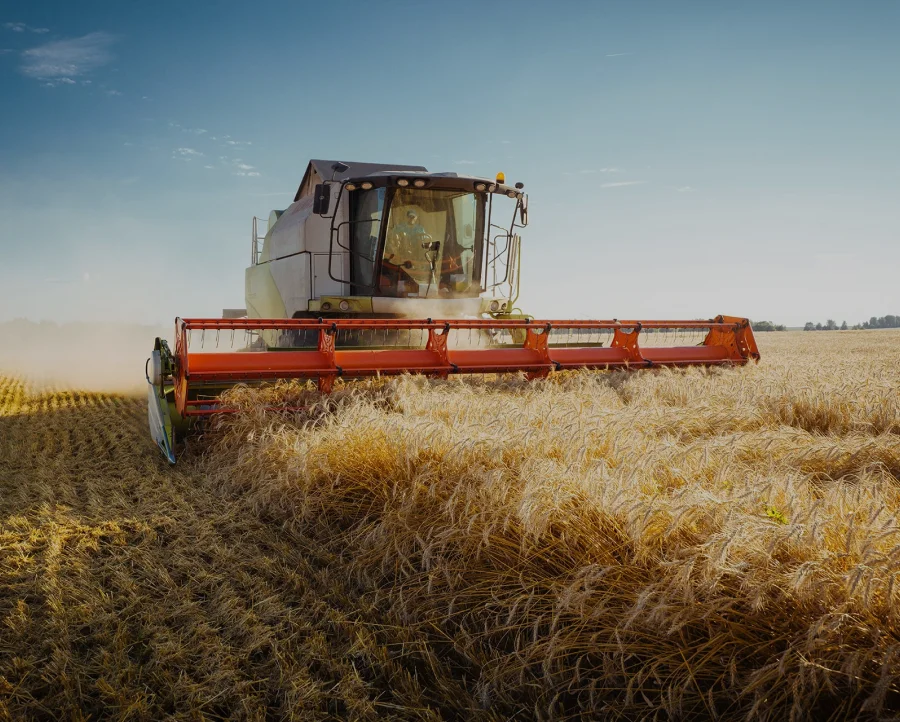
When a block hits its harvest window, a trunk shaker drives row by row and vibrates each tree for a few seconds. Nuts fall onto catching frames beneath the canopy. It is fast, and it is the moment the clock starts. From the second a nut hits the frame, hull degradation begins. California’s major varieties, Kerman, Golden Hills, and Lost Hills, have slightly different maturity windows. That is why large operations stagger harvest blocks across several weeks rather than taking everything at once. UC Davis cost studies confirm that Golden Hills typically needs a single shake, while other varieties or older orchards may need additional passes.
Stage 3 — Windrowing and Bin Loading
After shaking, equipment pushes nuts into windrows, picks them up, and loads them into bulk bins for transport. Field conditions matter here. Wet soil or equipment delays extend the time between shaking and hulling. Both factors degrade hull quality and accelerate aflatoxin risk in susceptible nuts.
Stage 4 — Transport to the Huller
Trucks move from the orchard to the receiving station, often within a few hours of shaking. For large handlers receiving from dozens of growers during peak harvest, this is where logistical complexity begins. Multiple trucks, multiple growers, multiple blocks, and a scale pit that has to process all of them accurately and quickly.
Stage 5 — Hulling, Drying, and Storage
The huller removes the outer hull and separates nuts by grade and moisture. Timeline pressure translates directly into grade outcomes at this stage. UC Davis postharvest research confirms that high temperatures and longer intervals between harvest and hulling significantly worsen hull degradation and shell stain. Late-harvested pistachios also carry higher aflatoxin contamination levels than those handlers process promptly. After hulling, pistachios dry to a storage moisture level of around 7 to 9% before going into controlled-atmosphere storage. Wet-process and dry-process hulling operations differ in throughput profiles and aflatoxin-separation effectiveness, a distinction that matters in years with elevated early-split pressure.
The 5 Operational Challenges of Harvest Season
The harvest timeline above is what growers experience in the field. What handlers experience at the receiving station is a different story. Five operational challenges arrive at the same time, and how well you manage them determines whether this harvest adds to your margin or eats into it.
Challenge 1: Receiving Throughput and Lot Accuracy at Intake
During peak harvest, a mid-to-large handler can receive dozens of truck deliveries per day. Each delivery comes from a different grower and represents a different block, variety, moisture level, and grade. Staff need to weigh, grade, sample, and log every delivery as a distinct lot before the truck leaves the scale. When that process runs on paper or across disconnected systems, the line backs up fast. Staff apply moisture deductions inconsistently. A delivery goes under the wrong grower. By the time the error surfaces, the truck is gone and grower trust is at risk.
Handlers that stay ahead treat lot creation at intake as a data event, not a paperwork event. Every delivery gets a lot number at the scale, with block, variety, grade, moisture, and delivery timestamp captured in real time and tied to the grower’s account. That lot number then follows the nuts through hulling, drying, storage, and out the other side. There are no missing deliveries at settlement time because there is no gap in the record. For a closer look at how lot-level data capture works across the supply chain, the guide to food traceability systems covers the mechanics in full. The nuts and dried fruits ERP page also covers how connected systems tie huller and sheller intake workflows to shared financials and inventory from the first delivery of the season.
Challenge 2: Aflatoxin Risk and Quality Segregation
Aflatoxin is the most consequential quality risk in the pistachio harvest window. It concentrates in early-split and hull-adhering nuts that Aspergillus mold exposed in the orchard prior to harvest. The problem for handlers is that you cannot see aflatoxin. A lot that looks clean at intake can come back from the lab over the limit. If that lot has already mixed with clean product, containment becomes a much larger problem.
UC Davis postharvest research is direct on the timing risk. Processing that runs beyond 24 hours after harvest significantly increases contamination risk. Lots with early shell splits are harder to hull, more susceptible to fungal contamination, and carry a visible stain along the shell suture that pushes product out of the premium split-in-shell grade. UC Davis cost studies show that split in-shell typically accounts for around 85% of total yield at full production. Product that degrades into shelling stock due to hull damage or contamination means a direct per-pound revenue loss for the grower and a classification problem for the handler at intake.
USDA’s Agricultural Marketing Service administers mandatory aflatoxin testing for all California pistachio handlers, with a maximum tolerance of 15 ppb in domestic commerce. For export, the PEAR (Pistachio Export Aflatoxin Reporting) program requires a certificate of analysis from a USDA-approved lab before any shipment leaves the country.
How to Handle These Risks
The handling protocol is well established. Handlers flag suspect lots by orchard history, early-split percentage, or visual inspection at intake, then move them into segregated storage pending lab results. But executing that protocol under peak receiving pressure, across dozens of simultaneous deliveries, requires more than a policy on paper. It requires a system that flags a lot at intake, holds it from inventory movement, logs the sample submission, and triggers an alert when results come back above threshold. Agricultural ERP systems built for nut processing handle this workflow as a built-in function, including threshold alerts, automatic lab-result logging, and lot segregation tied to the intake record.
Challenge 3: Hulling and Processing Throughput
UC Davis postharvest research identifies the 24-hour window between shaking and hulling as the quality boundary beyond which aflatoxin contamination risk increases significantly. Hulls that sit on nuts too long after shaking stain the shell and degrade the kernel. Product that crosses that line moves down the grade ladder from split in-shell into shelling stock. Hulling throughput during peak harvest has to keep pace with incoming volume. If it does not, the trade-offs become expensive: delay processing and risk grade loss, or rush and lose precision on lot separation.
Wet-process and dry-process hulling handle aflatoxin-susceptible lots differently, which means throughput decisions and lot-routing decisions connect directly. A handler running both process types needs to know in real time which line has capacity and which lots should go where. When that visibility exists, better decisions happen faster. When it does not, the call gets made at 11 p.m. with a full yard and incomplete information. For a full look at how connected processing operations tie into intake and quality data, the pistachio ERP platform page covers what that looks like in practice.
Challenge 4: Grower Settlement Complexity
A California pistachio handler might receive product from 50 to 200 growers during a single harvest season. Each grower has their own contract terms, including moisture deduction schedules, grade premiums, quality adjustments, and payment timing. Each may also deliver from multiple blocks with different variety and grade profiles. Settlement is the moment all of that complexity has to resolve into an accurate, defensible payment.
Pistachio is an alternate bearing crop. UC Davis cost studies note that the high-low yield cycle typically kicks in around years 9 to 10, meaning on-year and off-year volumes can differ substantially. Handlers managing grower contracts across an on-year harvest face a heavier settlement workload, and the grade mix shifts with it.
On a spreadsheet, this is where six weeks of data becomes a settlement-week crisis. Staff applied moisture deductions inconsistently at intake. A block split across two delivery dates. A grade adjustment sat in a text message and never made it into the log. Growers call the office waiting on their numbers. Staff reconcile receipts from six weeks prior. The handlers that avoid this run settlement as a continuous process, not an end-of-season reconciliation. Every delivery logged at intake ties immediately to the grower account, the contract terms, and the lot record. By the time harvest ends, settlement is largely already done. The farm traceability software guide explains how continuous data capture at each stage removes that end-of-season reconciliation work.
Challenge 5: Export Documentation and Compliance
California produces the vast majority of the U.S. pistachio crop, and a significant share goes to export markets across the Middle East, Europe, and Asia. Each destination country sets its own phytosanitary requirements, aflatoxin limits, and documentation standards. FSMA 204 traceability obligations add further demands around lot-level records and Key Data Elements. The enforcement date has moved to July 2028, but the rule’s requirements are unchanged. Major retail and foodservice buyers are already building compliance into their supplier contracts.
Handlers that manage export compliance well do not scramble for documentation at the end of the season. They generate it as a byproduct of how they run receiving and processing. Every lot record is audit-ready because staff built it correctly at intake, with aflatoxin results attached, moisture and grade logged, and processing steps recorded. When an export customer or a regulator asks for documentation, it is a report pull, not a records reconstruction. The guide to why food traceability systems matter covers how traceability connects intake to export documentation. For a broader look at how US agricultural regulations interact with ERP compliance workflows, that guide covers FSMA and the documentation requirements handlers need to stay ahead of.
How the Operations That Stay Ahead Run Harvest Season
The common thread across all five challenges is this: the handlers that stay ahead do not manage harvest week by week. They manage it lot by lot, in real time, from the moment the first truck hits the scale to the moment the last export document goes out.
That kind of visibility is not possible when intake lives in one spreadsheet, quality testing in another, processing notes on a supervisor’s clipboard, and grower settlements in a system that staff reconcile after the season ends. It requires one connected system where a lot number created at intake carries the full record through every stage without manual re-entry. That record covers grower, block, variety, grade, moisture, aflatoxin results, processing steps, and storage location.
Agricultural ERP systems built for nut processing make this possible. They connect intake, quality control, hulling operations, grower settlements, inventory, and export documentation in one platform. Hull split monitoring, aflatoxin threshold alerts, grower settlement automation, and USDA/FDA-ready reporting become part of how the operation runs day to day rather than problems to sort out at season end. For a full breakdown of what to look for in a platform built for this kind of work, the guide to top pistachio ERP features covers the capabilities that matter most at scale.
Is Your Operation Ready for Next Harvest?
If harvest season means six weeks of spreadsheets, missed settlements, and late-night paperwork, that is a systems problem rather than a staffing one. Operations running a connected agriculture ERP gain real-time lot visibility from the scale pit through export documentation, with grower settlement, quality control, and compliance on the same platform. AgriERP is one option built specifically for pistachio handlers and processors on Microsoft Dynamics 365.
See how AgriERP supports the pistachio harvest window
Frequently Asked Questions
When does pistachio harvest season start in California?
California’s pistachio harvest season typically starts in late August. The exact timing depends on variety, growing region, and how quickly hull split progresses that year. Early-maturing varieties like Golden Hills and Lost Hills may be ready slightly ahead of the widely planted Kerman variety.
How long does pistachio harvest season last?
The harvest window in California runs approximately six to eight weeks, from late August through October. Peak delivery volume falls in September.
How are pistachios harvested?
Growers harvest pistachios mechanically using trunk shakers, which grip the tree trunk and vibrate it so nuts fall onto catching frames. Workers then windrow the nuts, collect them into bins, and truck them to a receiving station or huller within a few hours of shaking.
Why is aflatoxin a bigger risk during the harvest window?
Aflatoxin risk peaks at harvest because the mold that produces it, primarily Aspergillus flavus, concentrates in early-split nuts that heat and insect damage exposed in the orchard. UC Davis postharvest research shows that late-harvested pistachios carry higher contamination levels than those handlers process promptly. The 24-hour window between shaking and hulling is the critical threshold. Once hullers remove the hulls during processing, the visual cues that help identify susceptible lots disappear, making segregation at intake the last reliable control point.
What happens between shaking and hulling?
After shaking, workers load pistachios into bins and truck them to the handler’s receiving facility. At intake, staff weigh, sample, grade, and log each delivery by lot before it moves to the hulling line. UC Davis cost studies show that a mature Golden Hills orchard at full production yields roughly 85% split in-shell, 5% shelling stock, and 10% closed shell. Delays between shaking and hulling push product from the premium split-in-shell category into lower-value shelling stock through hull degradation and staining.