The ERP Solution for the Year” 2025 in Agtech Breakthrough Awards 2025


How Climate Change Is Pressuring Soil
The impact of climate change on soil is no longer subtle. Across the globe, warmer temperatures are changing how soil stores water and nutrients. You might have seen how unpredictable rainfall and heatwaves impact your fields.
According to recent data, increased rainfalls and temperature extremes are breaking down soil structure faster than ever before.
Soil erosion, surface runoff, and poor infiltration have gained speed, and these reduce soil fertility. On top of this, global warming is another major issue whose effects are worsening year by year.
According to the United Nations, by 2050, more than 90% of the Earth’s topsoil could be at high risk, and the problem is also that it takes around a thousand years to create just a few centimetres of topsoil.
That is the very layer we depend on for food. The Guardian says that in the UK, more than 87% of farmers claim their productivity is directly affected by extreme weather events that are linked to climate change. If you are a farmer, then we are sure you can relate to that.
Crisis Beneath the Surface: Vanishing Nutrients
But it is not just that we are losing the soil from the top; there is much more going on in the deeper layer, which is far more dangerous, and that is the loss of nutrients. Soil nutrient management is now more urgent than ever.
Excessive fertilizer use over the years has left many fields with an imbalance of nitrogen, phosphorus, and potassium. Moreover, micronutrients like zinc and boron are also disappearing.
When these essential soil nutrients are out of balance, your crops suffer. It affects your yield, quality of crops, and long-term health of your land. And cherry on top, poor nutrient cycling makes the soil less resilient to weather changes, aggravating the challenge.
Agriculture’s Role and Its Responsibility
It is easy to put the blame on climate change alone, but there is no doubt in the fact that agriculture leaves the highest environmental footprint, and our farming methods have played a part.
Intensive ploughing, overuse of chemicals, and monocropping have all aggravated the problem of soil health. Farming has to change if we want to protect the soil.
This is why sustainable farming practices are now more important than ever. Methods like crop rotation, minimum tillage, and controlled use of fertilizers are already making a difference on farms worldwide.
Adding on regenerative techniques, such as cover cropping and carbon sequestration soil strategies, is becoming important for healthy farming.
Cover crops protect soil from erosion and restore its organic matter; on the other hand, carbon farming helps absorb atmospheric CO₂ back into the soil.
You might be surprised to know that building just 1% more organic matter in soil can boost its water holding capacity by 25,000 gallons per acre. Which matters a lot, especially during drought seasons.
Is The Government Policy Lagging Behind or Catching Up?
Although something as important as soil must be at the top of the policy list. However, in many regions, there is a lack of specific laws to protect or restore soil.
As Dr Sha says, “It is something which the government should advise on creating new policies and new rules that the sustainability factor should be included,” in a recent interview. That means many countries are on their own, reacting instead of taking a proactive approach.
However, there are some positive steps being taken. For example, the EU has launched a mission to have 75% of its soils healthy by 2030, under the project “Caring for soil is caring for life”. The Soil Health Card Scheme has helped 110 million farmers track nutrient levels.
However, in many places, agricultural subsidies and soil health are still not being devised. Most subsidies still promote high-output practices that quickly drain the soil. So we must support practices that preserve soil so that the effect is far-reaching.
The Rise of Regenerative Farming
These days, we are observing that farmers are shifting toward regenerative farming methods, and not just because they are good for the planet, these methods save them money, build soil health, and produce stable yields over time.
Regenerative agriculture is a mix of smart crop choices, animal integration, no-till practices, and organic matter recycling. It is all about using modern tools and methods to farm in a smart way.
Organic farming benefits are part of this, too. Organic systems tend to have higher soil biodiversity and better soil structure. Although you might get lower yields in the short term, soil resilience is better in the long term.
Strategies for Soil Conservation
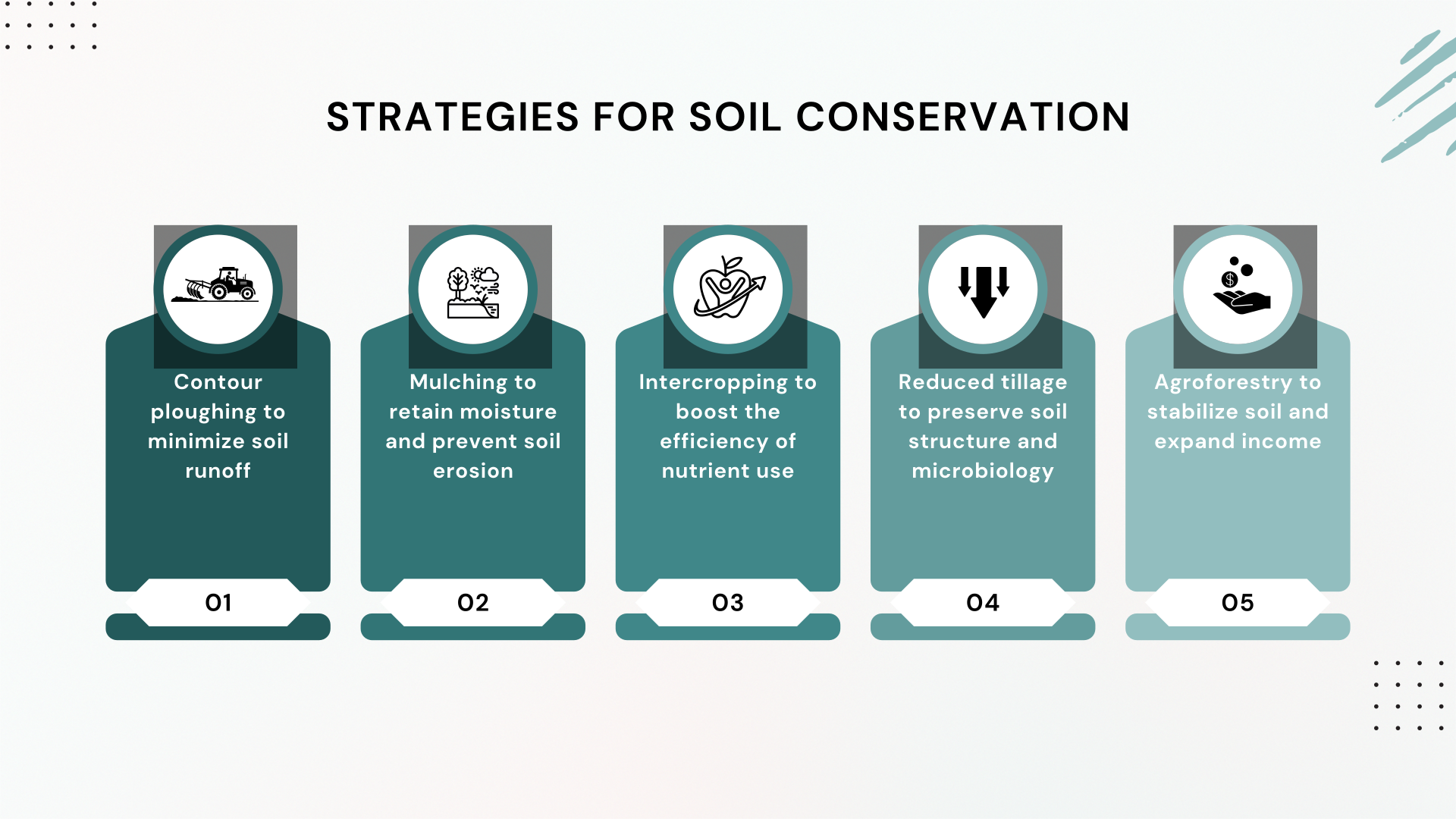 If you want to protect your soil today, then you must act now. And you can do that by adopting proven soil conservation strategies that can be adapted to most farm types.
Here are a few you can start with:
- Contour ploughing to minimize soil runoff
- Mulching to retain moisture and prevent soil erosion
- Intercropping to boost the efficiency of nutrient use
- Reduced tillage to preserve soil structure and microbiology
- Agroforestry to stabilize soil and expand income
Even small changes in how you manage your fields can result in noticeable improvements.
You are lucky to be farming today when you have technology by your side. Advanced technology, such as remote sensing tools and soil monitoring platforms, is making it easier to track soil health in real time.
And this is where powerful farm management software like AgriERP is highly helpful. They give you a complete picture of your soil data, crop rotation planning, and fertilizer needs in one place. Thus, helping you make more informed decisions every season.
The Economic Side of Soil
A piece of land that gives a good bottom line gives you peace of mind! But poor soil means more spending on inputs and less income.
Healthy soil can save you money on irrigation, fertilizers, and replanting. It can also give you access to markets that demand certified sustainable or regenerative products.
According to the World Business Council, farmers could expect a 15-25% return on investment after transitioning from conventional to a regenerative agriculture system. That means soil health is not merely an environmental issue; rather, this can be turned into a business opportunity.
Your Way Forward
The path forward is not one-size-fits-all, but there are a few steps that you can take today:
- Get your soil tested and track its health annually
- Diversify your crops and rotations
- Use compost, biochar, and other organic amendments
- Try cover crops to protect the soil between growing seasons
- Push for better policy support through your local cooperatives
You are not alone; platforms like AgriERP can help you maximize your farm operations and help you adopt sustainable farming practices. It can help you without breaking the bank and help you in soil data tracking, soil nutrient management, etc.
Conclusion
The soil health challenges of 2025 are real, complex, and require urgent attention and action. With the help of the right tools, knowledge, and technology, you can turn the tables.
Protecting your soil means securing a better future for yourself and your future generations tomorrow. It is not merely about good farming. Hence, if you want to be part of that future, start thinking about how you can rebuild and enrich the ground you grow on.
And if you are searching for support and solid solutions to help you, then AgriERP is built exclusively for farms like yours. It is practical, powerful, and designed to grow with you!