The ERP Solution for the Year” 2025 in Agtech Breakthrough Awards 2025


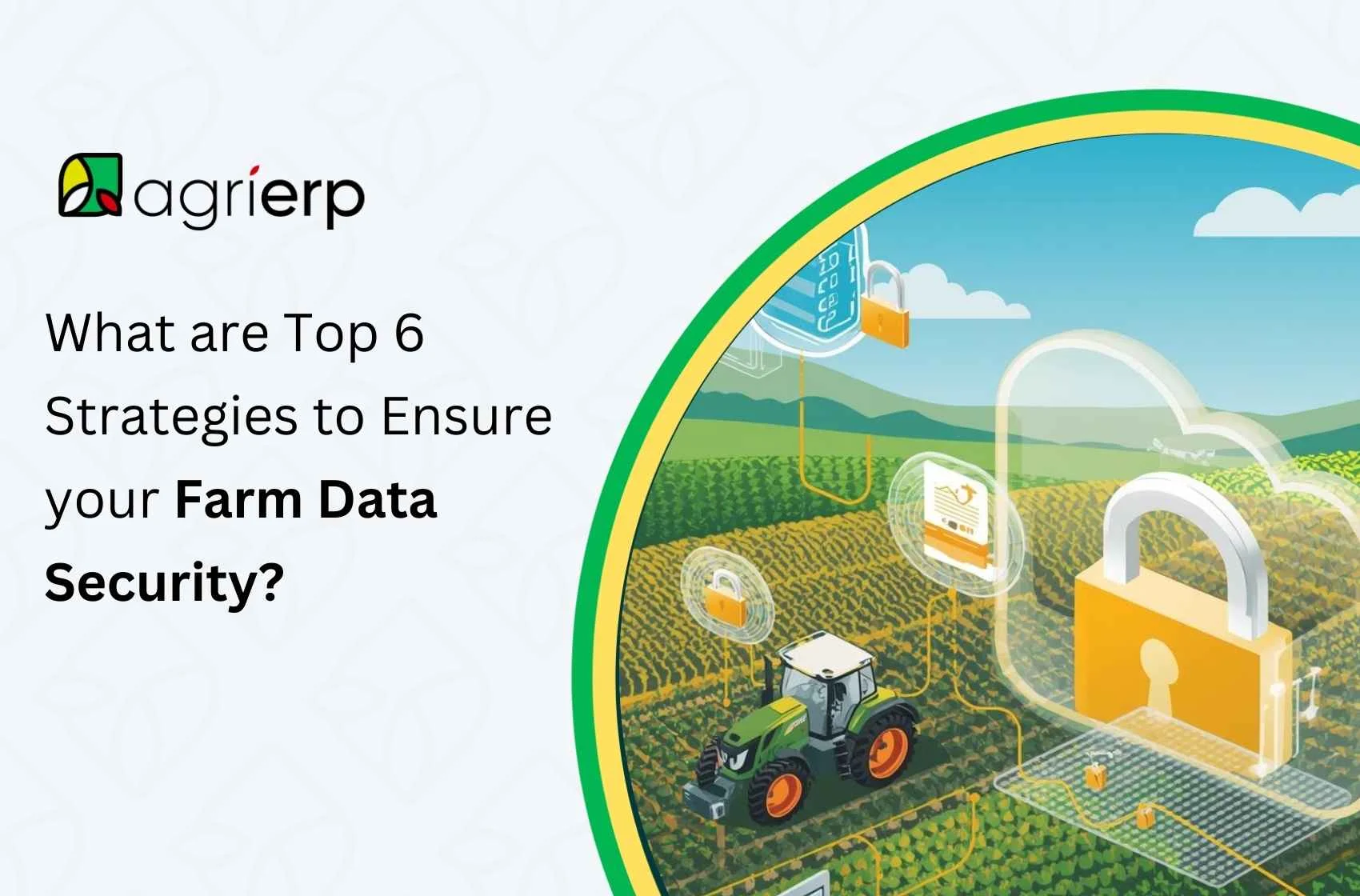
The modern agricultural enterprise has transformed rapidly. It is no longer defined solely by its physical acreage but by the complex, interconnected digital ecosystem that optimizes every aspect of production.
The efficiency gains delivered by connected devices, cloud platforms, sensors, drones, and Enterprise Resource Planning (ERP) systems have concurrently converted the farm into a data-rich, high-value target for cyber adversaries.
The risks associated with this rapid digitization are escalating rapidly, demanding executive-level attention. Data from the Food and Agriculture sector indicates that ransomware attacks targeting the industry saw an alarming 118 percent spike in the fourth quarter of 2024 compared to the same period in 2023. This surge confirms that the sector is vulnerable and is being actively targeted for financial and operational leverage.
In this blog, we’ll walk you through the top 6 farm data security strategies, backed by real-world threats, industry best practices, and easy steps you can implement right away.
Understanding Today’s Farm Data Risks
The convergence of Information Technology (IT) and Operational Technology (OT) on the farm creates a massive, complex attack surface. The financial leverage and strategic value of agricultural data provide cybercriminals with immense incentives, making robust data security a non-negotiable operational necessity.
Types of Agricultural Data at Risk
Cyberattacks are moving beyond targeting basic financial systems; they are increasingly focused on proprietary intellectual property (IP) that drives competitive edge and operational control.
- Yields and Proprietary Farming Methods: Granular historical and projected yield data, precise field maps, and unique operational practices constitute vital competitive intelligence. If compromised, this information could be exploited for market manipulation or intelligence gathering by competitors.
- Breeding and Genetic Data: This highly sensitive category includes proprietary seed varieties, livestock genetics, and confidential research and development (R&D) data. The theft of this biological IP represents a permanent loss of future revenue potential.
- Machinery Logs and Operational Telemetry: Data logs, remote guidance coordinates, and sensor telemetry from automated equipment (OT) control systems are essential for daily operations. Loss or corruption of this data can impact crop yields and livestock welfare.
- Financials and Contracts: Standard business records, including inventory, land leases, employee records, and sensitive financial models, remain primary targets for direct financial extortion.
Common Threats Overlooked by Farmers
Agribusinesses must recognize that threats are increasingly sophisticated and specifically tailored to exploit the unique characteristics of farming operations. Effective agriculture data breach prevention requires recognizing these advanced tactics.
- Ransomware Exploiting Operational Urgency: Cyber criminals actively target OT environments in agriculture. The severe consequences of operational disruption in farming, such as the potential spoilage of perishable goods, create intense pressure for rapid resolution. This urgency makes the sector particularly vulnerable to payment demands.
- IoT and Precision Ag Vulnerabilities: The rapid adoption of precision agriculture technology has introduced vulnerabilities at the edge of the network. Attackers can exploit weaknesses in connected devices, such as irrigation systems, weather stations, or drone controllers, to gain unauthorized access to core network systems.
- “Living-Off-the-Land” (LoTL) Techniques: Highly sophisticated threat actors are using LoTL techniques, which involve leveraging existing, legitimate system tools and processes to maintain long-term persistence within a network. This makes them significantly difficult for traditional signature-based antivirus or standard Endpoint Detection and Response (EDR) tools to detect, necessitating continuous behavioral monitoring.
- Weak Cloud Configurations and Remote Access Misuse: While commercial cloud services provide robust inherent security, the responsibility for configuring access often lies with the end-user. Misconfigured security settings, combined with weak remote access protocols, can inadvertently expose large quantities of cloud-stored farm records, including sensitive crop yields and financials.
Top 6 Strategies to Ensure Farm Data Security
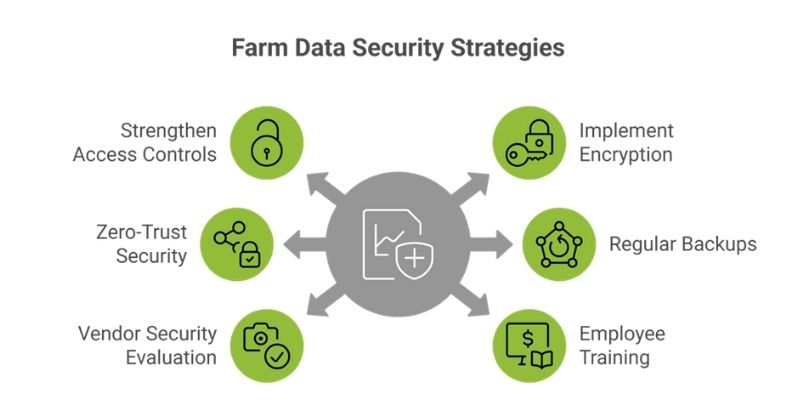
Implementing enterprise-grade cybersecurity requires moving beyond basic protective measures to adopt strategic frameworks that ensure data integrity and operational continuity across complex agriculture systems.
Strategy #1: Strengthen Access Controls and Authentication
For agribusinesses seeking to understand “how to secure farm data” and “how to protect farm data from hackers,” the foundation must be based on granular, continuous verification of identity and access privileges, central to robust farm data privacy practices.
Strengthen Authentication:
- Multi-factor authentication (MFA) must be compulsory for all farm applications, cloud services, and remote access systems.
- Move beyond strong passwords and outdated methods like SMS-based MFA, which are vulnerable to sophisticated attacks like SIM swapping. Mandate the use of phishing-resistant MFA, such as device-bound passkeys or hardware security keys, for high-assurance authentication.
- Utilize modern authentication, which continuously verifies users throughout a session, not just at login. This is particularly crucial when contractors or vendors access systems remotely.
Enforce Access Controls:
- The principle of least privilege must be enforced through Role-Based Access Control (RBAC). Permissions should be strictly defined by a user’s role (e.g., permanent employee, seasonal worker, equipment vendor, agronomist).
- Access controls must extend to securing shared devices used in the fields or mounted in machinery. Utilizing advanced network management techniques, such as Virtual Private Networks (VPNs), firewalls, and access control systems, helps decrease the vulnerability of field networks to common IoT cybersecurity threats.
Strategy #2: Implement Robust Farm Data Encryption Methods
Encryption provides the ultimate safety net, guaranteeing that even if a threat actor achieves unauthorized access, the data remains unreadable. This methodology is central to effective cloud security in agriculture and resilient farm data storage solutions, utilizing crucial farm data encryption methods.
Key Encryption Practices:
- Encrypt Data at Rest: All stored data (local farm servers, Network Attached Storage (NAS), or backups) must use robust encryption methods, such as AES-256, to ensure confidentiality and verify the integrity of proprietary information.
- Securing Cloud Storage: Cloud service providers, including those utilized by farm management software, typically encrypt cloud-stored farm records. This encompasses sensitive information such as crop yields, field maps, financial records, and inventory.
- Encrypt Data in Transit: Protect information moving between endpoints using secure protocols like TLS 1.3 (Transport Layer Security) for all data transfers between IoT sensors, drone controllers, and central cloud applications. This practice is essential for safeguarding sensitive farm information and securing data transfer across hybrid storage environments.
- Key Management: The security of encrypted data hinges on the security of the keys. Organizations must implement secure processes for key management, potentially leveraging specialized Hardware Security Modules to prevent unauthorized access.
- Audit Cloud Configurations: Regular auditing of cloud configurations used in agriculture is mandatory, as critical data can be exposed due to simple configuration errors.
Strategy #3: Zero-Trust Security Framework
Zero Trust Architecture (ZTA) has emerged as the most resilient farm cybersecurity solution for the highly interconnected, hybrid environments characteristic of modern agriculture. ZTA operates on the guiding principle of “never trust, always verify,” ensuring continuous authentication and strict access control by treating all network resources, internal and external, as potential threats.
The adoption of ZTA in agriculture is crucial for protecting diverse assets, from traditional IT systems to advanced operational technology.
Zero Trust Core Components:
- Securing IoT Devices: ZTA mandates continuous authentication for every entity, user, application, and device. Every element, from a single soil sensor to an automated irrigation system, must be authenticated and verified before gaining network access.
- Network Segmentation: ZTA uses its micro-segmentation layer, which divides the agricultural network into smaller, distinct segments.
- Isolation: This resource isolation limits the blast radius of any successful attack. Critical field processes (e.g., drone control) should be segmented from general office traffic, and OT systems must be isolated from centralized IT storage.
- Threat Detection and Monitoring: Access rules are enforced dynamically using context-aware security policies that analyze user behavior, device health, and geolocation. This system, combined with continuous monitoring and event logging, detects anomalies in real-time, helping to mitigate subtle, long-term attacks.
The table below highlights how ZTA principles are applied across the multi-layered agricultural ecosystem:
ZTA Architectural Layer | Specific Farm Asset Focus | Key Security Implementation |
| Device and Sensor Layer | Soil sensors, weather stations, and automated machinery | Continuous Device Authentication and Verification |
Identity and Access Management (IAM) | Farm owners, agronomists, third-party contractors | Multi-Factor Authentication (MFA) and Role-Based Access Control (RBAC) |
| Micro-Segmentation Layer | Irrigation controls, drone command centers, and centralized storage | Network Isolation to prevent lateral movement (containing breaches) |
Policy and Decision Layer | All data flows (Cloud-IoT) | Context-Aware Policies based on location, device health, and user behavior |
Strategy #4: Regular Backups, Secure Storage and Disaster Recovery Planning
In the event of a successful cyber attack, especially ransomware, the strongest defense is the ability to guarantee a rapid, complete, and clean restoration. Robust farm data storage solutions that integrate security and resilience are the most important technology for farm data protection.
Key Backup and Recovery Practices:
- Hybrid Storage Model: Agribusinesses should mandate a hybrid storage model, combining encrypted cloud services with local Network Attached Storage (NAS) or farm servers. This minimizes Recovery Point Objectives (RPO) and Recovery Time Objectives (RTO).
- Offline Backups: Maintain offline, encrypted backups of critical data. These copies must be physically or logically disconnected (“air-gapped”) from the primary network to guarantee a clean recovery point unreachable by network-propagating threats like ransomware.
- Testing Backup Integrity: Best practices for farm data protection include regularly testing the availability and integrity of backups in simulated disaster recovery scenarios. This confirms that the data is not corrupted and that systems can be brought back online quickly when needed.
- Ransomware Recovery Plan: Farms must develop and regularly exercise a comprehensive Cyber Incident Response Plan (IRP) specifically tailored for ransomware and data extortion incidents.
- Secure “Go Bag”: Preparation should include the assembly of a secure “Go Bag”, a physically separate, secure location containing essential recovery information, including master passwords, security keys, and network configurations, to restore systems without needing access to the potentially compromised network.
Strategy #5: Vendor and Supply Chain Security Evaluation
Modern farming relies heavily on Ag Technology Providers (ATPs), ERP providers, and machinery OEMs. This reliance transfers significant operational and legal risk to these third-party entities, making diligent vendor evaluation paramount for effective risk management in farm data. Weak vendor security can compromise entire farming operations.
Effective agriculture data breach prevention requires a proactive approach to third-party agreements.
Vendor Assessment Checklist:
- Security Standards: Agribusinesses must assess vendors based on their encryption standards, internal access policies, and documented breach response capabilities.
- Data Ownership: Contracts must explicitly state who has the right to collect, access, and control farm data, ensuring farmers clearly understand what they are consenting to.
- Opt-Out and Termination: Contracts must address the eventual end of the relationship, including clear clauses on the farmer’s ability to opt out of services.
- Data Fate upon Termination: Contracts must outline the fate of the data upon contract termination, specifically how data will be archived, removed, returned to the farmer, or destroyed, thereby mitigating long-term data retention risks.
- Disclosure Limitations: ATPs must clearly define how data is shared or sold to a third party, providing the farmer the necessary protection and choice regarding the commercialization of their proprietary information.
Strategy #6: Employee Training and Cyber Awareness
Human error remains a major catalyst for security breaches in all sectors, including agriculture. Training programs must be continuous, engaging, and practical, ensuring effective safeguarding of sensitive farm information across the entire workforce and protecting agricultural data.
Core Training Angles:
- Phishing Detection: Employees must be trained to detect and report phishing scams, which are increasingly personalized and difficult to identify. This training should be conducted annually and include practical simulations. A well-trained workforce acts as a crucial line of defense.
- USB Safety: Provide training on the safe handling of physical media. Employees should avoid using “found” USB sticks (a common hacking tactic), use only secure, company-issued devices, and avoid transferring data between multiple unverified machines.
- Machinery Hubs: Enhance physical security by disabling or blocking unused USB ports on sensitive machinery to reduce the attack surface.
- Seasonal Worker Digital Hygiene: Agricultural employers who hire seasonal staff (who may work for up to 10 months a year ) must provide safety and hygiene information in a manner they can understand, often requiring translation or visual aids. This orientation must integrate basic digital hygiene, such as strong password use and threat identification, to prevent high-turnover staff from inadvertently creating systemic vulnerabilities.
Real-World Impact of Applying Farm Data Security Strategies
The investment in comprehensive cybersecurity for agriculture delivers tangible returns primarily through strategic cost avoidance, enhanced operational predictability, and maintained competitive advantage.
- Preventing Operational Shutdown and Spoilage: Robust security measures prevent threats like ransomware from locking down critical OT systems, thereby avoiding halts in planting, harvesting, or irrigation processes. This avoids significant financial losses associated with the spoilage of perishable goods and the resulting disruption to the supply chain.
- Avoiding Regulatory Penalties and Legal Costs: Instituting rigorous farm data privacy practices minimizes the risk of data breaches. This, in turn, avoids severe legal and regulatory penalties, fines, and potential lawsuits from affected parties, while also minimizing the burdensome and costly requirements of post-incident compliance.
- Securing the Supply Chain and National Stability: Strengthening cybersecurity defenses contributes directly to the stability and reliability of the wider food supply chain. By preventing disruptions, agribusinesses safeguard not only their own profits but also play a critical role in stabilizing costs for consumers and maintaining national food security.
- Preserving Competitive IP and Reputation: Maintaining clear contractual control over proprietary farming data protects the farm’s core intellectual property (IP), such as genetic and yield data, from unauthorized commercialization. Avoiding negative publicity resulting from data breaches is essential for maintaining trust among suppliers, consumers, and financial investors, protecting the farm’s competitive advantage.
- Enabling Future Digital Growth: By mitigating the cyber risks and reducing operational uncertainty, strong security acts as a foundational enabler. It provides the confidence necessary to accelerate the adoption of new, complex digital technologies, including AI, robotics, and advanced analytics, that are vital for continued efficiency and value addition in farm operations.
Conclusion
The digital transformation of the farm has exposed agribusinesses to risks comparable to those faced by any major industry. Operating in a high-stakes, data-driven environment requires an executive commitment to security that matches the scale of the operation. Agribusinesses must view cybersecurity not as a cost center, but as a critical strategic investment in resilience and future growth.
Take the next step in securing your operation and streamlining management. Visit AgriERP today to explore advanced, secure ERP solutions designed specifically for the complex operational and data privacy needs of modern agribusinesses.