The ERP Solution for the Year” 2025 in Agtech Breakthrough Awards 2025


The case for switching from traditional ERP to Pistachio ERP in 2026 is compelling: real-time decisions, embedded AI, cloud-native agility, and built-in traceability are moving from “nice-to-have” to baseline expectations. ERP will evolve from a back-office ledger to a strategic intelligence layer predicting disruptions, optimizing resources, and guiding daily decisions with live data, not after-the-fact reports.
Pistachio ERP, an industry-tailored, cloud-native ERP for nuts and dried fruits, meets this moment with AI-driven forecasting, lot-level traceability, USDA/FDA-ready reporting, and Microsoft Dynamics 365 integration for real-time financial visibility. This article explains why the 2026 inflection point matters for agribusinesses, how Pistachio ERP compares to legacy systems, and the readiness steps leaders should take now.
The ERP Landscape Shifting in 2026
ERP is shifting from passive record-keeping to the strategic intelligence layer that orchestrates operations, predicts exceptions, and automates responses across the value chain by 2026. Cloud-native ERPs built for continuous delivery over internet infrastructure enable rapid updates, elastic scale, and lower overhead versus on-premise stacks. The new baseline includes:
- Real-time data ingestion across equipment, logistics, and commerce
- AI-ready architecture for predictive planning and autonomous exception handling
- Embedded sustainability and compliance reporting as everyday KPIs
Key Drivers Behind the 2026 ERP Inflection Point
Four forces are accelerating the shift to cloud-first, composable, AI-driven ERP:
- Operational urgency: volatile demand, climate variability, and logistics constraints require real-time resilience.
- Technical innovation: cloud-native and composable ERP reduces upgrade debt and integration friction.
- Regulatory expectations: auditable traceability and ESG disclosures move inside operational workflows.
- Buyer demands: CFOs and COOs expect speed, flexibility, and measurable ROI from an agricultural ERP, not multi-year rip-and-replace cycles.
Operational Urgency and Supply Chain Resilience
By 2026, leading ERPs are expected to predict shipment delays, re-sequence production, and reallocate resources in real time, not document misses afterward. Predictive orchestration uses live telemetry, forecasts, and constraints to prevent disruptions before losses occur. Practical examples include:
- Live equipment data driving maintenance windows to avoid downtime
- Logistics feeds auto-adjusting dock schedules and routes
- Resilient sourcing that dynamically redirects procurement around weather or transit risks
Architectural Innovation with Cloud-First and Composable ERP
Composable, cloud-first ERP platforms enable phased rollouts and continuous improvement rather than big-bang cutovers. Composable ERP means independently deployable modules you can add, swap, or scale as needs evolve. This modular ERP design reduces upgrade overhead, limits custom-code sprawl, and eases integration, helping teams avoid costly rip-and-replace cycles.
Artificial Intelligence Embedded as the New Standard
AI and machine learning are moving from pilot projects to standard workflows by 2026, improving demand forecasting, production scheduling, and exception management. Embedded AI in ERP means machine learning and automation are built into the system’s core, not bolted on as a separate tool. Expect:
- Automated invoicing and three-way match
- Smart inventory controls and replenishment
- Exception handling for variances and compliance flags
- Predictive analytics for yields, quality, and logistics
ESG Compliance and Sustainability Integration
Regulators, buyers, and lenders increasingly require transparent ESG metrics inside operating dashboards. ESG metrics in ERP refers to integrated tools that track environmental footprint, ethical sourcing, and regulatory compliance as routine business KPIs. Standard features include audit-ready traceability reports, emissions calculations, and sustainability scorecards alongside production and finance.
Comparing Traditional ERP With Pistachio ERP Capabilities
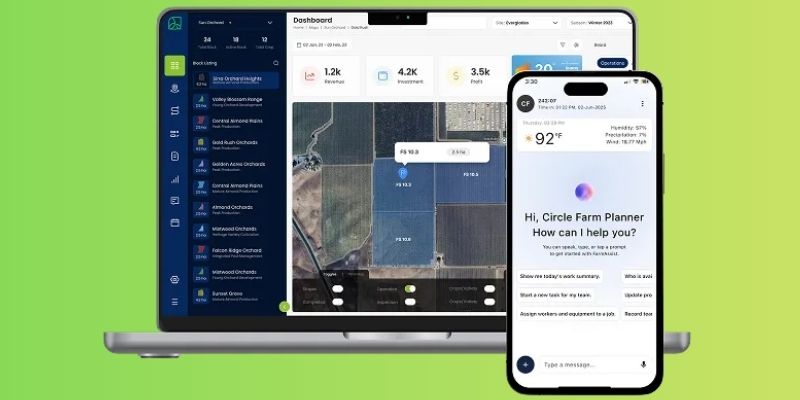
The practical difference between monolithic legacy ERP and Pistachio ERP is the ability to sense, decide, and act in real time without heavy customizations or swivel-chair work across apps.
| Capability | Legacy ERP (Monolithic) | Pistachio ERP (Modern, Cloud-Native) |
| Architecture | On-premise, static, transaction-focused | Cloud-native, modular, AI-ready |
| Updates & scaling | Infrequent, disruptive upgrades | Continuous delivery, elastic scale |
| Real-time decision-making | Limited; batch-driven | Streaming data with predictive analytics and alerts |
| AI & automation | Add-on tools, fragmented | Embedded AI for planning, quality, compliance, and finance |
| Traceability & compliance | Partial, manual reports | Lot-level traceability with audit-ready USDA/FDA outputs |
| Mobile & offline | Basic or unavailable | Robust mobile apps with offline capture and sync |
| Integration | Point-to-point, brittle | API-first with composable integrations |
| Financial visibility | Delayed closes, manual reconciliations | Microsoft Dynamics 365-connected, real-time financials |
| Implementation model | Big-bang, heavy customization | Phased, composable rollout by module/process |
| Total cost of ownership | High maintenance and upgrade debt | Lower overhead with cloud operations and modular design |
This modern agricultural ERP approach is particularly relevant for nuts and specialty crops where yield variability, quality grading, grower settlements, and export logistics intersect daily.
Pistachio ERP’s Real-Time Decision Engine and AI Automation
Pistachio ERP functions as a real-time decision engine, ingesting live data across operations and surfacing predictive insights for inventory, scheduling, yield, and grower. Agriculture-specific automations include:
- Automated lot tracking and recall readiness
- Harvest volume and quality forecasting
- Inline quality grading with exception alerts
- Continuous compliance audits and document generation
AI automation in ERP refers to orchestrated workflows where routine tasks like invoicing, claims, or compliance checks are executed without manual intervention, allowing teams to focus on approvals and exceptional cases. The platform delivers robust offline mobile apps for field data capture and sync, integrating with Microsoft Dynamics 365 to keep financials current as events occur.
Modular Design Enabling Scalable and Flexible Solutions
Pistachio ERP’s modular design supports stepwise implementation and scaling from single-site to multi-farm, multi-packer operations. Example module combinations:
- Start: Core accounting + crop planning
- Expand: + procurement + production + lot traceability
- Advance: + quality + grower accounting + export/compliance + ESG dashboards
This approach reduces upgrade debt, eases integration, and minimizes vendor lock-in as your needs evolve.
Enhanced Traceability and USDA Compliance Support
Lot-level traceability means every batch can be tracked from field to pack to market with complete lineage, test results, and handling steps critical for recalls, certifications, and customer confidence. USDA- and FDA-aligned solutions like AgriERP’s nuts and dried fruits suite provide end-to-end traceability and audit-ready reports as core capabilities. Strong traceability also speeds incident response and supports operational ESG transparency for customers and regulators.
Challenges and Prerequisites for a Successful 2026 ERP Transition
AI-enabled ERP pays off when organizations invest in data quality, standardized processes, and readiness technology alone is not the strategy. Use this checklist to prepare:
- Data foundation: cleanse, standardize, and integrate critical data
- Process redesign: map current flows, eliminate waste, align to new capabilities
- People readiness: engage stakeholders early; plan training and support
- Change governance: define a roadmap, KPIs, and steering cadence
Importance of Strong Data Foundations and Governance
Data governance policies and practices that ensure accuracy, integrity, and accessibility are non-negotiable. Weak data foundations can lead to faster automation of flawed practices with AI, amplifying errors instead of minimizing them. Priorities:
- Master data cleansing and deduplication
- System integration to eliminate shadow spreadsheets
- Ongoing quality monitoring with ownership and SLAs
Process Redesign and Change Management Strategies
Change management includes the training, communications, and incentives that drive adoption. A pragmatic flow:
- Assess current workflows and pain points
- Redesign processes around the new system’s strengths
- Pilot high-impact scenarios
- Scale with phased rollouts and continuous improvement
Enable success with dedicated change teams, regular town halls, and hands-on end-user training.
Executive Alignment for Sustained ERP Value
Executive alignment is a shared leadership commitment vision, resources, and follow-through that sustains ERP ROI. Best practices:
- Biweekly steering meetings resolving risks and decisions
- Success metrics such as adoption rates, close times, forecast accuracy, and issue resolution SLAs
- Visible sponsorship to embed predictive intelligence into daily operations
Strategic Implications for Agribusinesses Considering Pistachio ERP
Leaders must close capability gaps while aligning data, processes, and people. Use this readiness snapshot:
- Current ERP gaps: real-time analytics, predictive planning, traceability, flexibility
- Data hygiene: master data health, integration coverage, quality ownership
- Leadership commitment: steering cadence, KPIs, budget, and resourcing
- Phased plan: modular rollout, training waves, value milestones
Closing the Capability Gap for Growth and Resilience
Reevaluating ERP in 2026 is not about trend-chasing; it’s about removing bottlenecks that cap growth and erode. The most material gaps are real-time analytics, predictive planning, lot-level traceability, and flexible scaling across sites and seasons.
Weighing Feature Parity, Data Readiness, and Change Readiness
Assess Pistachio ERP features against current and future needs embedded AI, traceability, offline-capable mobile, and Dynamics 365 financials should be non-negotiable. Audit data readiness and plan change management from day one. Bringing in experienced partners like Folio3 AgriERP helps align best practices, integration patterns, and a pragmatic rollout roadmap.
Turning ERP from Operational Debt into Competitive Advantage
Operational debt the time and cost of maintaining outdated systems suppresses agility and decision quality. 2026 marks a shift where ERP becomes an engine of resilience and competitive advantage through real-time intelligence and automation. Treat modernization as a core growth lever, not a back-office upgrade.
Final Thoughts
In an era where agility, visibility, and compliance define competitive advantage, modern ERP solutions tailored to agriculture are no longer optional. Real-time insights, AI-driven forecasting, and integrated traceability can transform how agribusinesses operate and compete. Don’t let legacy ERP limit your growth. Discover how Pistachio ERP can transform your operations with real-time insights, AI forecasting, and audit-ready traceability. Visit agrierp.com today to request a demo and start your modernization journey.