The ERP Solution for the Year” 2025 in Agtech Breakthrough Awards 2025


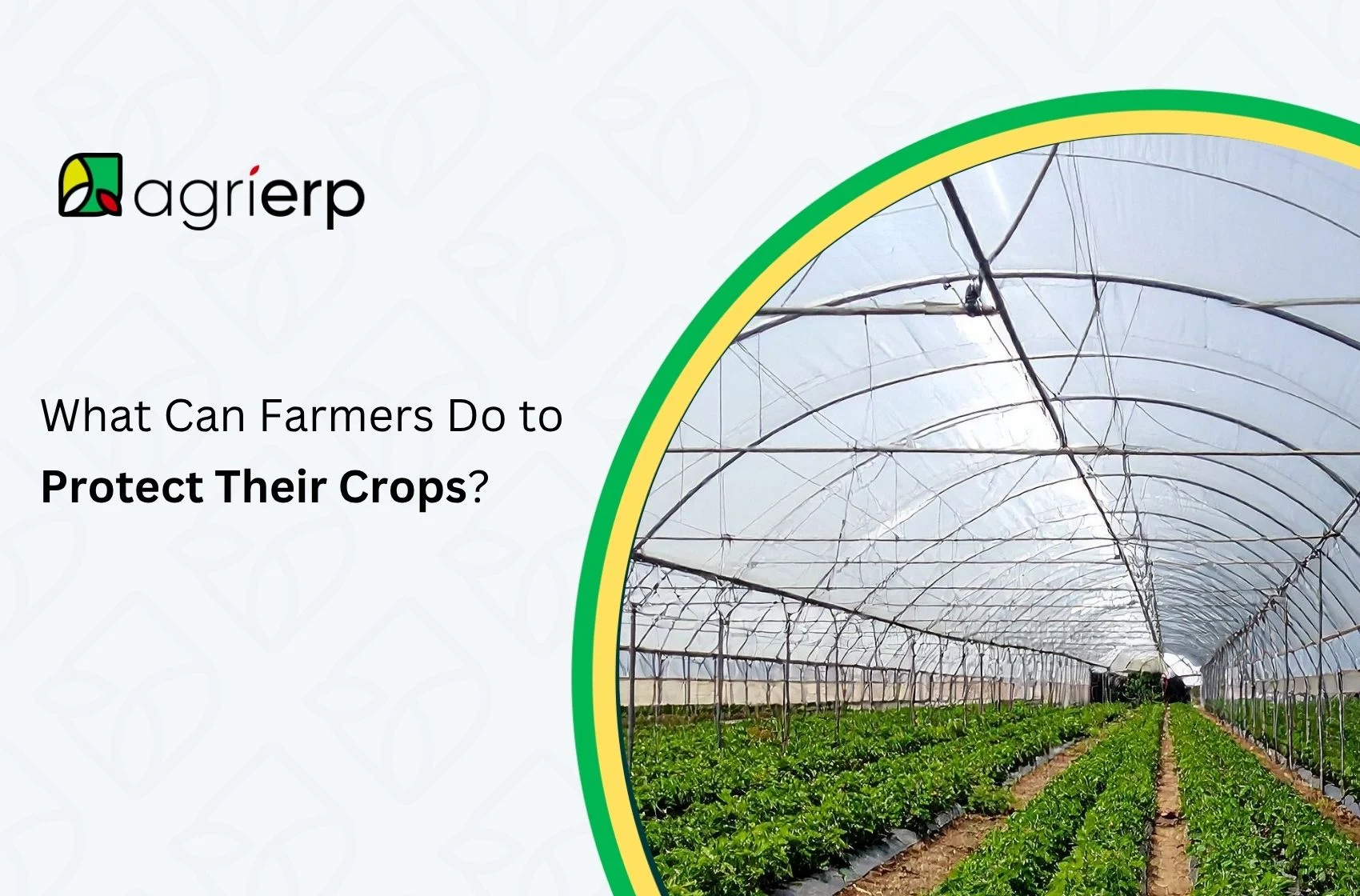
Crop losses are one of the most costly realities in farming — and most of them are preventable. Pests, diseases, weather events, soil degradation, and poor management practices all erode yields that should have made it to harvest. Understanding what farmers can do to protect their crops is not just an agronomic question; it’s a business question with direct implications for profitability and farm resilience.
This post covers the most effective crop protection methods available to commercial farm operators — from soil management and varietal selection to biological controls, irrigation, and monitoring — and how connecting these practices through smart farm management creates a compounding advantage season after season.
1. Build Soil Health as Your First Line of Defense
Healthy soil is the foundation of crop protection. Plants growing in biologically active, well-structured soil with balanced nutrition are inherently more resilient — they establish faster, develop stronger root systems, and tolerate pest and disease pressure that would devastate crops grown in degraded conditions.
Key soil management techniques that directly support crop protection include:
- Maintaining organic matter: High organic matter supports diverse microbial communities that suppress soilborne pathogens through competition and predation.
- Balancing soil pH and nutrition: Nutrient imbalances stress crops and make them more susceptible to disease. A crop deficient in potassium, for example, is significantly more vulnerable to fungal infection.
- Avoiding compaction: Compacted soils restrict root development, reduce water infiltration, and create anaerobic zones where root pathogens thrive.
Tracking soil health metrics by field across seasons — through a farm crop management platform — allows farms to connect soil management decisions to crop health outcomes over time.
2. Choose Disease-Resistant Crop Varieties
One of the most cost-effective ways to prevent crop damage is to start with genetics that are inherently resistant to the pathogens most likely to cause problems in your region. Disease-resistant crop varieties have been developed for virtually every major crop and pathogen combination — from fusarium-resistant wheat to late blight-resistant potatoes and nematode-resistant soybeans. Selecting these disease-resistant crop varieties fundamentally changes the baseline risk profile of your crop from day one.
Selecting resistant varieties does not eliminate the need for other protection measures, but it fundamentally changes the baseline risk profile of your crop. A field planted to a susceptible variety in a high-disease-pressure environment requires far more intervention — and still carries greater yield risk — than the same field planted to a resistant variety.
Key considerations when selecting varieties for disease resistance:
- Match resistance traits to the specific pathogens present in your fields, not just regionally common ones.
- Rotate varieties within a resistant class to slow the development of resistance-breaking pathogen races.
- Balance disease resistance with yield potential, market requirements, and environmental adaptation — resistance is one trait in a broader variety selection decision.
Tracking variety performance by field and season in your farm operations records gives you the multi-year data to make consistently better variety decisions.
3. Implement Integrated Pest Management
Integrated pest management for farmers (IPM) is the most comprehensive framework available for crop protection from diseases, insects, and weeds. Rather than relying on a single tool — usually a chemical application — IPM coordinates multiple control strategies to manage pest pressure below economically damaging levels while minimizing cost and environmental impact.
The core pillars of IPM for crop protection:
- Prevention: Crop rotation, resistant varieties, sanitation, and cultural practices that reduce pest habitat and entry points before a problem develops.
- Monitoring: Regular field scouting to detect pests and diseases early — before populations reach economic threshold levels.
- Economic thresholds: Making treatment decisions based on actual pest pressure and the cost of crop damage versus intervention, not on calendar dates or habit.
- Integrated controls: Deploying biological, cultural, mechanical, and chemical tools in sequence, using the least disruptive effective option first.
IPM is not just an organic farming pest control strategy — it’s the standard best practices for crop protection across conventional, transitional, and certified organic systems alike. Farms that implement IPM consistently reduce pesticide spend while maintaining or improving crop protection outcomes.
4. Use Cover Crops for Weed Control and Soil Protection
Cover crops are one of the most versatile tools in the crop protection toolkit. The best cover crops for weed control — dense, competitive species like cereal rye, crimson clover, and buckwheat — suppress weed emergence through shading and allelopathic effects, reducing herbicide requirements and the weed seed bank over time.
Beyond weed suppression, cover crops deliver multiple crop protection benefits:
- Erosion control: Living cover and residue protect bare soil from wind and water erosion between cash crop seasons — preventing topsoil loss that permanently reduces productivity.
- Disease break: Diverse cover crop mixes interrupt soilborne disease cycles that build under continuous cash cropping.
- Nutrient scavenging: Cover crops capture residual nitrogen and other nutrients from the soil profile after cash crop harvest, preventing leaching losses and returning those nutrients to the system when terminated.
- Biological diversity: Diverse covers support beneficial insect populations that provide natural pest regulation services to the following cash crop.
The mulching benefits for crops — whether from standing cover crop residue or terminated mulch — extend through the cash crop season, conserving soil moisture, moderating soil temperature, and continuing to suppress weed pressure.
5. Apply Crop Rotation to Break Pest and Disease Cycles
Crop rotation benefits for crop protection are among the best-documented in agricultural science. Rotating between unrelated crop families disrupts the buildup of host-specific pests and pathogens that occurs under continuous cropping — often eliminating the need for chemical intervention that would otherwise be mandatory.
Effective crop protection rotations:
- Separate crops from the same botanical family by at least two to three years to break soilborne disease cycles — rotating between brassica crops, for example, offers little protection against clubroot.
- Include a non-host crop for your most economically damaging pest or pathogen. Corn rootworm management through rotation is a classic example — one year of soybeans breaks the rootworm cycle that would require soil insecticide in continuous corn.
- Design rotations that also deliver methods to improve crop yield through nitrogen fixation, improved soil structure, and weed suppression — rotation should be an agronomic asset, not just a defensive measure.
Tracking rotation history accurately by field is essential for realizing these benefits. Farm management platforms that maintain multi-year field records make rotation planning a data-driven decision rather than a memory exercise.
6. Use Biological Control Methods
Biological control methods for crops harness natural enemies, beneficial organisms, and microbial tools to suppress pest and disease pressure — reducing reliance on synthetic inputs while delivering effective, targeted crop protection.
Practical biological control approaches include:
- Beneficial insect conservation: Maintaining habitat for natural predators — ladybirds, lacewings, parasitic wasps — that suppress aphid, caterpillar, and whitefly populations. Diverse cover crops and field margins are the primary habitat infrastructure.
- Biopesticides: Microbial products like Bacillus thuringiensis (Bt) for caterpillar control, Trichoderma-based products for soilborne disease suppression, and entomopathogenic fungi for soil insect management are increasingly effective and compatible with conventional programs.
- Pheromone disruption: Mass trapping and mating disruption systems for key lepidopteran pests reduce populations without broad-spectrum insecticide applications that damage beneficial insect communities.
- Biofumigation: Incorporating high-glucosinolate brassica cover crops as green manures releases natural fumigants that suppress soilborne nematodes and pathogens — a key tool in organic farming pest control and conventional replant disease management.
7. Optimize Irrigation Techniques for Crop Protection
Irrigation techniques for crop protection are often underappreciated — but how, when, and where you apply water has direct consequences for disease pressure, crop stress, and yield loss.
Key irrigation management practices for crop protection:
- Avoid over-irrigation: Waterlogged soils create anaerobic conditions that promote root rot pathogens and stress plants, making them more susceptible to foliar diseases. Maintaining soil moisture within the optimal range — monitored through soil sensors — prevents both under- and over-watering.
- Time irrigation to reduce leaf wetness: Overhead irrigation applied in the evening extends leaf wetness periods overnight, dramatically increasing infection risk for fungal diseases like botrytis and downy mildew. Morning irrigation or switching to drip systems eliminates this risk entirely.
- Use drip irrigation for disease-sensitive crops: Keeping foliage and fruit dry is a primary defense against many of the most damaging foliar and fruit diseases. Drip systems deliver this benefit alongside water efficiency gains.
Connecting irrigation scheduling to weather and disease forecasting models — through your farm analytics platform — allows irrigation decisions to account for disease risk, not just crop water demand.
8. Monitor Crops Consistently and Act Early
Effective crop monitoring techniques are the connective tissue of any crop protection program. Every other practice in this list — IPM, biological controls, irrigation management — depends on knowing what’s actually happening in the field before it becomes an emergency.
Commercial crop monitoring best practices:
- Establish a structured scouting program. Designate fields, timing, and sampling methods so that monitoring is consistent and comparable across seasons — not reactive or ad hoc.
- Use digital scouting tools. Mobile-based scouting apps that capture geo-referenced observations, photos, and pest counts create a searchable field record that supports both in-season decisions and multi-year pattern analysis.
- Integrate remote sensing. Drone imagery and satellite-based NDVI monitoring detect crop stress signatures — often from nutrient deficiency, water stress, or disease onset — before they’re visible at ground level, allowing timely intervention.
- Track observations in your farm management system. Scouting data that lives in a field notebook or a standalone app cannot be correlated with yield data, input records, or weather history. Integration is where monitoring data becomes actionable intelligence.
9. Adapt Crop Protection Strategies to Climate Change
How climate change affects crops is reshaping the risk landscape for pest and disease management. Warmer winters allow pest populations that were historically limited by cold temperatures to survive and build earlier in the season. Shifting precipitation patterns create periods of unusual drought stress followed by high-humidity disease pressure. New pest and pathogen species are establishing in regions where they were previously absent.
Practical adaptations for a changing climate:
- Monitor for new and emerging pests in your region — what wasn’t a problem five years ago may be a significant economic pest today.
- Adjust disease forecasting models to account for the earlier season warming that advances disease pressure timelines.
- Invest in varieties with broader environmental adaptation and stress tolerance — drought tolerance and heat tolerance are increasingly relevant crop protection traits alongside traditional disease resistance.
- Build water security. Water scarcity risk is one of the most significant climate-related crop protection challenges facing farms across major growing regions. Farms with resilient water management strategies are better positioned to maintain crop health through drought periods.
How AgriERP Supports Crop Protection?
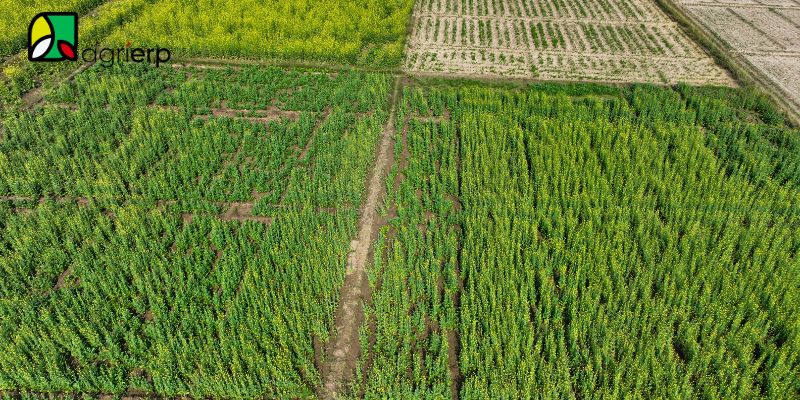
Effective crop protection is a data problem as much as an agronomic one. The best-designed protection program delivers inconsistent results if scouting observations aren’t tracked, spray timing isn’t recorded, variety performance isn’t compared across seasons, and input costs aren’t allocated accurately to each crop enterprise.
AgriERP’s crop management tools give farm operators a centralized system to:
- Track field-level crop health observations alongside input applications, weather data, and yield outcomes — connecting cause and effect across seasons.
- Record and analyze variety performance by field and disease pressure, building the data foundation for smarter variety selection decisions.
- Document all IPM activities — scouting results, economic threshold decisions, spray applications, and biological control deployments — in a searchable, field-linked record.
- Monitor input costs by crop and field to understand the true cost of your crop protection program and identify where efficiency gains are available.
For farms managing diverse farm types and crop enterprises, the ability to track crop protection data consistently across the operation — and analyze it through AgriERP’s agriculture analytics solution — is what turns a collection of good practices into a systematic, improving protection program.
Conclusion
What farmers can do to protect their crops comes down to building multiple overlapping layers of defense — healthy soil, resistant varieties, smart rotation, biological controls, disciplined monitoring, and responsive management — rather than relying on any single intervention. Each layer reinforces the others, and the system becomes more resilient with every season of data and refinement.
AgriERP’s farm operations and crop management platform gives farms the operational infrastructure to manage that complexity consistently — tracking, analyzing, and improving crop protection decisions across every field and every season.