The ERP Solution for the Year” 2025 in Agtech Breakthrough Awards 2025


Do you look at your fresh produce and hope that it reaches the consumers as soon as possible and in the best possible condition?
This is only possible through the best and most efficient logistics, and logistics can be efficient only with the help of a solid logistics software. But what is logistics software in agriculture? And how does it help farmers and agribusinesses?
Logistics software in agriculture refers to all the digital tools that help you manage the movement of your farm’s goods, from seeds and fertilizers to harvested crops. It is the jugular vein of the agricultural supply chain.
And the supply chain management software makes sure that the logistics management of your farm is always efficient and timely. By using agriculture logistics solutions, farmers can plan optimal routes, track inventory, and monitor deliveries, making the entire process smooth and transparent.
For example, a solid solution such as AgriERP offers logistics management tools for farmers and consolidates multiple aspects of the supply chain for agribusiness. Hence, empowering farmers to streamline their operations and boost productivity.
Challenges in Agricultural Logistics
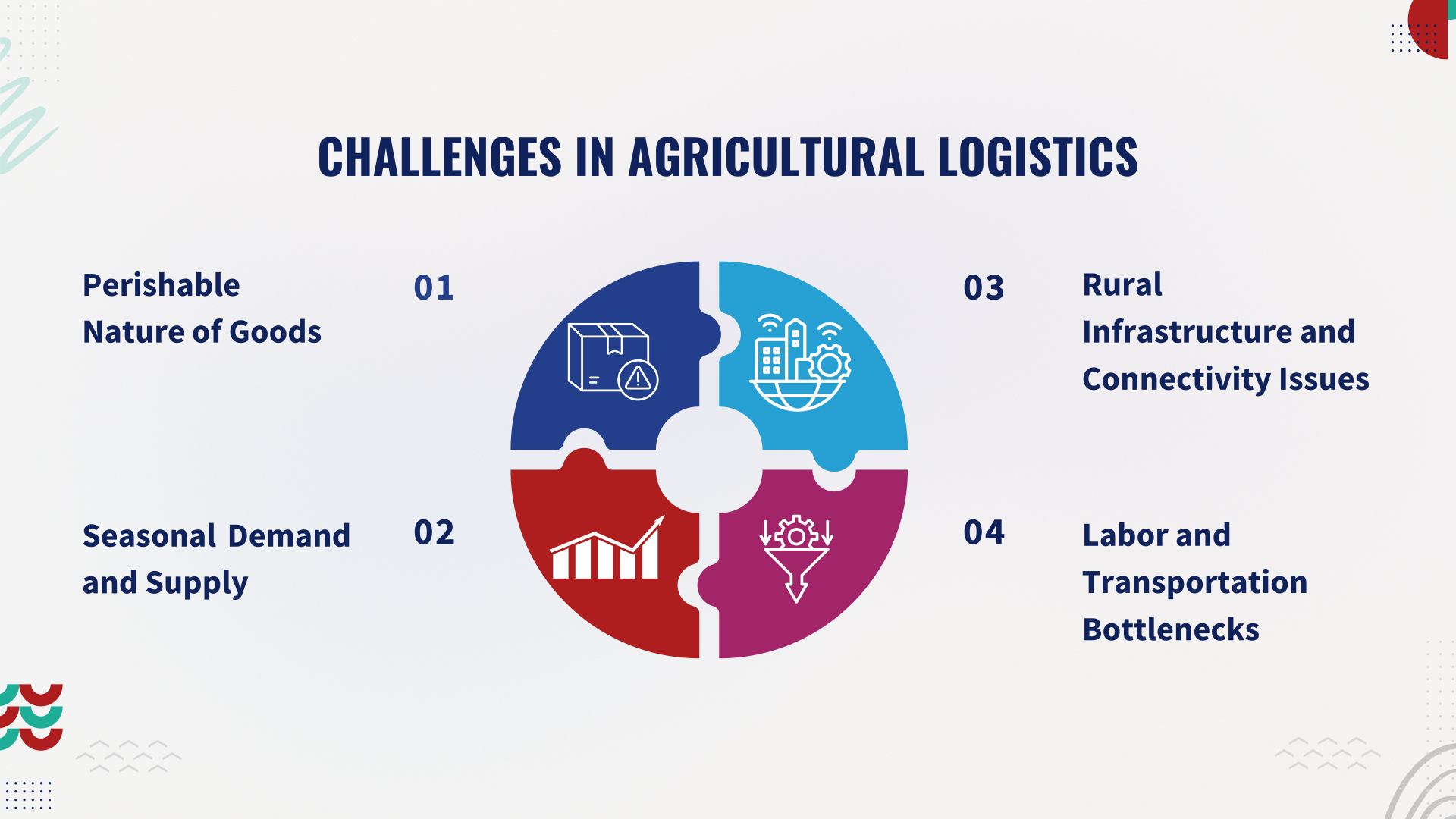 Agriculture is all about the right timing; all inputs and outputs must be managed efficiently for a great output. However, managing logistics in agriculture comes with many challenges, and understanding these can help in choosing the right logistics software in agriculture.
Perishable Nature of Goods
There are perishable goods such as fresh produce, dairy, and other agricultural products. The slightest delay in transportation can result in spoilage and financial losses. Effective logistics software in agriculture lets you monitor and manage these highly time-sensitive deliveries.
Seasonal Demand and Supply
Agricultural products usually have seasonal peaks. This variation in demand makes planning and forecasting challenging. Agricultural supply chain management software can evaluate past data and predict demand. This way, the supply can be adjusted accordingly.
Rural Infrastructure and Connectivity Issues
Many farms are located in remote areas with poor infrastructure. This inaccessibility can result in delays in transportation and higher costs. Farm logistics management tools can help you chalk out the most efficient routes, even in challenging areas.
Labor and Transportation Bottlenecks
Timely deliveries can also be affected by shortages of means of transport and skilled labor. But these problems can be minimized by using agricultural logistics solutions that automate scheduling and resource allocation.
Core Features of Agriculture Logistics Software
Modern logistics software in agriculture comes with various features to overcome the challenges discussed above. Let us discuss these:
Route Optimization
Efficient route planning guarantees timely deliveries and also cuts down on fuel costs. Logistics software for farmers uses smart algorithms to determine the best routes, taking into account factors such as traffic and road conditions.
Inventory & Storage Tracking
It is important to keep track of your inventory levels and storage conditions. Agricultural supply chain management software provides real-time data regarding stock levels and helps you avoid overstocking or shortages.
Real-Time Fleet Management
It is easier to manage schedules and prevent delays when the location and status of delivery vehicles are tracked. Farm logistics management tools provide real-time tracking features for better control.
Integration with Farm Management or ERP Systems
Integrating logistics software with your current farm management systems will help your data flow seamlessly. This integration also helps in coordinating various operations, from planting to delivery.
Cold Chain and Temperature Monitoring
In case you are handling perishable goods, then maintaining the right temperature during transportation is the factor that directly impacts the quality of your products. Agriculture logistics solutions are embedded with features to monitor and control temperature and guarantee product quality.
Order Fulfillment and Traceability
Tracking orders from placement to delivery warrants transparency and results in customer satisfaction. Supply chain software for agribusiness provides you with detailed logs for traceability and accountability.
Benefits of Using Logistics Software in Agriculture
Implementing logistics software in agriculture has a myriad of advantages that boost efficiency and profitability. Here are a few:
Reduced Spoilage and Waste
With the help of route optimization and monitoring of storage conditions, logistics software helps reduce the spoilage of products. This results in decreased waste and increased profits.
Improved Delivery Times and Cost Efficiency
Better planning and real-time tracking result in timely deliveries, reducing delays and the costs that come with them. This efficiency leads to better customer satisfaction and lower operational costs.
Enhanced Visibility Across the Supply Chain
Having a clear view of the entire supply chain lets you make better decisions. Agricultural supply chain management software provides dashboards and reports that let you visualize data and get complete insights.
Better Planning and Forecasting
Analyzing historical data helps in predicting future trends. Logistics software for farmers uses this data to effectively plan resources and schedules.
Regulatory Compliance and Documentation Automation
The agricultural industry has to comply with strict regulations. Logistics software automates the documentation and helps you comply by requiring minimal manual effort.
Future of Logistics in Agriculture
The agricultural sector is changing quickly, and it is racing forward due to technological advancements.
Role of AI, Drones, and Autonomous Vehicles
Artificial Intelligence (AI) can analyze massive amounts of data and optimize logistics. Drones and autonomous vehicles can let you monitor crops and deliver goods in a timely manner. Hence, minimizing reliance on manual labor.
Predictive Logistics Using Weather and Demand Forecasting
By analyzing weather patterns and market demand, logistics software can predict possible disruptions and alter the plans, hence leading to smooth operations.
Blockchain for Traceability
Blockchain technology provides a safe and secure way to record transactions. By maintaining an unalterable transaction record, they give you complete transparency and traceability in the supply chain. This can boost trust among both consumers and stakeholders.
Conclusion
For establishing a strong and uninterrupted supply chain and smooth operations, it is a must to understand what logistics software in agriculture is, it is the lifeline of your farm. By overcoming challenges of perishable goods, seasonal demand, and infrastructure issues, logistics software in agriculture plays the main role in making your farm operations smooth. Features such as route optimization, inventory tracking, and real-time fleet management boost efficiency and minimize waste. In addition, integrating these tools with your current software systems gives you a complete approach towards farm logistics management, and the benefits are clear: reduced spoilage, improved delivery times, enhanced visibility, better planning, and easy compliance with regulations. As the agricultural sector changes rapidly, adopting agricultural logistics solutions is not just beneficial but rather necessary.
If we look ahead, the future of logistics in agriculture is bright. New technologies like AI, drones, and blockchain are transforming the way we manage agricultural supply chains. Predictive analytics will help in proactive decision-making, while blockchain will foster transparency and traceability. For farmers and agribusinesses that want to stay proactive, adopting advanced logistics software for farmers is a smart decision. Smart solutions ike AgriERP, offer solid supply chain management modules for agribusiness. It integrates various functionalities to support modern farming needs. According to a report by the World Economic Forum, integrating technologies in agriculture can increase global food production by up to 70% by 2050. Embracing these technologies today will pave the way for a more efficient and sustainable agricultural future tomorrow!