The ERP Solution for the Year” 2025 in Agtech Breakthrough Awards 2025


In today’s food industry, inefficiencies aren’t just frustrating, they’re costly. Supply chain management (SCM) is the backbone of the food industry, connecting every stage from seed and fertilizer sourcing to processing, packaging, distribution, and retail.
The stakes are huge. According to the USDA ERS, the U.S. food system contributes $1.537 trillion to GDP and supports over 22 million jobs.
Yet challenges persist. ReFED’s 2024 report found that 31% of the U.S. food supply goes to waste, a staggering loss of revenue, resources, and environmental impact. At the same time, recalls cost businesses an average of $10 million each, not counting lawsuits and reputational damage.
Effective supply chain management solves these problems. It cuts waste, enhances margins, ensures safety, and keeps businesses competitive in a transparent, sustainability-driven market. SCM isn’t just about logistics; it’s about integrating resources, processes, and data to move food efficiently and safely from farm to fork.
With the right technology, like ERP systems, sensors, and predictive analytics, companies can minimize waste, avoid delays, and stay compliant.
Reasons Why Supply Chain Management Is Important
Here’s why food industry supply chain management is more than just logistics:
- SCM helps you forecast demand, manage inventory smarter, and trim spoilage, keeping more money in your pocket.
- You maintain strict control over safety, quality, and traceability so consumers trust you and you avoid recalls or reputation damage.
- SCM simplifies audits, record-keeping, and traceability, so you can easily meet food safety regulations and show where everything came from.
- With real-time visibility, like knowing where food is at any moment, you can offer fast delivery, transparency, and adaptability that today’s customers expect.
Core Components of Food Supply Chain Management
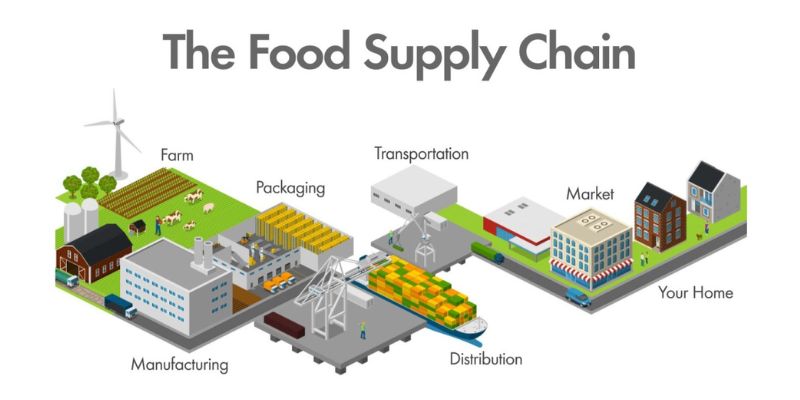
Supply chain management for the food industry isn’t just about trucks and warehouses, it’s about coordinating every stage so you protect margins, reduce waste, and build consumer trust. From inputs in the ground to the final retail shelf, each step has a direct impact on profitability.
Here’s a breakdown of the core components and why they matter.
1. Farm Production and Inputs
The first stage covers crop planning, seed and livestock sourcing, soil preparation, fertilization, irrigation, and labor management. Inputs must arrive on time and in the correct quantities. According to USDA NASS, farms account for 85% of operations, but only 14% of the value of agricultural production, making coordination challenging.
Many farms adopt Digital tools, like sensors, drones, and data analytics, to improve input use, schedule harvests more accurately, and plan fertilizer applications. The Farm Management system integrates with these devices to capture field data, manage seed inventory, and estimate yields.
2. Harvesting and Post‑Harvest Handling
Harvest timing is required to maximize yield and quality. Scheduling depends on crop maturity, weather, and labor availability, while post‑harvest handling includes washing, grading, and packing.
Produce is among the most commonly wasted categories; much of it is never harvested or spoils before it reaches consumers. ERP systems help coordinate harvest schedules, allocate labor and equipment, record quality tests, and manage temperature‑controlled storage. By tracking harvest batches and linking them to field records, you improve traceability and reduce waste.
3. Processing & Packaging
After harvesting, raw commodities are transformed into finished goods. This stage includes sorting, cleaning, slaughtering, milling, cooking, bottling, canning, and labeling. Processing must comply with food safety regimes. Packaging not only protects products but also provides traceability data (e.g., lot numbers, expiration dates).
ERP automates safety checks at each step and automatically generates compliance documentation. It also offers recipe/bill‑of‑material management, allergen tracking, and dynamic labeling so that every product leaving your facility is traceable back to its source.
4. Distribution and Logistics
Once products are packaged, they move through wholesalers, distributors, and retailers. Transportation may involve trucks, rail, ships, or air. Managing distribution requires route planning, load consolidation, and temperature control (e.g., refrigerated trailers).
ERP connects with fleet‑management systems to schedule deliveries, monitor vehicle temperatures, track drivers, and provide live ETAs. It also supports export documentation, ensuring that shipments meet international regulations and customs requirements.
5. Retail and Consumer Delivery
The final stage includes supermarkets, wholesalers, restaurants, and direct‑to‑consumer channels. The explosion of online grocery adds new complexity. Retailers must manage inventory across physical stores and fulfillment centers, offer accurate product information, and deliver orders within hours.
Farm Management system integrates POS data, online platforms, and warehouse systems to provide real‑time visibility. It helps assign orders to the optimal fulfillment location, coordinate last‑mile delivery, and record consumer feedback. By analyzing sales patterns, you can forecast demand more accurately and reduce stockouts or overproduction.
Challenges in Agricultural Food Supply Chains
1. Seasonality and Crop Yield Uncertainty
The weather is unpredictable. Droughts, floods, heat waves, and late frosts all can shift yields dramatically from year to year. Even with good seed and inputs, you might harvest 20–30% less in a bad season. Some crops respond poorly to small variances in rainfall or temperature.
2. Perishability and Waste
Food safety and sustainability teams are especially aware of this challenge. In the U.S., 30–40% of the food supply is lost or wasted every year. That’s not just a sustainability issue; it’s millions in lost revenue, extra landfill fees, and higher carbon emissions that brands increasingly get called out for.
3. Fragmented smallholder farms vs. large agribusiness.
Executives managing procurement often juggle hundreds of suppliers. With 86% of U.S. farms considered “small” yet responsible for only 17% of production value, ensuring consistency and quality across so many smallholders is costly. The lack of standardized processes makes data collection, traceability, and forecasting harder.
4. Compliance with food safety regulations.
Manufacturers and distributors face strict requirements under HACCP, FSMA, organic standards, and GlobalGAP. Non-compliance leads to recalls, fines, or worse. The average direct cost of a recall is about $10 million, not counting lawsuits or lost sales. Traceability is the backbone, you must know where inputs came from, how products were processed, and where finished goods were shipped.
5. Climate Change, Water Scarcity, and Sustainability
Climate change introduces new risks, from extreme weather to changing pest patterns. Droughts, floods, and heat stress reduce available water and jeopardize harvests. Transporting food worldwide produces about 20% of food-system emissions, and the food system as a whole is responsible for nearly one-third of global greenhouse gases. Regulators and consumers expect measurable reductions.
The Role of ERP in the Food Supply Chain
ERP (Enterprise Resource Planning) systems act as the command center for your entire food supply chain, giving you one clear view of everything from field operations to customer delivery. Instead of reacting to delays or errors after they happen, ERP lets you predict issues before they impact production or sales.
It connects departments, suppliers, and distributors so everyone works from the same data, improving coordination and decision-making in real time. You can easily monitor supplier performance, manage contracts, and track costs across your network.
AgriERP, designed specifically for agriculture and food businesses, helps you turn complex supply chain data into actionable insights. With AgriERP, you gain full visibility, automate repetitive tasks, and build a more agile, transparent, and profitable food operation.
Conclusion
In 2025, it’s not enough to simply move food from farm to shelf, you need systems that optimize every link in the supply chain. Leading operations reduce waste, ensure compliance, and protect margins by managing supply chains with real-time data instead of guesswork.
AgriERP gives you complete visibility across farming, processing, logistics, and retail. With true performance metrics at your fingertips, you can stop reacting to problems and start making proactive decisions that strengthen profitability.
Maximize your supply chain’s efficiency with systems built for transparency, safety, and growth. Let us help you streamline smarter, deliver fresher, and earn more.