The ERP Solution for the Year” 2025 in Agtech Breakthrough Awards 2025


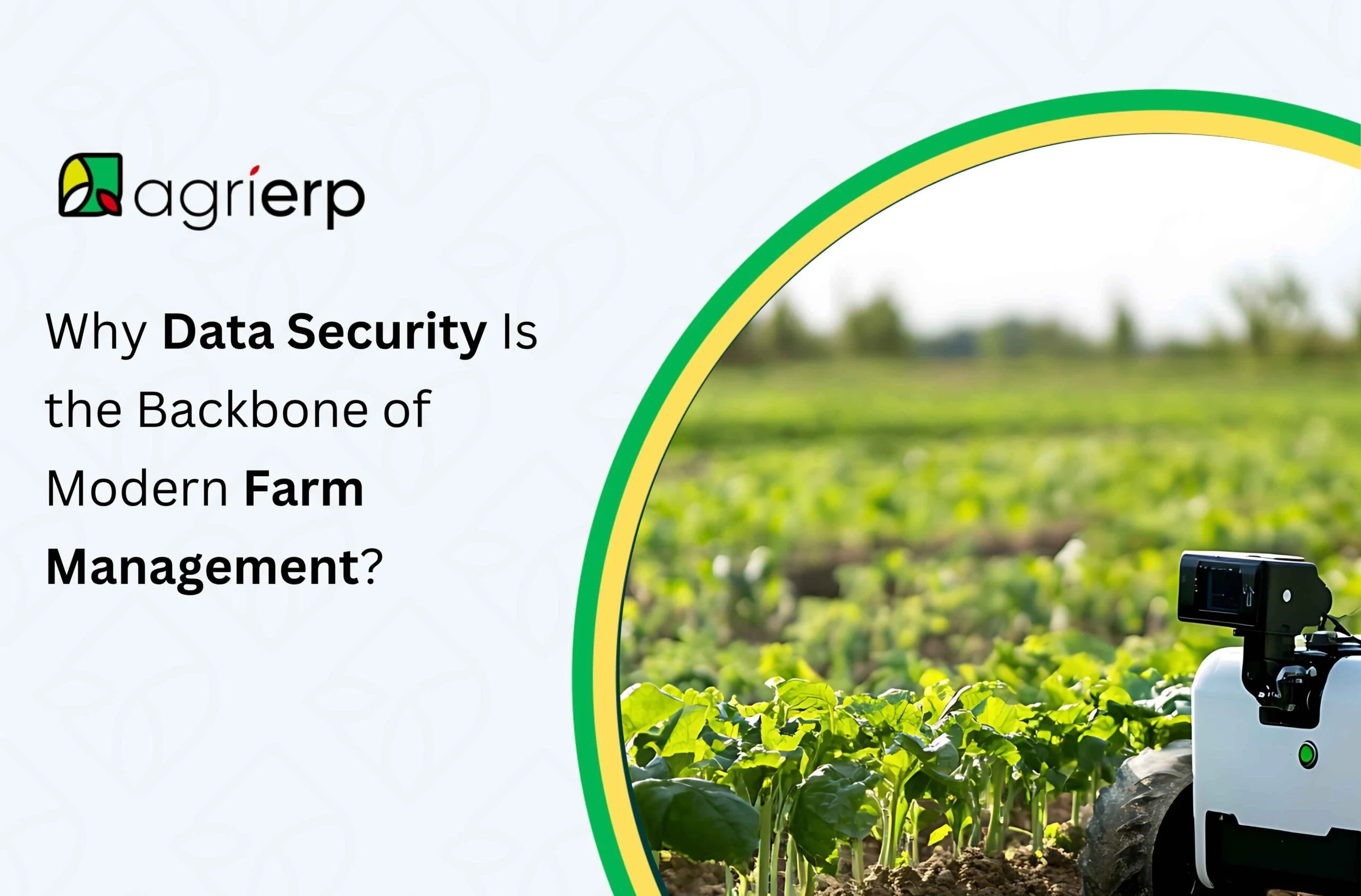
Have you ever wondered what would happen if someone hacked into your farm’s control systems? Imagine waking up to find your tractor disabled or irrigation shut off by a faceless attacker demanding ransom. This may sound far-fetched, but cybercriminals are increasingly targeting farms of all sizes.
In fact, one industry report found global cyberattacks on agriculture doubled (101% increase) in just one year. At the same time, modern farms generate massive volumes of data, IBM estimates the average farm will produce about 4 million data points per day by 2036, from soil moisture readings to yield forecasts.
All that data drives today’s precision farming, but it also represents a gold mine for hackers. In short, your farm’s data is its lifeblood, and protecting it underpins every decision you make.
This blog will explain why data security matters now, outline the key threats to your farm’s data, offer practical protection strategies, and highlight lessons from leading AgTech companies that prioritize security.
Modern Farms Are Data-Driven – Are You Protecting Your Data?
Today’s agriculture is as much about information as it is about crops. You likely use GPS-guided tractors, smart sensors, and farm-management software to boost yields and efficiency. These tools rely on many types of data, from crop yields and soil health to weather and livestock metrics, as well as financial records and employee information.
For example, one USDA survey found 70% of large crop farms now use auto-steering GPS systems and 68% use yield monitors. Digital tools like tablets and cloud software let you manage your farm remotely. But if that data pipeline isn’t secure, unauthorized users could seize control of your farm.
Your data lets you optimize planting, irrigation, and sales. But more data means more targets. Every sensor, camera, or connected piece of equipment adds a potential entry point. If hackers alter or erase your data, it can lead to disastrous outcomes, wrong planting schedules, spoiled harvests, or even equipment failure. In other words, data security isn’t just IT jargon, it’s central to keeping your farm running.
Common Vulnerabilities on the Farm
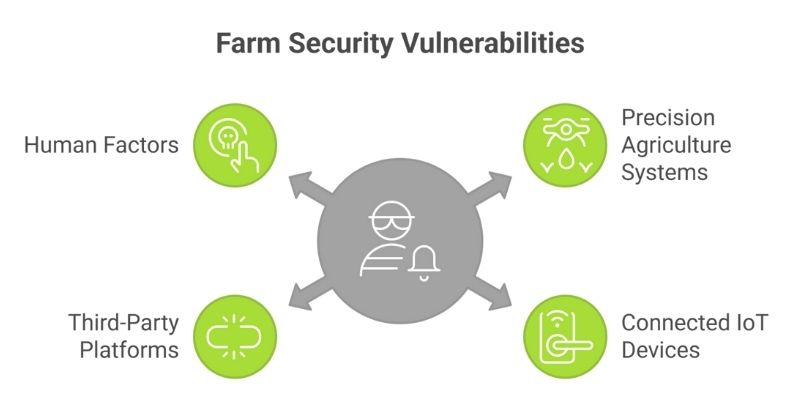
Modern farms use cutting-edge tech, but that also introduces new weak spots. Key vulnerabilities include:
- Precision Agriculture Systems: GPS-guided tractors, drones, and automated sprayers greatly boost yields, but they generate vast data that can be tampered with. In practice, a breach could poison your crops by falsifying field maps or remotely disabling equipment.
- Connected IoT Devices: Soil sensors, weather stations, cameras, and livestock trackers all help you monitor conditions in real time. Unfortunately, many of these devices lack strong security protocols. A hacker who finds a default password on a smart irrigation system (as is common) could shut off water to fields or use that device as a backdoor into your network.
- Third-Party Platforms: If you use farm-management software, grain elevators, or co-ops for data services, any one of those vendors can become a weak link. Malicious actors often exploit under-secured partners to reach larger companies.
- Human Factors: Farmers and staff can inadvertently invite trouble. A convincing fake email or text can trick even seasoned operators. Phishing messages, fraudulent invoices, and weak password reuse are leading causes of breaches on farms.
Each of these gaps shows why data security measures must go hand-in-hand with farm operations. Failing to secure one part can undermine the rest of your management system.
What is the Business Impact of Data Breaches in Agriculture?
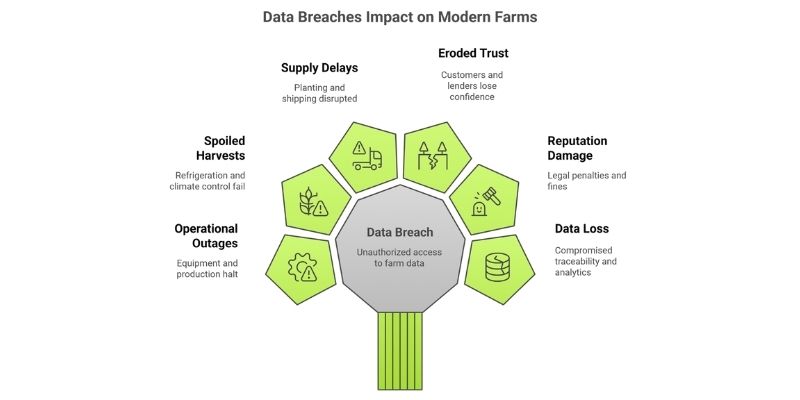
What happens if security fails? The impacts can be devastating. Even a brief outage can stop machines, ruin perishable products, and undermine trust. Beyond immediate losses, breaches damage your business’s reputation and bottom line.
- Operational Outages: Even brief cyberattacks can freeze farm equipment and production systems. Ransomware or malware may halt machinery, disable refrigeration or sorting, and force shutdowns of entire processing lines. Such downtime stops farm operations and blocks deliveries, immediately cutting off revenue.
- Spoiled Harvests: When refrigeration or climate-control fails (even for a short time), perishable foods quickly spoil. For example, a momentary data outage can cause cooling systems to stop, ruining harvested crops or dairy products. This waste not only means lost inventory, but also potential food safety hazards.
- Supply Chain Delays: Farms rely on precise timing (harvest windows, cold-chain logistics). Attacks that delay planting or shipping can create shortages and ripple effects downstream. Disrupted systems may delay shipments or cancel deliveries, leading to product backlogs and even price spikes in the market.
- Eroded Trust: Breaches shatter confidence among customers, suppliers, and lenders in a farm’s reliability. News of a data leak makes buyers wary of food safety, and business partners are less willing to extend credit. Cyber incidents can damage consumer trust in food safety and the supply chain’s reliability.
- Reputation & Liability: Beyond immediate losses, breaches harm a farm’s reputation and can trigger legal penalties. Companies face ransom demands and recovery costs, plus fines for any regulatory or privacy violations. In agriculture, these might include food-safety infractions or data-privacy breaches. Data security attacks can lead to contractual penalties and expensive compliance fallout.
- Data Integrity Loss: Modern farming depends on accurate data (for yield estimates, equipment schedules, market contracts, etc.). If attackers steal or corrupt this data (compromising traceability and analytics), the entire decision-making foundation collapses. In other words, a data breach can render your farm’s information untrustworthy, undermining everything from crop plans to sales agreements.
Protecting Your Farm’s Data: Best Practices
Keeping your data safe doesn’t have to be prohibitively expensive or complicated. The most effective defenses often combine common sense with a few key steps:
- Use Strong Authentication: Require multi-factor authentication (MFA) on all critical systems. Even if a hacker steals a password, MFA (a second code on your phone, fingerprint, etc.) makes unauthorized access “nearly impossible. Passwords alone aren’t enough, and MFA is now widely used to safeguard farm logins.
- Encrypt Sensitive Data: Treat your data like valuables: use encryption on all financial records, farm plans, and communications. Encryption is like a digital padlock, it scrambles information so outsiders can’t read it even if intercepted. For example, encrypt emails with tax documents or password-protect spreadsheets of yield data.
- Segment Networks: Keep your farm control systems (equipment and sensors) on separate networks from your business systems (office computers, accounting, etc.). That way, a breach in one area (say, an IoT device) can’t easily spread to your payroll or banking.
- Regular Updates and Backups: Just as you maintain machinery, keep software and firmware up to date. Patch known security flaws promptly. Also, maintain off-site backups of your data. If ransomware or hardware failure strikes, you can restore operations quickly. In other words, plan for recovery as well as prevention.
- Train Your Team: Educate everyone on common threats: how to spot phishing emails, avoid suspicious USB drives, and follow good password practices. Human error is a leading cause of attacks, so awareness and discipline are crucial.
- Vendor Vigilance: Work only with providers, equipment makers, software companies, and co-ops that follow strong security standards. Ask about their data protection and privacy policies. Require that any third party handling your data use encryption and MFA.
By following these practices, you make your farm a much harder target. If an incident does occur, act fast, isolate affected systems, change passwords, and notify your bank or local authorities immediately.
Conclusion
In the age of smart farming, data security is not optional, it’s the backbone of your operation. Every yield prediction, machinery setting, and financial transaction depends on reliable data. Protecting that data ensures your farm runs smoothly, your investments are safe, and your food supply chain stays strong. For help unifying secure data management with agriculture expertise, consider an all-in-one farm management solution AgriERP.
We understand that your farm’s success depends on both innovation and safety. AgriERP is purposefully built on Microsoft Azure Cloud Platform, providing a multi-layered security at every level. Don’t wait for a breach to learn the hard way. Take action now Contact AgriERP to learn how we can help protect your farm data early and keep you in control.