The ERP Solution for the Year” 2025 in Agtech Breakthrough Awards 2025


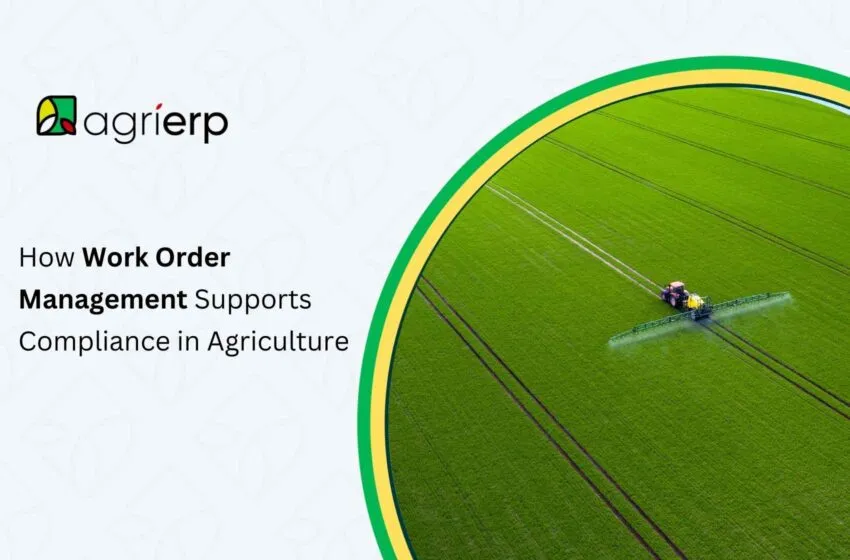
While running your daily farm operations, have you struggled to keep your farm in compliance with all the numerous rules, informed and unannounced inspections, and endless paperwork? You are not alone, and we understand that in agriculture, compliance is not just about ticking boxes; it is about protecting your farm, your workers, and, most importantly, your customers.
And this is where work order management for farm compliance plays a huge role. If you organize all your tasks, track activities, and maintain accurate and up-to-date records, you can meet these strict regulations without losing your focus on production.
Many farms still struggle with compliance because they still rely on manual methods or scattered notes and spreadsheets. However, we are living in a digital era that has transformed operations and eased our lives.
A digital farm management solution, such as AgriERP, can alleviate the stress of this process by consolidating everything in one place. However, before we delve deeper, let us first grasp the concept of compliance in agriculture and understand why work order management is so crucial.
Understanding Compliance in Agriculture
By running a farm today, you must already be aware of how demanding the regulatory landscape can be. Compliance in agriculture means following a set of very strict rules designed to guarantee food safety, protect the environment, and also adhere to fair labor practices.
There are several key areas you need to be aware of:
- Food Safety: Programs like GAP (Good Agricultural Practices), HACCP (Hazard Analysis Critical Control Point), and FSMA (Food Safety Modernization Act) have set strict guidelines for the production, handling, and storage of food.
- Environmental Regulations: Environmental regulations set pesticide usage limits, water management rules, and conservation practices to be applied. Not meeting these regulations can lead to fines or loss of certification.
- Labor and Worker Safety Laws: OSHA is the Occupational Safety and Health Administration, and state-level laws mandate farms to provide safe working conditions and proper training.
So what is the challenge then? Well, the problem is that these rules are not static; rather, they are very dynamic and change according to market demands, environmental needs, and government policy.
If you miss a step, such as forgetting to document your pesticide use, it can put your entire operation at risk. This is why it is very important to have a reliable farm work order management system.
What is Work Order Management in Agriculture?

You can think of work order management in agriculture as the backbone of all your farm organization. It is a structured approach to assigning, tracking, and completing tasks, covering everything from planting, irrigation, pest control, and equipment servicing.
A work order includes details like the following:
- The task to be completed
- Specifying who is responsible for this task
- The timeline for completion
- Any resources or materials that are required.
Although many farms are still using manual methods, such as paper checklists, the digital agriculture work order systems are far more efficient and reliable. With agricultural work order software, you can create, track, and store all records in one place; thus, it becomes easier to manage your farm compliance and respond quickly to audits.
How Work Order Management Supports Compliance?
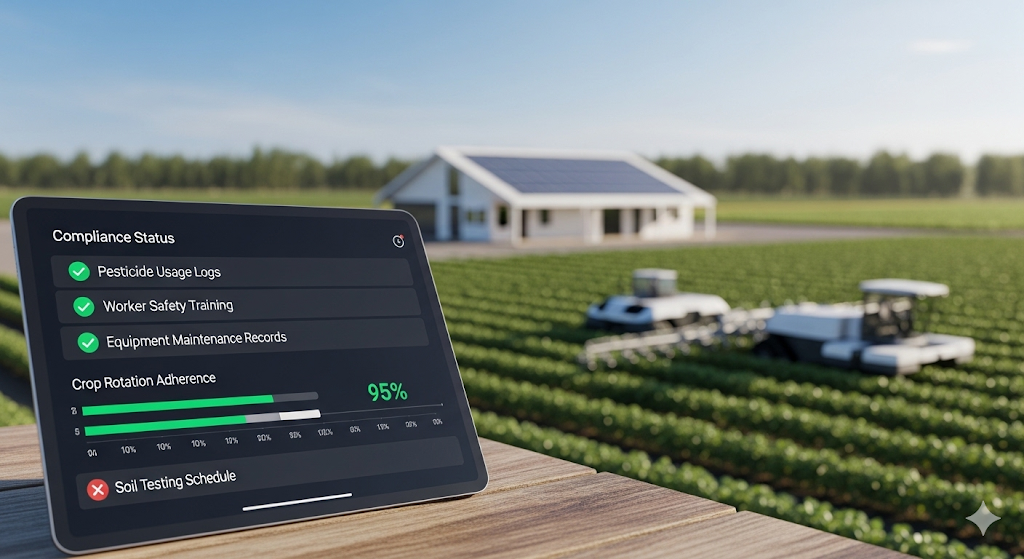
Now the big question: how does work order management support compliance? Well, farming is unpredictable. Many factors affect it, such as weather changes, unexpected pest outbreaks, and shifting market conditions. But compliance has no room for guesswork; regulators expect accurate and timely records. This is where work order management for farm compliance comes in handy.
1. Standardizing Farming Operations
Consistency is the key when it comes to compliance in agriculture. Work order management lets you create repeatable workflows that meet regulatory standards every time. For example:
- Pesticide application logs that include date, crop, chemical type, and operator.
- Irrigation schedules that match water-use permits.
By turning these into standardized work orders, you can reduce the risk of missing important steps and keep your operations audit-ready.
2. Accurate Record-Keeping
If a food safety inspector shows up unexpectedly tomorrow, will you be able to produce every record that he requests? With farm work order management benefits in place, you can. Digital systems store detailed records of every farm activity, making it easy to retrieve them during inspections or certification renewals.
This saves your time and, on top of this, builds credibility with buyers, who demand proof of compliance.
3. Tracking Chemical & Fertilizer Usage
It is important to track the chemical inputs. Overuse of chemicals can harm both the environment and mess up your compliance standing. Agriculture work order systems help you log exact quantities, dates, and the staff responsible for applications.
By tracking usage:
- You avoid exceeding legal limits.
- You protect your soil health.
- You can meet environmental regulations without any guesswork.
4. Worker Safety & Training Compliance
Worker safety is not optional; rather, it is the law. Agricultural regulations and compliance mandate farms to train their staff regarding the safety protocols, equipment use, and hazard awareness. With work order management, you can:
- Assign safety training as a mandatory work order.
- Track which employee has completed it and when.
- Maintain a permanent record for audits.
5. Equipment Maintenance & Safety Checks
If your machinery is faulty, it can lead to accidents and non-compliance. By using agricultural work order software, you can schedule preventive maintenance, log repairs, and keep safety checks up to date. This warrants that your equipment meets all the required safety standards year-round.
6. Audit-Ready Reporting
Time is precious when an auditor visits. Work order management enables you to instantly generate compliance reports and link your field activities to the exact metrics regulators require. This means no sifting through old folders or trying to remember who sprayed which field last month.
Conclusion
The market for Work Order Management System is projected to grow from USD 20.86 Billion in 2025 to USD 46.29 billion by 2034! This figure speaks volumes about its growing adoption. And how this is not just about avoiding penalties, but rather it is about running a more efficient and profitable farm.
So far, we have looked at how work order management for farm compliance can help you standardize your operations, maintain accurate and up-to-date records, track chemical usage, protect worker safety, keep equipment in the best shape, and be ready for any audit at any time. All of these steps make compliance smoother for you and your farm more productive.
Now imagine having one solid platform that brings all these elements together, your tasks, records, chemical logs, training schedules, and maintenance reports, without the mess of spreadsheets or paper. That is where a system like AgriERP can make a huge difference for your farm.
By adopting these practices within a digital solution, you can focus more on growing your farm and less on getting into endless paperwork. Then, compliance stops being a headache and becomes a natural part of your workflow. So let AgriERP handle it for you and begin your journey to success today!