The ERP Solution for the Year” 2025 in Agtech Breakthrough Awards 2025


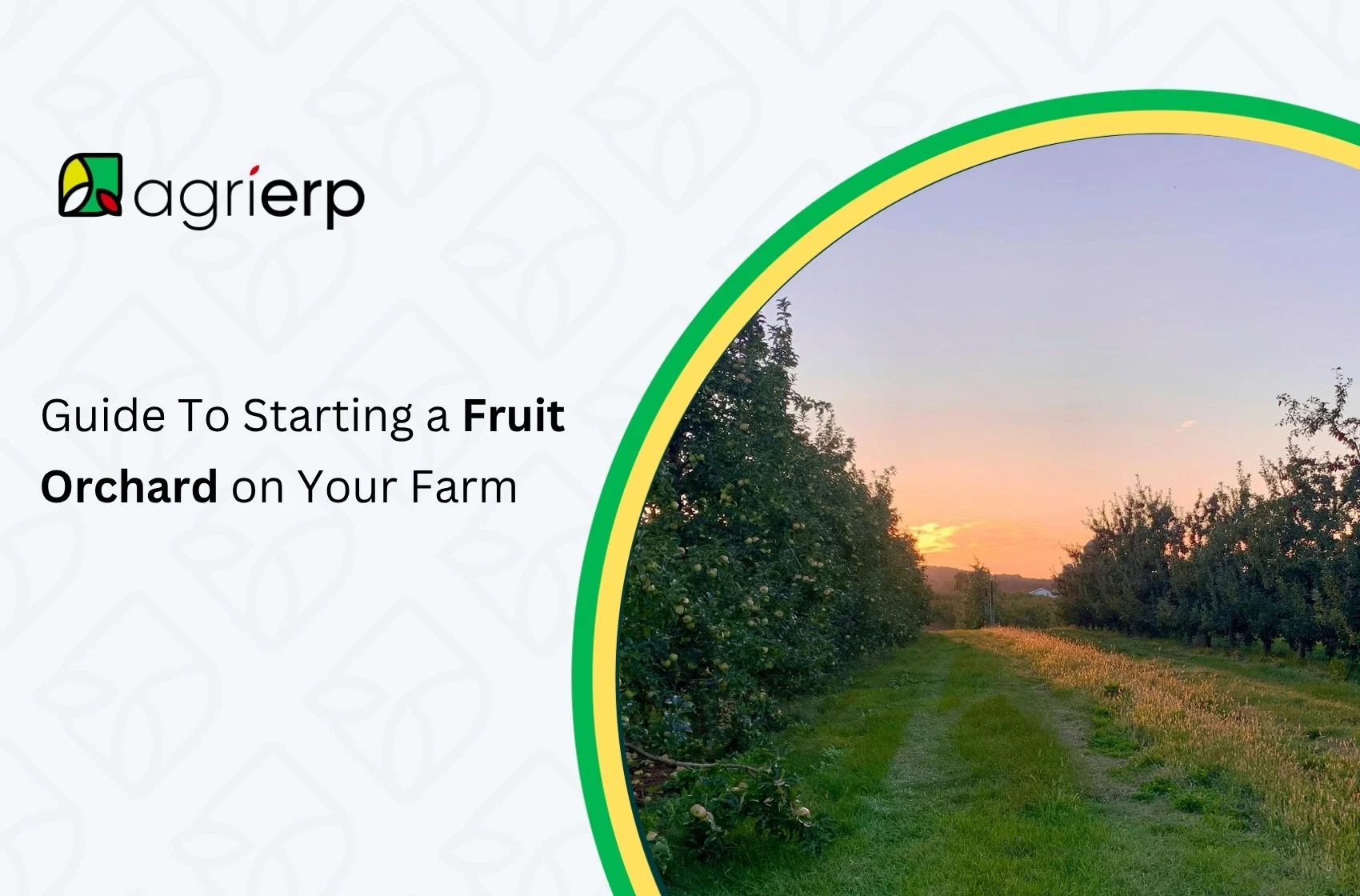
Adding a fruit orchard to your farming operation is one of the most significant long-term investments you can make. Unlike annual crops, orchard farming locks you into decisions — species selection, site layout, soil preparation, irrigation — that will shape productivity for decades. Get them right, and an orchard becomes one of the most profitable and resilient enterprises on your farm. Get them wrong, and the costs compound for years before you can course-correct.
This post covers the foundational decisions every farm operator needs to work through before planting: from site assessment and orchard soil preparation to orchard management systems, labor, sustainability, and the technology that keeps it all running efficiently.
What Is an Orchard Farm?
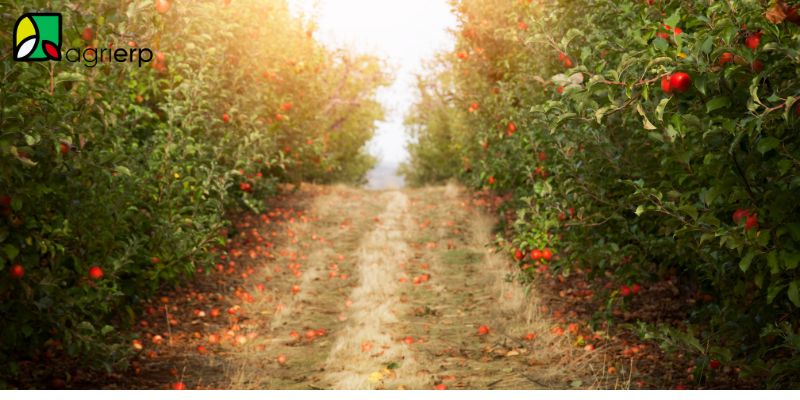
What is an orchard farm? At its simplest, it’s a planted area dedicated to growing tree or shrub fruits — apples, pears, peaches, cherries, citrus, almonds, walnuts, and others — managed as a long-term productive system rather than an annual crop. But orchard farming in a commercial context is much more than planting trees. It’s a multi-decade enterprise requiring coordinated management of soil health, water, nutrition, pest and disease pressure, labor, and post-harvest handling — all while navigating the biological reality that most orchards take three to seven years to reach full production.
For farm operators weighing whether to establish an orchard plantation, the key question isn’t just “will this crop grow here?” It’s “can we manage this system profitably over a 20–30 year horizon, and do we have the operational infrastructure to support it?” Understanding your farm type and its specific management requirements is the right starting point for that conversation.
Choosing the Right Site and Species
Every successful orchard plantation starts with an honest site assessment. The species you grow must match your climate, and the site you plant must support the cultural requirements of those species across their full productive life.
Climate considerations for orchards are the starting point. Chill hours — the number of hours below 45°F that deciduous fruit trees require to break dormancy properly — vary dramatically by species and variety. Planting a high-chill apple variety in a warm climate, or a low-chill peach in a region with unpredictable late frosts, sets up yield problems that no amount of management can fully overcome. Understanding your local frost dates, heat accumulation patterns, and the growing risks tied to climate variability and extreme weather events is foundational to species and variety selection.
Beyond climate, evaluate:
- Slope and aspect: South-facing slopes warm earlier in spring but may increase frost risk at bloom. North-facing slopes are cooler but can reduce heat-related stress in warm climates. Good air drainage reduces frost pocket risk.
- Soil depth and drainage: Most fruit trees require at least 3–4 feet of well-drained soil. Shallow or poorly drained soils restrict rooting depth, increase waterlogging risk, and predispose trees to root diseases.
- Water availability: Orchards are permanent, high-value crops. Reliable water access — whether from surface rights, groundwater, or stored supply — is non-negotiable for commercial production.
Orchard Soil Preparation
Orchard soil preparation is the single most important pre-plant investment you will make, because once trees are in the ground, your ability to correct soil problems is severely limited.
Start with comprehensive soil testing — not just basic nutrient analysis but pH, organic matter, soil texture, water-holding capacity, and ideally a biological assessment to understand the microbial community you’re starting with. This data feeds directly into your pre-plant amendment program and your long-term soil management strategy.
Key preparation steps include:
- pH correction: Most tree fruits perform best in soils with pH 6.0–6.8. Lime applications to raise pH or sulfur to lower it need to be incorporated well before planting, as surface applications are slow to change subsoil chemistry.
- Organic matter building: Incorporating compost, cover crop residues, or other organic amendments before planting builds the soil biological activity that drives long-term nutrition and structure. This is especially critical on sandy or degraded soils.
- Subsoil tillage: On compacted sites, deep ripping before planting breaks through hardpan layers that would otherwise restrict root development and drainage.
- Cover crop establishment: Planting a diverse cover crop mix in the year before orchard establishment builds organic matter, suppresses weeds, and adds biological diversity to the system — setting the stage for regenerative soil health practices from day one.
Irrigation Systems for Orchards
Establishing the right irrigation systems for orchards before planting — rather than retrofitting after trees are in the ground — is far more cost-effective and allows the system to be designed around the orchard’s long-term needs.
Drip and micro-sprinkler systems are the dominant approaches in commercial orchard farming. Drip irrigation delivers water directly to the root zone with minimal evaporation loss, supports fertigation, and keeps the orchard floor dry — reducing fungal disease pressure. Micro-sprinklers provide wider soil wetting patterns suited to coarser soils and can double as frost protection systems in frost-prone regions.
System design should account for:
- Water source capacity and pressure: Flow rates must meet peak summer demand across the full planted area.
- Filtration: Drip systems require clean, filtered water to prevent emitter clogging — a significant maintenance issue in orchards using surface water.
- Fertigation capability: Integrating fertilizer injection from the start allows nutrient programs to be delivered efficiently through the irrigation system across the orchard’s life.
Effective water management in permanent orchards goes beyond hardware — it requires scheduling discipline, soil moisture monitoring, and season-long tracking of water use by block, which feeds directly into farm financial management and cost-of-production reporting.
Orchard Farming Techniques: Planting and Establishment
The planting design and training system you choose will define your orchard’s productivity potential, harvest efficiency, and long-term management requirements. These orchard farming techniques deserve careful thought before a single tree goes in the ground.
Tree density and rootstock selection are closely linked. High-density plantings on dwarfing rootstocks — common in modern apple, pear, and cherry systems — reach full production faster and allow mechanized harvesting aids, but require trellis infrastructure and more precise irrigation and nutrition management. Low-density plantings on vigorous rootstocks have lower establishment costs and are more forgiving of management variation, but take longer to reach commercial yields.
Training systems — from open-center and central leader to tall spindle and V-trellis configurations — affect light penetration, fruit quality, ease of pruning, and compatibility with mechanized equipment. The choice should be driven by your target market (fresh vs. processing), labor availability, and equipment investment capacity.
Orchard crop rotation considerations also apply at establishment — in sites previously planted to the same tree species, replant disease caused by soilborne pathogens and nematodes can severely limit new tree performance. Cover cropping with biofumigant species, fumigation, or extended fallow periods before replanting are the main management options.
Sustainable and Organic Orchard Management
Sustainable orchard practices are increasingly a commercial requirement, not just an ethical preference. Buyers across fresh and processed fruit markets are tightening sustainability expectations, and certification programs — organic, food safety, environmental — are becoming standard prerequisites for many supply chains.
Organic orchard management replaces synthetic pesticides and fertilizers with biological controls, approved mineral inputs, and cultural practices that support natural pest regulation. The transition to organic certification typically takes three years and requires careful planning of the nutrition and pest management programs that will sustain yields through and beyond the transition period.
Key elements of sustainable and organic orchard systems include:
- Integrated Pest Management (IPM): Monitoring-based pest management that prioritizes biological controls, pheromone disruption, and targeted interventions over calendar-based spray programs.
- Floor management: Maintaining diverse, managed cover crops in orchard midrows builds organic matter, supports beneficial insect habitat, and reduces erosion — core elements of soil health in regenerative agriculture systems.
- Reduced tillage: Minimizing soil disturbance in established orchards protects soil structure and the fungal networks that support tree nutrition.
Farms committed to sustainable agriculture can document these practices and their outcomes through AgriERP’s ESG and sustainability reporting tools — providing the evidence that buyers and supply chain partners increasingly require.
Orchard Labor Management
Orchard labor management is one of the most operationally complex dimensions of commercial orchard farming. Labor in orchards is highly seasonal, skill-differentiated, and tied to time-sensitive windows — pruning, thinning, and harvest cannot be delayed without direct yield or quality consequences.
Key labor planning considerations include:
- Seasonal peaks: Pruning, bloom-time frost protection, summer thinning, and harvest each create distinct labor demand spikes. Mapping these against your workforce capacity well in advance is essential.
- Skill requirements: Pruning and thinning require trained, experienced workers whose decisions directly affect next season’s crop load. Harvest labor is higher volume but more trainable.
- Piece-rate vs. hourly structures: Many orchard operations use piece-rate systems for harvest to align worker incentives with productivity. Tracking these accurately requires robust labor management systems that record productivity by worker, block, and operation.
- Housing and H-2A compliance: Operations relying on seasonal guest workers face significant administrative requirements around housing, transportation, and wage documentation that demand systematic record-keeping.
Orchard Yield Optimization
Orchard yield optimization is not a single intervention — it’s the ongoing result of coordinating nutrition, water, pest management, crop load, and post-harvest practices across every season of the orchard’s productive life.
The levers that most directly influence yield and fruit quality include:
- Crop load management: Thinning excess fruit in early summer concentrates resources into remaining fruit, improving size, color, and return bloom for the following season. Getting thinning timing and intensity right is one of the highest-skill decisions in orchard management.
- Nutrition programs: Leaf tissue testing through the season provides real-time insight into the orchard’s nutritional status, allowing targeted corrective applications rather than blanket programs.
- Canopy management: Annual pruning to maintain light penetration into the fruiting zone is fundamental to consistent color and quality across the tree canopy.
- Data-driven block management: Tracking yield, quality, and input costs by block — rather than across the whole orchard — reveals the performance variation that drives improvement decisions. Real-time field data and farm analytics platforms make this level of analysis operationally feasible.
AgriERP’s crop management and farm analytics tools support orchard operators in tracking all of these variables at the block level — connecting agronomic decisions to financial outcomes across seasons.
Conclusion
Orchard farming is a long-term commitment that rewards rigorous upfront planning and disciplined ongoing management. The decisions you make before a tree goes in the ground — site selection, orchard soil preparation, irrigation design, variety choice, training system — will shape your operation’s productivity and profitability for a generation.
From sustainable orchard practices and organic orchard management to orchard yield optimization and labor planning, every dimension of the enterprise benefits from systematic data capture, clear cost tracking, and season-over-season performance analysis.AgriERP gives orchard farm operations the crop management, labor tracking, and analytics tools to manage complexity at every stage — from establishment through peak production and beyond.