Data Analytics Solution of the Year” 2026 in Agtech Breakthrough Awards 2026


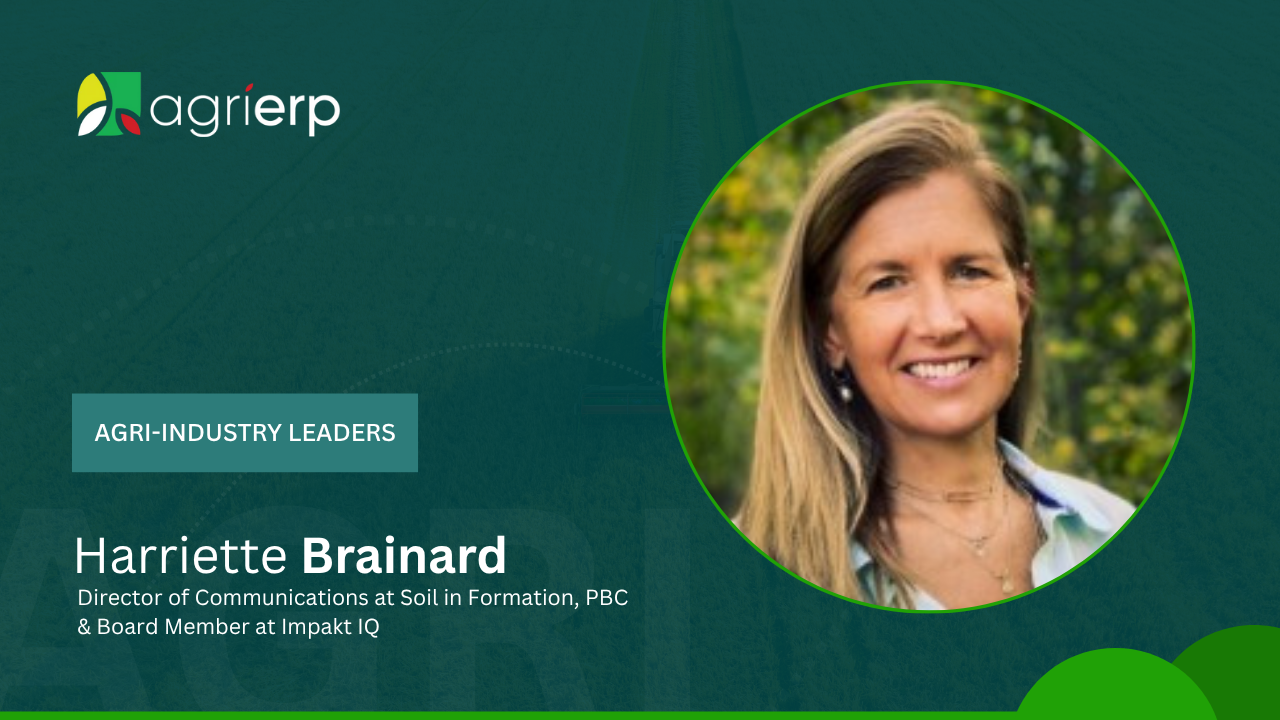
Real-time electrochemical soil sensors can measure nitrogen cycles, organic and inorganic carbon, and water retention continuously, replacing the outdated core soil samples farmers have relied on for decades, according to Harriette Brainard of Soil in Formation (SIF). In this AgTalks conversation she explains how the technology works in dry-soil conditions, why it matters for farmers in resource-limited regions, and how blockchain and AI extend its value.
Starting her career with a deep-rooted connection to farming in Pennsylvania, Harriette has always felt a strong connection to the land and its role in the food system. Growing up on farmland, Harriette developed a passion for helping farmers, focusing on creating a healthy environment and promoting sustainable farming practices.
She has always been driven by a desire to tackle the global challenges facing the agriculture industry, particularly around climate change, investment challenges, and the issues farmers face in a rapidly changing world.
After years working in food systems and education, she found her way to Soil in Formation, where she became the company’s first non-scientific employee. Joining the organization at its inception, she saw a unique opportunity to be part of the solution to the growing challenges faced by farmers globally.
AgriERP: What specific benefits does this offer to farmers in terms of improving their decision-making and sustainability practices?
Harriette Brainard:
Soil in Formation is changing how we understand soil health through its use of electrochemical sensor technology. The company adapted low-moisture sensor technology originally developed for medical use, allowing precise readings even in dry soil conditions. This breakthrough has resulted in technology that can measure everything from nitrogen cycles to organic and inorganic carbon levels, water retention capacity, and more, all in real time.
With the ability to measure soil health continuously, farmers no longer have to rely on outdated core soil samples that may not reflect the true condition of the soil. Understanding real-time fluctuations in soil health, such as changes in carbon levels, helps farmers make informed decisions about fertilization, crop rotation, and resource allocation, all of which contribute to improved yield and sustainability.
AgriERP: How is real-time soil data helping farmers in resource-limited regions reduce costs and improve management?
Harriette Brainard:
She emphasizes how real-time soil data is transformative, especially in regions where access to traditional soil labs is limited. In Latin America and parts of Africa, farmers often struggle with a lack of resources to assess soil health accurately. By offering a scalable and affordable probe, Soil in Formation aims to bridge this gap and enable farmers in these regions to access the same level of information available to those in the U.S. and Europe.
In addition to providing valuable insights into soil health, the technology helps farmers reduce the amount of money spent on inputs. For example, knowing the precise nitrogen levels in their soil allows farmers to adjust their fertilizer use, which can have a significant impact on both their budget and their environmental footprint. By utilizing this technology, farmers can also adapt to the varying conditions of their fields, which is essential in an era of unpredictable weather patterns and climate change.
AgriERP: How can integrating real-time soil data into a blockchain system help farmers secure investment and government support?
Harriette Brainard:
One of the biggest challenges in agriculture today is the lack of transparency in data. As farmers collect more and more data, they struggle with how to use it effectively to secure investment or government support. Brainard sees blockchain as a potential solution. By integrating real-time soil data into a blockchain system, farmers can provide transparent, immutable proof of their soil health practices. This could help unlock funding from investors and philanthropic organizations, as well as open the door for government subsidies that reward sustainable farming practices.
AgriERP: How do you see AI helping farmers improve management, especially in regions with limited data?
Harriette Brainard:
She sees artificial intelligence (AI) as playing a crucial role in improving soil health management. As data becomes more abundant, AI can help farmers make sense of complex variables and predict future outcomes. By using AI to analyze historical data, farmers can improve their long-term soil management practices and make better decisions for the future.
She also points out that AI can help bridge the gap for farmers in regions with less historical data available, such as parts of South America and Africa. AI can help fill in the gaps by analyzing patterns and providing predictions based on limited data, ensuring that farmers in these regions aren’t left behind as global agricultural technology advances.
AgriERP: What role do regenerative practices play in improving and increasing profitability for farmers?
Harriette Brainard:
Growing interest in regenerative agriculture, which focuses on restoring soil health and biodiversity. She thinks that farmers who adopt regenerative practices will see a positive return on investment (ROI) in the long term, not only through improved yields but also by contributing to the fight against climate change. Furthermore, she highlights how various government and philanthropic programs are helping farmers, particularly in developing countries, adopt these practices by providing financial support and resources.
Final Takeaways: What Farmers Need to Get Right
Her insights on the future of agriculture point in one direction:
Real-time soil data and advanced technologies are changing the game for farmers.
By using data to make informed decisions, farmers can increase their efficiency, sustainability, and profitability, while also contributing to the broader fight against climate change. As technology becomes more accessible, farmers in every corner of the world will be able to harness these tools to improve their practices and ensure a more sustainable future.
What’s Next?
We would love to hear your thoughts on this conversation! Let us know.
Stay connected! Follow us for more exclusive interviews and AgTech news.