The ERP Solution for the Year” 2025 in Agtech Breakthrough Awards 2025
AgriERP is greenhouse management software that connects scheduling, space planning, climate records, and pay-by-scan fulfillment into one system for continuous, overlapping crop turns. Built for head growers and controllers, it provides per-unit cost and settlement tracking across hydroponic greens, vine crops, ornamentals, and propagation


Head growers, availability managers, and controllers work the same crop across one site or many, yet planning, cost, inventory, and compliance live in separate tools that never reconcile.
Crops are seeded weeks before a fixed ship week, often from spreadsheets and whiteboards. By the time demand is clear the quantity is locked, so extra product is dumped and short weeks miss the order.
Under pay-by-scan the plant stays yours on the shelf, and every unsold unit is your loss. Shipments, scans, and shrink sit in separate files, so sell-through by store and SKU is rebuilt by hand.
Labor, inputs, space, and energy are recorded in different places, so per-unit cost is an estimate assembled after the fact. Which crops and customers are profitable stays hidden in averaged totals.
Production, sales, purchasing, and finance run in separate systems, so sales commits stock that is not grown and finance waits on manual reports. A trace or recall is pieced together by hand.
Every activity writes to the same crop turn record, so scheduling, climate and fertigation data, labor, grading, shipments, and settlement build up without re-entry. Where standalone greenhouse software stops at the growing record, AgriERP is a greenhouse ERP that carries the crop turn to the general ledger.
Schedule crop turns backward from committed ship weeks and allocate zone and bench space.
Record climate, fertigation, scouting, and labor against each turn by zone.
Capture grade-out and shrink, assign SKUs, and update live availability.
Fulfill programmed orders and pay-by-scan, and reconcile scan against shipment.
Roll cost to the ledger and settle margin by crop turn and program.
Build each crop turn backward from its committed ship or availability week, so sticking, transplant, spacing, and finish dates are set against a real delivery date. Weeks that are overbooked show up before a single tray is seeded.
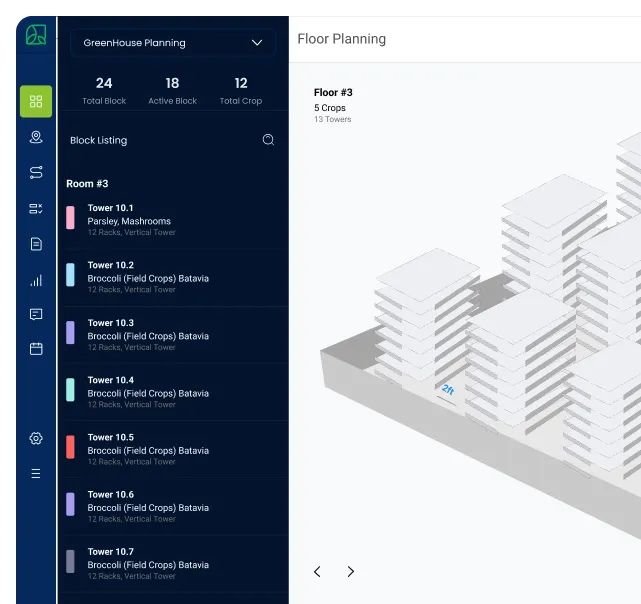
Assign every crop turn to a zone, bay, or bench with the Room Planner, tracking square footage and container spacing per turn. Remaining sellable space by week is visible instead of discovered at spacing time.
Project sellable units by SKU and week from the schedule, grade-out assumptions, and shrink history. Sales commits programmed orders against forecast availability rather than against hope.
Record cutting, plug, and liner orders against each crop turn, including source, variety, and arrival week. Input timing and genetics are tied to the finished crop from the start.
Capture programmed retail and foodservice commitments, standing orders, and ad weeks against the production plan. Every committed unit sits next to the schedule that has to produce it.
Track trial entries by variety, sowing date, and zone, and compare finish quality and turn time across selections. Trial results feed next season's schedule and availability.
AgriERP functions as greenhouse crop management software that records every activity against a specific crop turn in a specific zone or compartment, from transplant to finish. Cost, inputs, and labor accumulate on the turn without re-entry.
Integrate with your climate computer, sensors, and controllers so temperature, humidity, CO2, and light readings post against the zones they belong to. AgriERP does not run the climate; it records what the environment systems report and ties it to the crop and its cost.
Log fertigation recipes, EC, pH, and water volumes by zone and crop turn. Input cost and nutrient history stay attached to the finished product.
Record scouting findings, pest and disease pressure, beneficial releases, and spray or biological applications by zone. The record required for audits builds as crews work.
Capture labor against tasks such as sticking, transplanting, spacing, deleafing, and grading, tied to the crop turn. The largest controllable greenhouse cost lands on the crop instead of in a monthly lump sum.
Draw substrate, containers, tags, and chemicals from inventory as they are used on a crop turn. On-hand counts and per-turn input cost stay current.
Track patented and licensed varieties by unit produced so per-plant royalty obligations accrue as crops are grown. Royalty liability is a live figure, not a year-end reconstruction.
Define grade standards by crop and set hold checkpoints through the turn. Quality expectations are set before pack-out, not negotiated at the truck.
Record graded, held, and culled units at pack time against the crop turn. Shrink at the greenhouse is measured, so true sellable yield per turn is known.
Assign retail SKUs, UPCs, and price points to finished units, including retailer-specific codes. Product is ready for programmed orders and register scanning.
Pack finished plants to cases, shelves, containers, and shipping racks with counts recorded per unit. What ships is tied to what was grown and graded.
AgriERP includes greenhouse inventory software that updates the live availability list by SKU and location as units are graded and packed. Sales works from current sellable counts, not yesterday's estimate.
Flag units that fail grade for hold, rework, or dump, with the reason recorded. Only sellable product reaches the availability list and the shipping dock.
Carry lot and batch identity from crop turn through pack-out onto the shipping label. Traceability for a recall or audit is a lookup, not an investigation.
Fulfill programmed retail and foodservice orders and standing purchase orders from current availability. Commitments and available units reconcile before the truck is loaded.
Support pay-by-scan and vendor-managed inventory programs where the operation owns the plant on the retail shelf until it scans. Shipments, store placements, and ownership are tracked per store and SKU.
Bring in scan and sell-through data and reconcile it against shipments and store inventory. Sell-through per store and SKU is a report, not a weekend spreadsheet.
Compare current store inventory and sell-through against greenhouse availability to guide replenishment. Product flows to the stores that are selling it, in the quantities they are selling.
Record retail shrink, scrap, and returns against the store and SKU that generated them. The cost of unsold and dead product is captured where it happened.
Produce shipping manifests, rack tickets, and phytosanitary documentation for plants moving across state and national lines. Paperwork required to ship live goods comes from the same records.
Plan delivery routes and record freight cost against orders and programs. Landed program cost includes the freight it took to serve it.
Roll labor, inputs, space, and energy into per-unit and per-square-foot cost by crop turn, posted to the general ledger. Prices are quoted against known cost, not an estimate.
Match pay-by-scan remittances and program payments against shipments, scans, and shrink. What was earned per program reconciles against what was shipped and sold.
Reconcile accrued per-variety royalties against units sold and remit reporting to breeders. License obligations settle from the same records that grew the crop.
Report margin by crop turn, SKU, customer, and program using actual cost and actual sell-through. The next schedule is built from what actually made money.
Measure revenue and margin per square foot per week by zone and crop. The scarcest greenhouse resource is allocated to what returns the most.
Post crop, labor, inventory, sales, and settlement to Microsoft Dynamics 365 financials without export or re-entry. Operations and the books are one system.



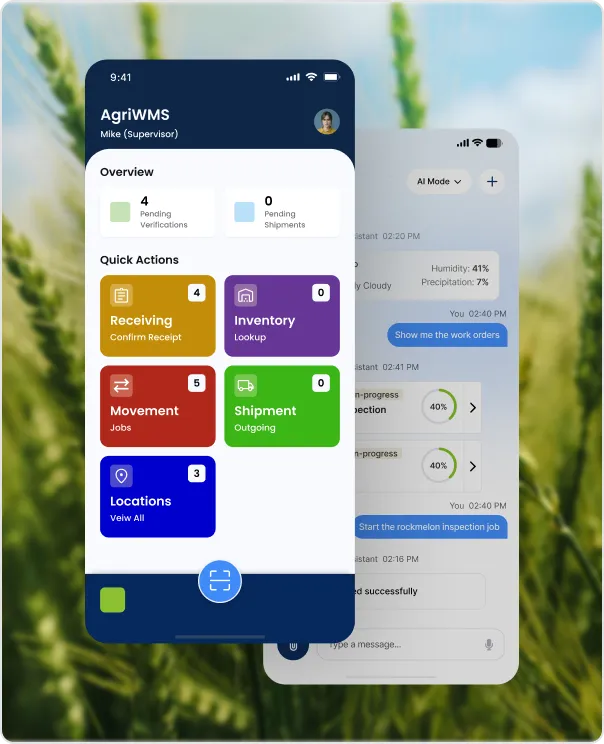
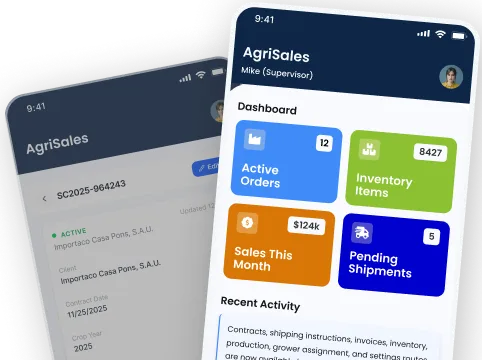
Crews move between zones, headhouses, and cold frames where signal is not guaranteed, and paper notes get keyed in late, if at all. The AgriERP mobile app captures work offline and syncs when a connection returns.
Offline capture, with automatic sync when connected
Every entry tied to the exact zone, bench, or crop turn
Available in English and Spanish for field crews
Entries post directly to financial and compliance records, with no re-entry
Standalone horticulture software, climate computers, and irrigation controllers run the growing environment, and AgriERP integrates with them rather than replacing them. What it replaces is the fragmented business layer most operations still run on spreadsheets: production planning, purchasing, inventory, cost, traceability, and finance. The point is not to grow better plants. It is to run a better greenhouse business from one set of records.

Standalone growing and climate tools stop at the crop record. AgriERP carries every crop turn, labor entry, and input to the general ledger.
Scan data, shipments, shrink, and settlement live in one system. Sell-through needs no export or re-entry step.
Data created at scheduling and grade-out is the same data sales and finance work from. No one rebuilds a spreadsheet from someone else's records.
Built on Microsoft Dynamics 365 and Oracle NetSuite. Proven enterprise infrastructure under an agriculture-specific system.
A specialist can review your crop mix, zones and bench space, sales channels including pay-by-scan programs, compliance requirements, and existing systems before scoping an approach for your head grower, sales and availability manager, or controller.
AgriERP configures to the crops you grow, and works as nursery management software for ornamental and young-plant growers as readily as for edible crops. The same crop turn record carries whatever you grow.
Lettuce, spinach, and salad greens on nutrient-film or deep-water systems with short continuous turns and food-safety audit requirements.
Tomatoes, cucumbers, and peppers on long high-wire crops with per-plant labor, deleafing, and multi-month harvest windows.
Basil, cilantro, and microgreens on rapid turns where availability and freshness drive programmed grocery orders.
Annuals and flats scheduled to spring ship weeks and sold heavily through pay-by-scan retail programs.
Finished potted crops timed to holiday and seasonal ship dates, where finish week is fixed months ahead.
Plugs, liners, and rooted cuttings supplied to finishing operations, with variety, royalty, and source tracked per tray.
Container and field-to-container nursery production with longer turns and phytosanitary shipping requirements.
Operations running both food and ornamental programs under one roof, each with its own compliance and settlement model.
Standard fits a single site with a focused crop program on Microsoft Dynamics 365 Business Central. Enterprise fits multi-site operations running multiple crops, mixed edible and ornamental programs, and higher transaction volume on Microsoft Dynamics 365.
Delivered by Folio3, a Microsoft Solutions Partner.

ERP Solution of the Year, 2025.
Agriculture and enterprise ERP expertise on one team.


We helped Grant4D to migrate from Quickbooks to the AgriERP standard package with D365 Business Central at the core to enhance ..
We implemented AgriERP Enterprise package with Dynamics 365 ERP for Rombola which digitized their processes, automated repetitive tasks and boosted overall productivity
AgriERP includes financial management on Microsoft Dynamics 365, so operations, inventory, and settlement post to the general ledger in one system. Most operations consolidate onto it rather than run a separate accounting package alongside.

Standalone growing and climate tools stop at the crop record. AgriERP is greenhouse management software that carries each crop turn through to financials, so per-unit cost, pay-by-scan settlement, royalty liability, and margin by program all reconcile without a separate accounting system or manual re-entry.

Yes. AgriERP runs edible and ornamental programs in one platform, each with its own grade standards, food-safety records, phytosanitary documentation, and settlement model. The same crop turn record carries whatever the operation grows.
Yes. AgriERP supports pay-by-scan and vendor-managed inventory, where you own the plant on the shelf until it scans at the register. Shipments, store placements, scan data, and shrink are tracked per store and SKU, and remittances reconcile against what sold.
Yes. AgriERP tracks patented and licensed varieties by unit produced so per-plant royalty obligations accrue as crops are grown. Royalty liability stays a live figure and reconciles against units sold when it is time to remit reporting to breeders.
Yes. Pesticide, biocontrol, and food-safety records build as crews work, and the system produces phytosanitary and shipping documents for plants crossing state and national lines. Any unit traces from crop turn to shipping label for an audit or recall.
Timeline depends on the number of sites, the crop mix, and the sales models in use. A single-site Standard operation goes live faster than a multi-site enterprise running mixed programs and pay-by-scan. A specialist scopes it against your crops, zones, and channels first.
Standard fits a single site with a focused crop program on Microsoft Dynamics 365 Business Central. Enterprise fits multi-site operations running multiple crops, mixed edible and ornamental programs, and higher transaction volume on Microsoft Dynamics 365.