The ERP Solution for the Year” 2025 in Agtech Breakthrough Awards 2025
AgriERP is field crop management software that manages daily row-crop operations, covering planning, work orders, input records, scouting, and harvest storage. It works for the operations manager coordinating tasks, the agronomist making field calls, and the owner tracking which fields turned a profit across any crop rotation.


Most farm operations are left playing catch up with their field records for the following reasons:

Sprays, sidedress, irrigation, and harvest windows shift with every forecast. When the plan lives on a whiteboard and a group text, crews and equipment fall out of sync and passes miss the window that protects yield.
You know what you produced, but tying crew hours, machine time, and fuel to the field that used them takes more time than you have. So labor and equipment cost per acre stays a guess instead of a number.
Planting, input applications, scouting, and yield records sit in separate tools and spreadsheets. Building one clean record per field, for a contract, an audit, or next year's plan, is a manual export job.
Seed, fertilizer, chemical, fuel, equipment, and land costs sit in different ledgers, so cost per acre is only reconciled after harvest. Which fields, hybrids, and rotations actually paid stays hidden in the whole-farm average.

AgriERP is built around the field. A budget line, a planting pass, an input application, a scale ticket, and a sales contract all attach to the same acres, so cost per acre and margin per bushel stay running totals instead of year-end projects.
Plan crops and rotations by field and budget cost per acre before planting.
Record planting, inputs, and work orders by field and hybrid.
Log scouting, in-season inputs, and irrigation against each field.
Capture yield, scale tickets, and grain quality into storage.
Run sales contracts and deliveries, then settle margin per bushel by field.
The five stages below follow a crop from a planned acre and a budget line all the way to a priced load and a closed set of books.
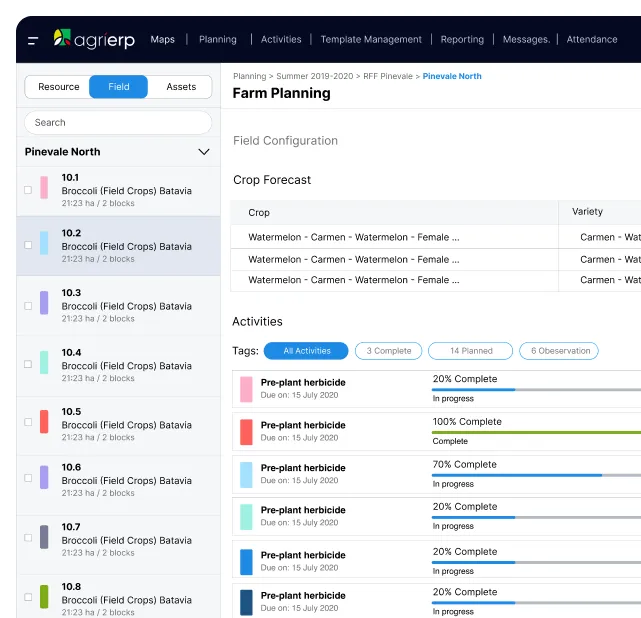
Build the season crop plan and multi-year rotation by field and tract from soil and yield history. Every acre is assigned a crop before inputs are booked.
Budget seed, fertilizer, chemical, fuel, equipment, and land by field to a cost per acre and break-even per bushel. Planned versus actual is tracked against the same budget all season.
Maintain fields, tracts, and management zones with acres and boundaries. Planning, records, and reporting all reference the same field definitions.
Raise purchase orders and bookings for seed, fertilizer, and chemical against the plan and against suppliers. Commitments and on-hand balances are visible before the season starts, not after.
Track owned and rented ground and its lease cost by tract, so land, often the largest single cost, sits on the field it belongs to.
Set the crop-protection and fertility program by field and growth stage, so the season’s pest, disease, and nutrient plan is defined before the sprayer rolls.
Record planting by field, hybrid, seeding rate, depth, spacing, and date. What went in the ground is tied to the field and its budget from day one.
Assign planting and application work orders to crews and equipment across fields, and track progress so operations stay inside the planting and spray windows.
Plan, apply, and track every fertilizer input by field, product, and rate. Each pass posts to the field budget as it happens.
Record pesticide and chemical applications by field, product, rate, operator, and conditions. The application record needed for compliance and cost builds as the sprayer runs.

AgriERP’s farm inventory management software draws seed, fertilizer, chemical, and fuel from inventory as they are applied by field, so on-hand balances and per-acre input cost stay current.
Track soil pH, nutrient levels, and soil-test results by field, and tie each fertility decision back to the ground it came from.
Log pest, disease, and weed pressure by field and growth stage from a mobile device, so the scouting note and the spray decision live together.
Plan and record in-season fertilizer and spray passes by field and product. In-season inputs land on the field budget as they happen.
Bring field-level weather and forecasts into scouting, spray, and fieldwork timing, with alerts when conditions change and a pass has to move.
Where fields are irrigated, schedule and record water applications and monitor soil moisture in real time, synced from field probes. Water use is tracked against the crop and the cost budget.
Track fieldwork progress by field and operation, so every pass through the season is accounted for against the plan.
Forecast yield by field and crop from in-season conditions and history, so harvest, storage, and marketing can be planned early.
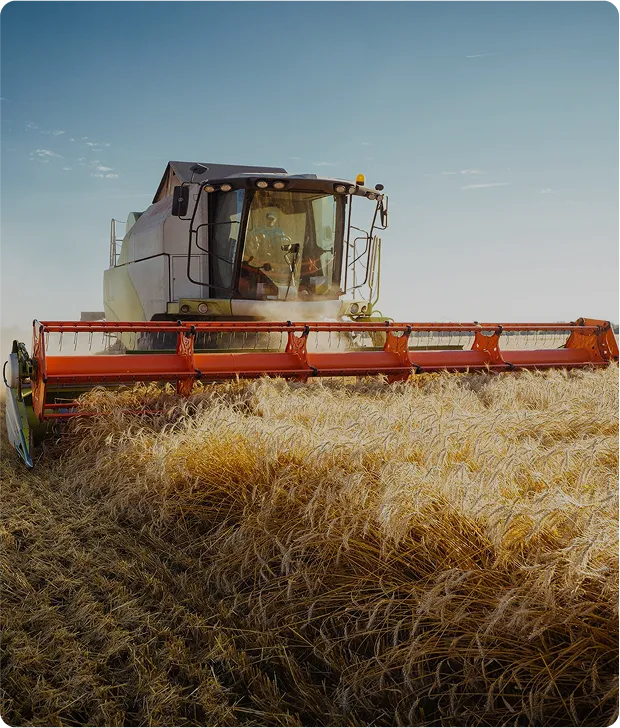
Record harvested yield by field, hybrid, and zone from the combine or scale. Yield sits next to the cost that produced it, by field.
Match loads and scale tickets to the field and the contract they belong to. Bushels, freight, and hauling are tracked from field to bin or elevator.
Capture moisture, shrink, dockage, and grade on every ticket, so deductions are recorded where they happen instead of surfacing at settlement.
Track grain by bin, quantity, moisture, and quality in on-farm storage, so stored grain and its condition are known before it is priced or moved.
Record retail shrink, scrap, and returns against the store and SKU that generated them. The cost of unsold and dead product is captured where it happened.
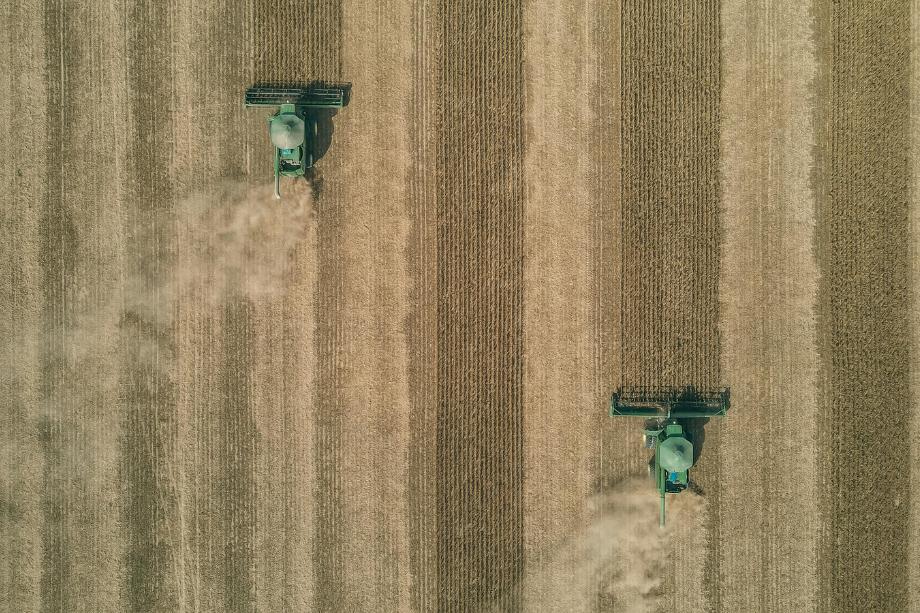
Coordinate combines, grain carts, and trucking through the harvest window to cut delays, keep crews moving, and reduce shrink.
Build production, cost, and profitability reports on Power BI dashboards, and query them in plain language with the AgriERP AI Companion.
Create and manage sales contracts by crop, quantity, and delivery, so committed bushels and open position are visible against what is in the bin.
Track orders and deliveries against each contract, so priced and unpriced bushels and outstanding commitments stay clear through the marketing year.
Price against a cost per bushel that already carries inputs, storage, moisture, shrink, and grade, so the call to sell or hold is made against real cost, not a hunch.
Reconcile scale tickets, contracts, premiums, and deductions against elevator settlements, so revenue is confirmed against what was actually delivered and priced.
Roll inputs, equipment, land, and labor into cost per acre and margin per bushel by field and hybrid, posted to the general ledger on Microsoft Dynamics 365. Which fields made money is a report, not a guess.
Settle contracts and grower accounts against the same field and production records used for costing, so payments reconcile without a side spreadsheet.
Build production, cost, and profitability reports on Power BI dashboards, and query them in plain language with the AgriERP AI Companion.
The person running the operation, the person making the agronomic calls, and the person who has to make the numbers work all pull from the same field records instead of three versions of the truth.


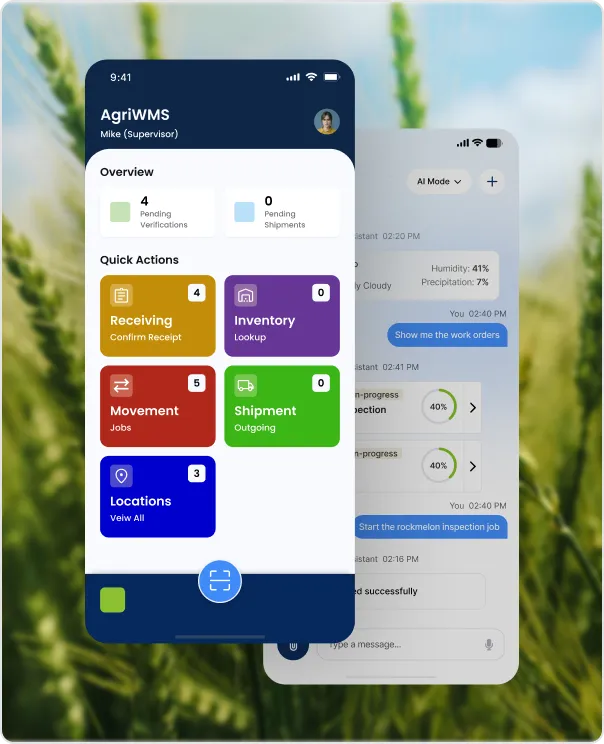
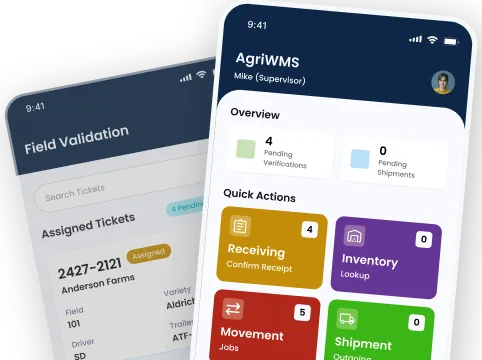
Between the cab, the bin site, and the back forty, cell signal comes and goes, and passes and tickets pile up for the kitchen table at night. The AgriERP app records the work where it happens, offline, and syncs when signal returns.
Offline capture, with automatic sync when connected
Every entry tied to the exact field, tract, or zone
Available in English and Spanish for field crews
Entries post directly to financial and compliance records — no re-entry
Guidance, planters, and yield monitors already run the iron, and precision-ag platforms already map the field. AgriERP does not replace them; it takes their data and adds the layer they leave out. Standalone farm management software rarely reaches cost per acre, grain contracts, settlement, and the general ledger. AgriERP puts all of it on the same field record, so the business side of the farm stops living in spreadsheets.
Seed, chemical, fuel, iron, and land post to the field that used them. Cost per acre is a real number, not a whole-farm total split at year-end.
Built on Microsoft Dynamics 365 and Business Central, so adding farms, entities, or bushels does not mean switching systems.
Every input, pass, load, and settlement posts to Microsoft Dynamics 365, so field costs and farm financials are one system, not two that never quite agree.
Contracts, deliveries, and settlements sit next to the bins and fields behind them, so you price against a live cost per bushel instead of a guess.
A specialist can review your crop mix, room and rack layout, energy and labor structure, compliance requirements, and existing systems before scoping an approach for head growers, operations directors, or finance and ownership.
Corn this year, soybeans next, wheat after that. The field record follows the rotation, so cost, history, and yield stay with the ground no matter what it grows.
High-population, high-input corn where hybrid, nitrogen, and moisture at harvest drive margin per bushel.
Rotation soybeans where variety, population, and contract premiums shape profitability by field.
Wheat, barley, and oats where milling and protein quality protect price at delivery.
Cotton where lint quality, ginning, and input timing determine returns per acre.
Irrigated rice where water, land, and milling grade govern cost and price.
Sorghum grown on tighter input budgets where cost per acre decides the crop.
Hay and forage cut across the season where quality and moisture drive value per ton.
Sugar beets, potatoes, canola, and other field crops with their own contracts and handling.
Standard fits a single farm on Microsoft Dynamics 365 Business Central. Enterprise fits multi-farm and multi-entity operations with higher transaction volume, on-farm storage, and active grain marketing on Microsoft Dynamics 365.
Delivered by Folio3, a Microsoft Solutions Partner.
ERP Solution of the Year, 2025.
Agriculture and enterprise ERP expertise on one team.


We helped Grant4D to migrate from Quickbooks to the AgriERP standard package with D365 Business Central at the core to enhance ..
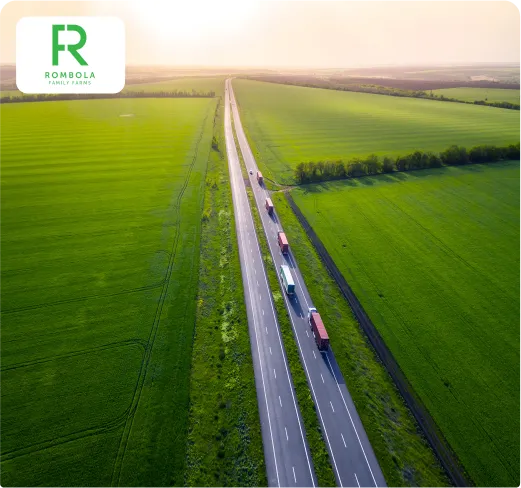
We implemented AgriERP Enterprise package with Dynamics 365 ERP for Rombola which digitized their processes, automated repetitive tasks and boosted overall productivity
AgriERP includes financial management on Microsoft Dynamics 365, so field costs, inventory, grain, and settlement post to the general ledger in one system. Most operations consolidate onto it rather than run a separate accounting package alongside.
A farm accounting package stops at the books and a precision-ag app stops at the field. AgriERP is field crop management software that connects the two, so cost per acre, grain contracts, settlement, and compliance records all reconcile from one set of field records without export or re-entry.
Yes. AgriERP creates and manages sales contracts by crop, quantity, and delivery, tracks orders and deliveries against them so priced and unpriced bushels stay clear, and reconciles scale tickets, premiums, and deductions against elevator settlements, all against a live cost per bushel.
Yes. Seed, fertilizer, chemical, fuel, equipment, land, and labor post to the field they belong to, so cost per acre, break-even, and margin per bushel roll up by field and hybrid through the season rather than being reconciled after harvest.
Yes. Pesticide and application records build as sprayers run, production and quality records are captured through harvest, and end-to-end traceability follows a bushel from field and input to load and contract, so the paperwork is maintained, not reconstructed at a deadline.
Yes. Owned and rented ground and its lease cost are tracked by tract on the field they belong to, and grower and contract settlements are produced from the same field and production records used for costing.