The ERP Solution for the Year” 2025 in Agtech Breakthrough Awards 2025
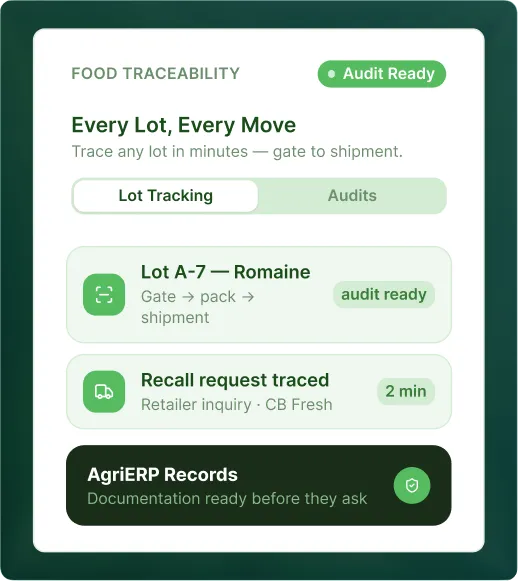
Trace any lot in minutes, not days, whether it is a retailer recall request or a HARPS auditor at the door. AgriERP records every movement from gate to shipment as it happens, so the documentation is already there when someone asks for it.


Whether you supply US retailers, Australian supermarkets, or both, the compliance requirements are already in effect. The question is whether your records are ready when someone asks.
Walmart extended GS1-128 case barcodes to all food and beverage suppliers in 2025. Non-compliant labels carry fines of $250 to $10,000 per shipment, and repeat failures put vendor status at risk.
Voluntary on paper, mandatory in practice for anyone supplying ALDI, Coles, Costco, Metcash, or Woolworths. Certification rests on documented traceability and food safety records.
Legally in force since 12 February 2025. Growers and primary processors of berries, leafy vegetables, and melons must maintain traceability systems and records that prove compliance.
The information auditors and retailers need already exists somewhere in your operation. The problem is that assembling it takes days of manual work across paper records, spreadsheets, and disconnected systems.
Input applications, harvest records, grading notes, and shipment details live in different tools and formats, so a complete lot history has to be assembled by hand every time someone asks for one.
If a lot needs to be traced or pulled, every hour spent finding the paperwork is an hour the product is still in the supply chain. Retailers and regulators expect lot histories on demand.
GS1-128 barcodes encoding lot, batch, expiry, and weight cannot be generated correctly if the underlying data is not captured at the point of packing. Labels built from memory or estimates fail at the dock.
When records are not continuous, getting ready for a HARPS or FSANZ audit means pulling the operation back together from fragments, an exercise that takes weeks and still carries the risk of gaps.
When the traceability knowledge lives in one person's head or notebook rather than a connected system, a staff change or a sick day becomes a compliance risk.
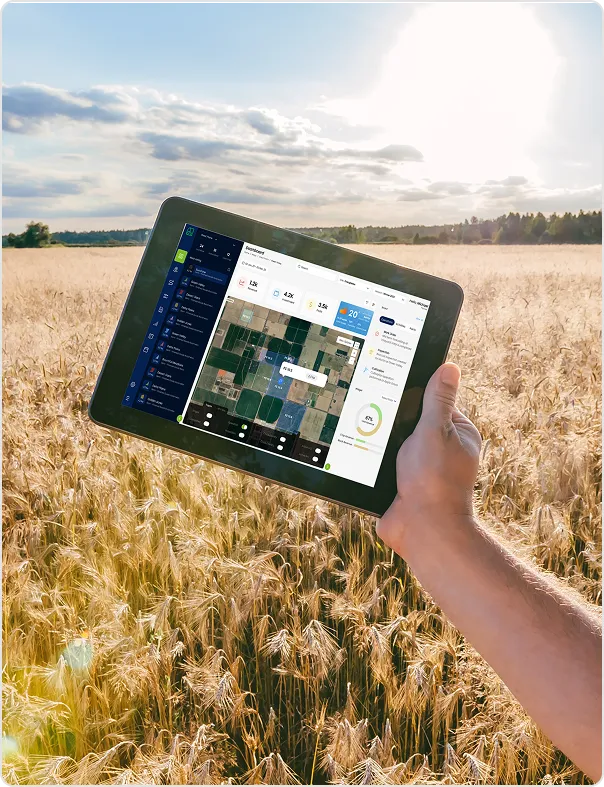
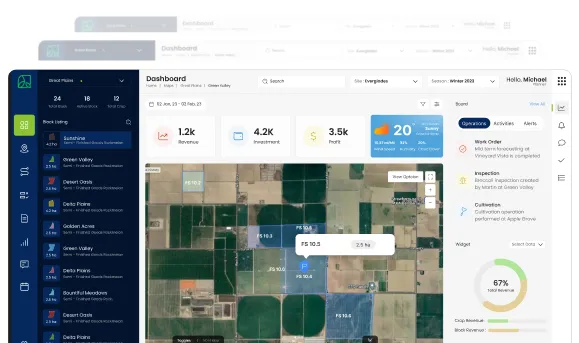
AgriERP captures the traceability record as your team works, so lot histories, input records, and shipment data are always complete, always current, and always retrievable.
Every input, harvest, and packing decision attaches to the lot as it happens. By the time it ships, the full history is already there.
GS1-128 case labels are generated from the packing record, not typed afterward, so what the barcode says is what the pallet contains.
Pull a complete lot history from receiving through final shipment in minutes. Know which customers are affected, which batches to contact, and what is still in storage before the hour is out.
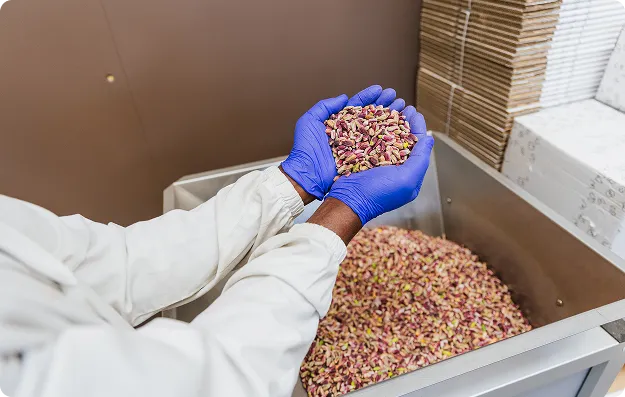
From the input that enters the gate to the label that leaves on the pallet, every step has a record.
Every lot gets a continuous record from the moment it enters the gate. Every input applied, harvest collected, bin moved, and case packed attaches to that record automatically. Pull the full history forward to customers or backward to inputs at any time.
GS1-128 case labels and SSCC-18 pallet labels print directly from the packing record. GTIN, lot, batch, expiry, and weight are encoded at the point of packing, not re-keyed from a separate spreadsheet.
Run a trace in both directions at once: forward to every customer that received the lot, backward to the field, inputs, and harvest date it came from. No separate searches, no phone calls, no manual cross-referencing.
The records HARPS auditors and FSANZ inspectors ask for, scouting logs, input application rates, water source records, pest observations, are captured by the team as they work. No reconstruction before the audit. No gaps in the record.
Every record carries a user, timestamp, and document reference that cannot be changed after the fact. When an auditor asks for documentation, you export a complete package covering field activity through shipment, the same day they ask.
Grade decisions, defect observations, and quality holds are recorded against the lot at the point they happen. A lot on hold cannot move until it is released. Quality is not a separate system: it sits in the same record as the field, harvest, and shipment data.
Book a demo and we will show you how AgriERP builds your compliance record as you work, so audits, recalls, and retailer requests are never a scramble.
If a retailer, regulator, or auditor asked for your lot history right now, how long would it take? AgriERP is built for operations where the honest answer to that question is not good enough.

Berry, leafy vegetable, and melon growers have been legally required to meet FSANZ Standards 4.2.7 to 4.2.9 since 12 February 2025. AgriERP captures the hazard identification, input application, water management, and traceability records these standards require as your team works.
Handlers and packers supplying ALDI, Coles, Costco, Metcash, or Woolworths need HARPS documentation. Suppliers to Walmart and major US retailers need GS1-128 case labels. AgriERP generates both from the records your team already creates at receiving, packing, and dispatch.
Operations supplying both US and Australian retailers carry two compliance burdens from one platform. GS1-128 labeling for Walmart and major US retailers and HARPS documentation for Australian supermarkets draw from the same lot record, so you are not maintaining separate systems for each market.

Rombola Family Farms moved to AgriERP on Microsoft Dynamics 365, replacing manual and fragmented record-keeping with a connected system that captures operational data continuously. The result was traceability and food safety documentation that exists as a byproduct of daily work, rather than something assembled in preparation for an audit.


Yes. GS1-128 case labels and SSCC-18 pallet labels are generated from the packing records already in the system, encoding GTIN, lot, batch, expiry, and weight without re-keying. The label data matches the production record because it comes directly from it.
HARPS certification requires documented food safety records, lot traceability, and evidence of continuous compliance with a GFSI-benchmarked base standard. AgriERP generates those records as a byproduct of daily operations, so the documentation exists when the auditor arrives rather than being assembled in the weeks before. The system supports alignment with Freshcare, GLOBALG.A.P., SQF, and BRC base standards.
Yes. FSANZ Standards 4.2.7 to 4.2.9 require growers and primary processors of berries, leafy vegetables, and melons to maintain traceability systems, identify and control food safety hazards, and keep records demonstrating compliance. AgriERP captures input records, water and irrigation management, scouting observations, and lot traceability in one connected system, providing the record basis these standards require.
Because every transaction attaches to the lot in real time, a full lot history from input receiving through final shipment can be retrieved in minutes. You can identify every customer that received the lot, every batch included, and every unit still in storage without cross-referencing separate systems or records.
Yes. GS1-128 and SSCC-18 labeling for US retailers and HARPS documentation for Australian retailers both draw from the same operational record in AgriERP. Operations supplying both markets run their compliance from one platform rather than maintaining separate systems for each market.
Field records including scouting observations, input applications, and harvest data are captured offline and sync automatically when a connection returns. The traceability record stays continuous and timestamped regardless of field connectivity.
For most operations it becomes the financial core, since AgriERP runs on Microsoft Dynamics 365 Business Central. Australian operations can connect Xero and MYOB where those are already in place.