The ERP Solution for the Year” 2025 in Agtech Breakthrough Awards 2025
Input costs are up. Commodity prices are down. AgriERP gives you the data to act on both while the season is still open, with cost per acre visibility, precision input tracking, and yield analysis built on Microsoft Dynamics 365 Business Central.


Input costs have stayed stubbornly high since 2021. Commodity prices have fallen. The farms that survive this squeeze are the ones that know exactly where every dollar is going before it is too late to change course.
Spend accumulates all season but only surfaces when the books close, after you have already committed to the next round.
Without a connected record, what was ordered, applied, and what the field actually needed never lines up.
One block underperforms every season with no way to trace it back to a timing miss, a water shortfall, or an input rate that was off.
By the time you can calculate cost per acre, you are already planning the next season. The number tells you what happened, not what to change.
Moisture deductions, grade downgrades, and ticket errors cut realized yield value but nobody catches them until the settlement statement arrives.
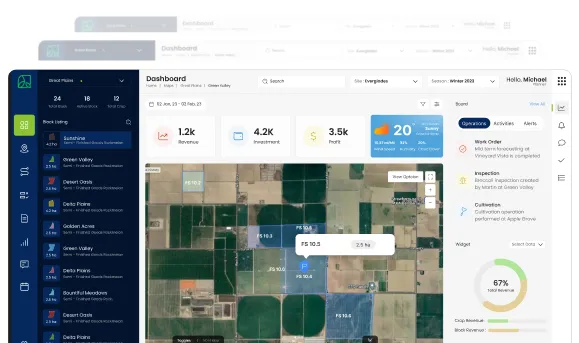
AgriERP connects your input records, field activity, scouting data, and financials so cost per acre is a live number during the season, not a discovery after it.
Every application is recorded against the field it was applied to, connected to soil data and scouting notes, so over-application shows up before the next pass.
Yield by block mapped against inputs, timing, and soil health across seasons, so underperforming ground has a cause, not just a number.
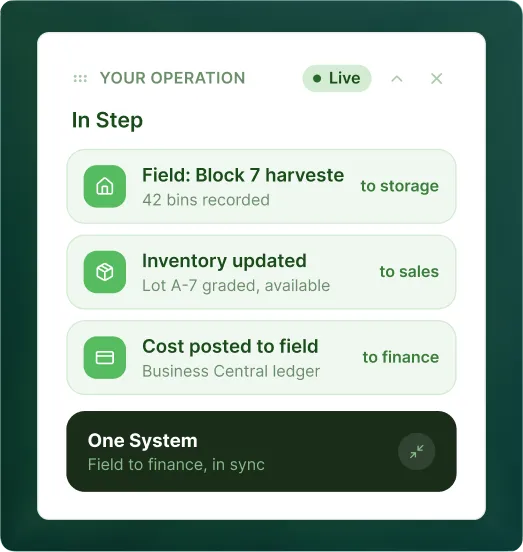
Costs flow from field activity into the ledger without re-entry, so your field data and your accounting tell the same story at the same time.
Six areas where AgriERP tightens the gap between what you spend, what you grow, and what you earn.
Track every seed, fertilizer, and chemical from purchase order to field application, so you know exactly what was used, where, and at what rate, before the next application is planned.
Connect soil health data, scouting observations, and NDVI readings to input decisions, so you apply what the ground needs rather than what habit suggests.
Water is one of your largest variable costs and one of the easiest places to over-spend without noticing. Track usage, schedule by zone, and connect to real-time weather so irrigation happens when it needs to and stops when it does not.
Record yield by field and block at the point of harvest, and catch moisture deductions, grade issues, and ticket errors before they become settlement surprises.
The number every farm needs but almost none can see in real time. AgriERP allocates every input, labor hour, equipment use, and overhead cost to the field it belongs to, so cost per acre updates as the season runs, not after it closes.
When the season closes, every decision it contained has a record: what was applied, when, at what cost, and what yield came back. Use it to plan the next season with evidence rather than instinct.
Book a demo and we will show you how AgriERP tracks input spend, captures yield, and puts cost per acre in your hands while the season is still open.
Whether you farm row crops, manage orchards, or run a mixed operation, the margin pressure is the same. The operation that knows its numbers first makes the better call.
Track cost per acre by field and variety across the full season, from input purchasing to settlement.
Match input spend and irrigation precision to the yield potential of each block and variety.
Consolidate cost and yield data across farms, entities, and seasons so performance comparisons are not a manual exercise.
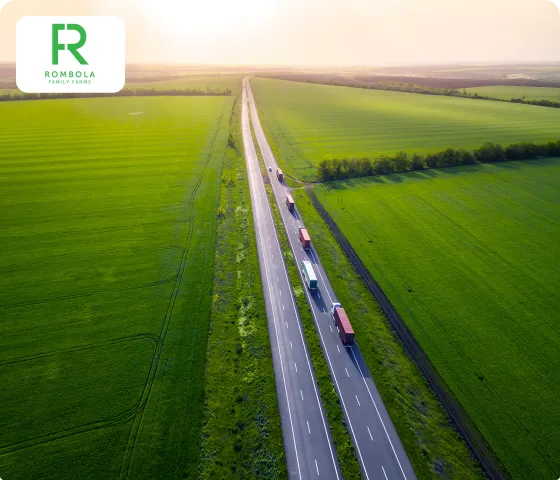
Rombola Family Farms moved to AgriERP on Microsoft Dynamics 365, digitizing processes that had previously been manual and fragmented. The result was data visibility across the operation that supported informed decisions at every stage, from input planning through harvest, rather than decisions made on instinct and end-of-season reports.


Every input application, labor hour, equipment use, and overhead cost is recorded against the field and crop it belongs to as work happens. Microsoft Dynamics 365 Business Central carries those records into the financial ledger without re-entry, so cost per acre is a live calculation during the season rather than a post-season accounting exercise.
Yes. Input applications, scouting notes, soil data, and irrigation records sit alongside yield capture by field and block. That means you can compare what was spent on a field against what came back from it, and track that relationship across multiple seasons to understand what is actually driving performance.
Yes. AgriERP tracks costs and yield at the field and block level regardless of crop type, so you can compare performance across different crops on the same platform. Multi-entity and multi-site operations consolidate on Microsoft Dynamics 365 Business Central so the numbers across your whole business stay in one place.
Scouting notes, input applications, irrigation records, and yield data are all captured offline on mobile and sync automatically when a connection returns. Nothing needs to be re-entered and the field record stays attached to the right block.
When every application is recorded against the field and connected to soil sampling and scouting data, the gap between what was applied and what the field actually indicated it needed becomes visible. Over time, that record also shows where rates can be dialled back without affecting yield, which is where input cost reduction tends to compound season over season.
Yes. Costs, inputs, and yield data track at the field and block level across any number of sites, and financial reporting consolidates across entities on Microsoft Dynamics 365 Business Central. You can benchmark cost per acre and yield per acre across sites without manually assembling the data.
For most operations it becomes the finance core, since AgriERP runs on Microsoft Dynamics 365 Business Central. Australian operations can connect Xero and MYOB where those are already in place.