The ERP Solution for the Year” 2025 in Agtech Breakthrough Awards 2025


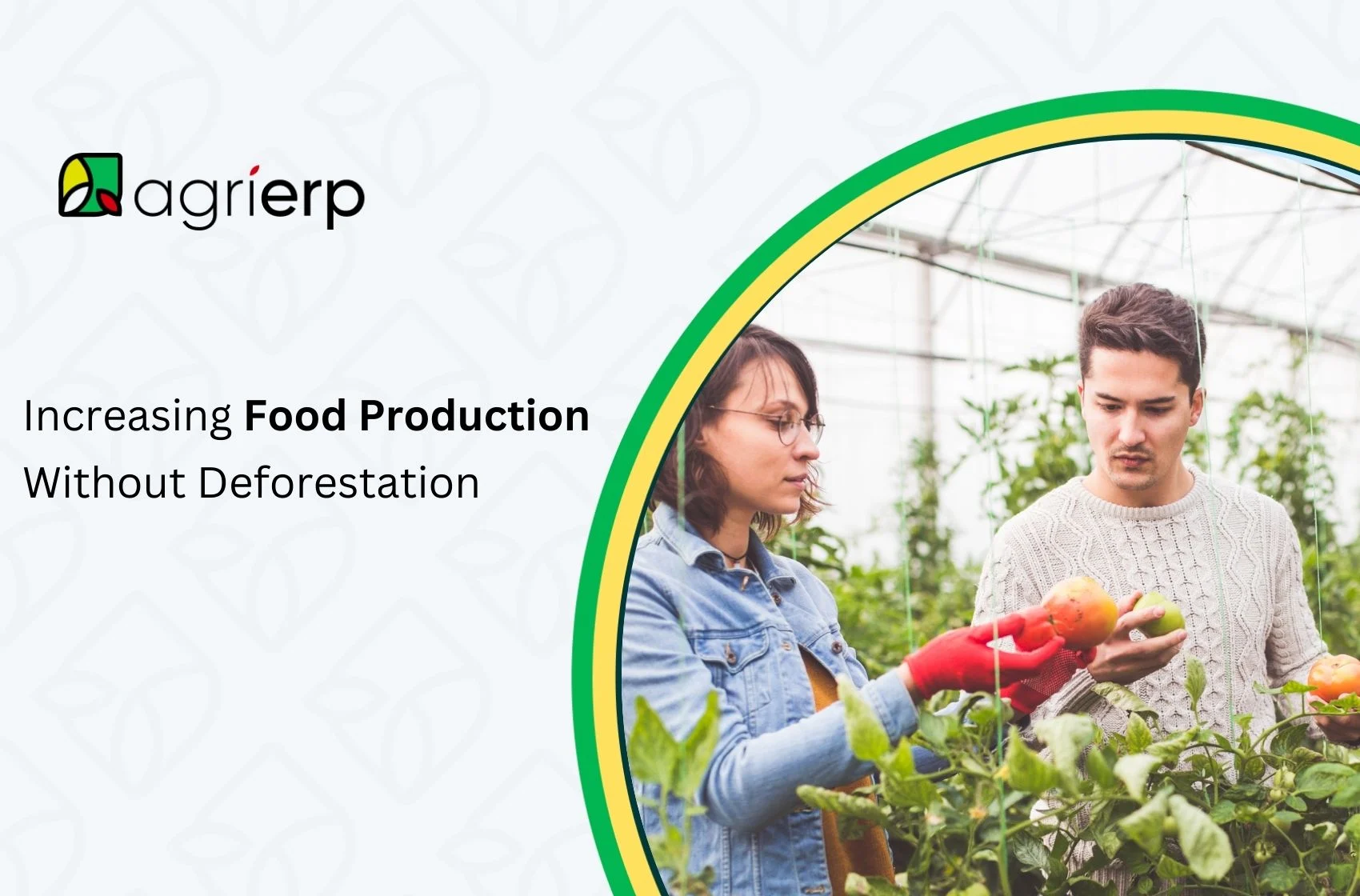
It is mind-blowing that 99 percent of all land that has been deforested over the last 10,000 years has been used for agriculture. But despite this, food insecurity is still skyrocketing; in 2023, around 2.33 billion people globally faced moderate or severe food insecurity. The global population is increasing at a rapid pace, and demand for food is also surging! This situation has raised an urgent question: how can we have increasing food production without deforestation?
The Problem: Agriculture and Deforestation Are Interlinked
Farming and forests are tightly connected, but not in a good way. We have been clearing forests for farmland for ages, and this has led to massive environmental harm, but ironically, this has also made farming harder due to issues such as soil loss, climate change, and disrupted rainfall. No doubt farming and agriculture are the only activity that leaves a massive environmental footprint! Let us see the top contributors:
How Farmland Expansion Drives Forest Loss?
According to FAO, almost 88% to 90 % of deforestation today is due to the expansion of farmland. In this modern era, too, pasture land and cropland grow, and agriculture remains the largest cause of forest loss globally. Crops grown for livestock feed or export commodities like soy and palm oil all contribute immensely to deforestation.
Environmental Consequences of Deforestation
Deforestation results in highly damaging environmental aftereffects:
- Carbon Emissions: Forests act as major carbon sinks. If they are cleared, it causes the emission of CO₂, which contributes to global warming.
- Biodiversity Loss: Rainforests are home to more than half of our planet’s terrestrial species. Clearing forests results in the extinction of many species.
- Soil Degradation: Without a good forest cover, the soil quickly erodes. Important nutrients wash away, thus causing poorer crop yields and heavy reliance on artificial inputs.
- Water Cycle Disruption & Pollution: Forests help in regulating rainfall and absorb water. If they are cleared, then soils can not retain moisture, and there is an increased risk of floods and polluting downstream water.
Core Strategies to Increase Food Production Without Deforestation
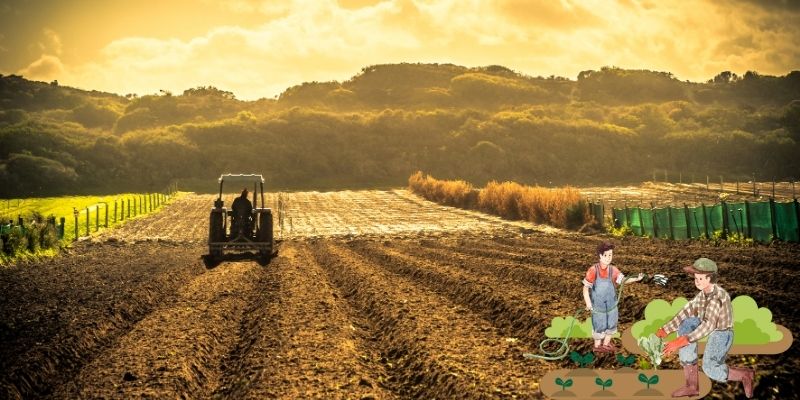
So what can we do in this alarming situation? Well, there are proven approaches that help you to grow more by using the land and resources that we already have.
1. Regenerative Agriculture
Some methods help you to restore the lost soil structure and fertility; these include crop rotation, cover cropping, and no‑till farming. This way, not only do yields improve over time, but these practices also help trap carbon and reduce erosion.
For example, rotating legumes with cereals naturally adds nitrogen and reduces the need for synthetic fertilizers. On the other hand, planting cover crops can prevent erosion during off-seasons, while no-till farming prevents the disruption of the soil microbiome. Together, these help us reduce our reliance on chemical inputs and support long-term productivity.
2. Vertical Farming & Controlled‑Environment Agriculture (CEA)
Vertical farming is a method that stacks production indoors or under controlled conditions, thus using minimal land. Farms in urban areas and hydroponic systems dramatically reduce the pressure on land by producing dense, all-year-round yields.
Indoor vertical farms can use up to 98% less water than traditional methods and produce crops without pesticides. CEA systems help you produce food near consumption centers, thus the emissions due to transportation and spoilage are reduced. This, in turn, supports food security without aggressive deforestation.
3. Agroforestry and Intercropping
By planting trees alongside food crops or mixing species, farms support biodiversity, shade-sensitive growth, and improve overall soil health. Smart practices such as silvopasture (an agroforestry practice that combines trees, forage, and livestock grazing on the same land) or tree‑crop combinations help you gain more production per hectare without clearing more land.
Tree roots prevent erosion and extract essential nutrients from deeper layers, while canopy layers provide microclimates that help crops thrive in hot climates. Agroforestry also stores more carbon and supports pollinator habitats, hence boosting yields over time.
4. Precision Agriculture and AI‑Based Monitoring
Precision agriculture has given farming a new face by uplifting and refining all of the operations. With the help of sensors, satellite imagery, and data‑driven platforms, farmers can be guided on exactly how much water, fertilizer, or pesticide they must use. This precision minimizes waste and boosts productivity, producing more output on your existing farmland.
Moreover, modern tools such as drones and GPS help farmers to map fields and apply inputs only where they are needed, hence improving efficiency. AI tools can accurately predict disease outbreaks before they happen or yield changes, helping farmers to take proactive decisions that boost their harvests without expanding land use.
5. Improved Seed Varieties and Biotechnology
Biotechnology has also uplifted agriculture and helped us in reducing land use. Modern genetics creates seeds that give high-yield, are drought-resistant, and pest‑tolerant. Farmers can produce more food on less land, hence preventing the need to convert new forests into agricultural land.
Crops bred by conventional or biotech methods now have traits that reduce the need for inputs, like pest resistance or shorter growing seasons. For example, drought-tolerant maize varieties can maintain yields with less water, making farming feasible in degraded or marginal areas instead of expanding into forests.
6. Water‑Efficient Irrigation Techniques
We know that water is a scarce resource; according to The World Bank, over 70% of water is used by agriculture. But methods such as drip irrigation, moisture sensing, and smart watering schedules make sure that your crops get only what they need, and when they need it.
That makes scarce water be used optimally, boosting yield per liter applied and reducing pressure on forested watersheds. Technologies like automated valves or AI-based irrigation models can modify the delivery of water according to real-time plant needs. This not only saves water but also reduces the risk of waterlogging or runoff, hence protecting surrounding ecosystems.
The Role of AgriERP in Enabling Sustainable Agriculture
Now that you are well aware that we must work together to minimize deforestation but maximize food production, you must be wondering how to do it alone. Well, the answer is no, you can not. You need a powerful ERP system besides you to manage your operations and guide you at every step, and help you.
Consider options like AgriERP, which are developed exclusively for agriculture. It will help you implement these strategies practically, whether you are a grower or an agribusiness, and without breaching your bank. Here is how:
- It lets you track your resource usage, including land, water, and energy. Thus, you see where inefficiencies exist and manage them.
- It helps you plan smarter crop cycles with AI, suggesting rotations, precision recommendations, and estimates of your yields.
- Its procurement and inventory tools help reduce input waste, making operations leaner and more sustainable.
- It supports traceability and compliance, the kind of documentation required for deforestation‑free supply chains or meeting the sustainability standards.
Conclusion
A native American proverb is: “We do not inherit the earth from our ancestors, we borrow it from our children.” With this important message in mind, sustainable farming is not optional anymore; rather, it has become essential. We have seen how agriculture and deforestation are deeply interconnected, and they lead to a great impact on the climate, biodiversity loss, and food insecurity.
But despite these detrimental factors, there are smart solutions to combat deforestation that let us grow more without cutting more forests. Farming strategies such as regenerative practices, agroforestry, precision agriculture, CEA, improved seeds, and efficient irrigation all enhance your output while simultaneously protecting our ecosystems.
And smart platforms like AgriERP tie these tools together and help you monitor your land use, water use, crop plans, input levels, and comply with regulations. For a moment, imagine that your farm or agribusiness can grow food at the scale needed for the future, but without expanding into forests.
With the help of AgriERP, you can set up sustainable crop cycles, optimize resource usage, track all sustainability data, support traceability, and manage expansion without harming forests.