The ERP Solution for the Year” 2025 in Agtech Breakthrough Awards 2025



What Is Kitting?
Let us take an example and say that you are preparing a tractor maintenance kit. Instead of selling oil, filters, and belts separately, you group all of them together into a single, pre-packed set, basically creating a kit. This is what we call kitting.
Kitting is when you combine individual items, each with its own SKU, into a new, single SKU that is considered as a single unit in your inventory system. After all the components are picked and assembled into a kit, that kit is now ready to be shipped.
This way, you do not need to process every single part during the fulfillment process; rather, it is handled as one.
This method is very useful in agriculture because of its nature. Suppliers send repair kits for tractors, irrigation systems, or planting machinery.
You can see kitting being utilized at multiple business locations such as warehouses, distribution centers, or fulfillment hubs. It helps keep operations running smoothly and prevents bottlenecks.
For agri-businesses, kitting is a smart way to save time during order processing. It prevents human error, especially during peak seasons when there are high order volumes to be handled.
Moreover, it also assists in demand forecasting because kits are much easier to track and restock. By minimizing the handling time and optimizing your storage, kitting helps in improving warehouse efficiency.
What Is Bundling?
Now let us see what is bundling. You can think of bundling as your go-to strategy for promotions and making your product visible. Let’s take an example and say that you put together a “Spring Planting Bundle” that consists of seeds, fertilizers, and pest control products.
These items are usually sold separately, but in this case, you offer them as a complete package.
Bundling is to group multiple standalone products together and sell them as a single offer.
In contrast to kitting, every item in the bundle has its original SKU, and the bundle is usually assembled at the point of sale or the order processing stage, and not before that.
You can use bundling to encourage customers to try complementary products. For instance, if a grower needs seeds, they will also most likely need fertilizer. So why not offer both in a convenient and discounted bundle?
This method also helps in cross-selling, especially if you are trying to introduce new products, or if you have excess inventory or a slow-moving item, bundling this item with a popular product will help you move your stock quickly.
It’s a win-win for both because customers find bundles attractive, they save time, and often get them at a lower price as compared to buying each item individually.
So, bundling is not merely about marketing. It is an intelligent move to increase the average order value and give customers a better shopping experience.
Kitting vs Bundling: Key Differences
Although kitting and bundling might seem similar to you, in reality, they serve different purposes and are handled much differently behind the scenes. Here is a quick comparison:
| Aspect | Kitting | Bundling |
| Packaging | Items are assembled and packed ahead of time as one unit | Items are grouped when the customer places the order |
| Purpose | Streamline warehouse processes and reduce order time | Promote sales and increase customer value |
| Inventory Tracking | Tracked using one new SKU for the assembled kit | Tracked individually by each product’s original SKU |
| Fulfillment Timing | Prepared in advance and stored as one product | Assembled during or after the order is received |
Let us have a deeper understanding of this:
Packaging:
Kitting involves creating a new unit that is physically stored and shipped as one. This means less work during fulfillment since everything’s ready to go. Bundling, however, happens after the order is placed, and items are pulled from shelves and grouped during packing.
Purpose:
If you want to achieve speed and accuracy in order processing, then kitting is a better option for you.
This is because it reduces the steps involved in order fulfillment. On the other hand, bundling is usually used for promotions, to boost sales, and to introduce new products to customers.
Inventory Tracking:
Kitted items are tracked under a new SKU. Hence, simplifying your warehouse management and helping you forecast your stock levels. Bundled items retain their original SKUs, which gives you flexibility in sales reporting but also makes inventory tracking complex.
Fulfillment Timing:
Kitting requires pre-assembly that has to be done in batches. This helps in quick order processing. Bundling, however, happens as required. Although additional customisation is possible, fulfillment may be slowed down during peak times.
Although difficult but choosing between these two depends on your priorities, such as speed and accuracy vs. flexibility and marketing. Both can be valuable if used the right way and for the right purpose.
Benefits of Each Approach for Agri Businesses
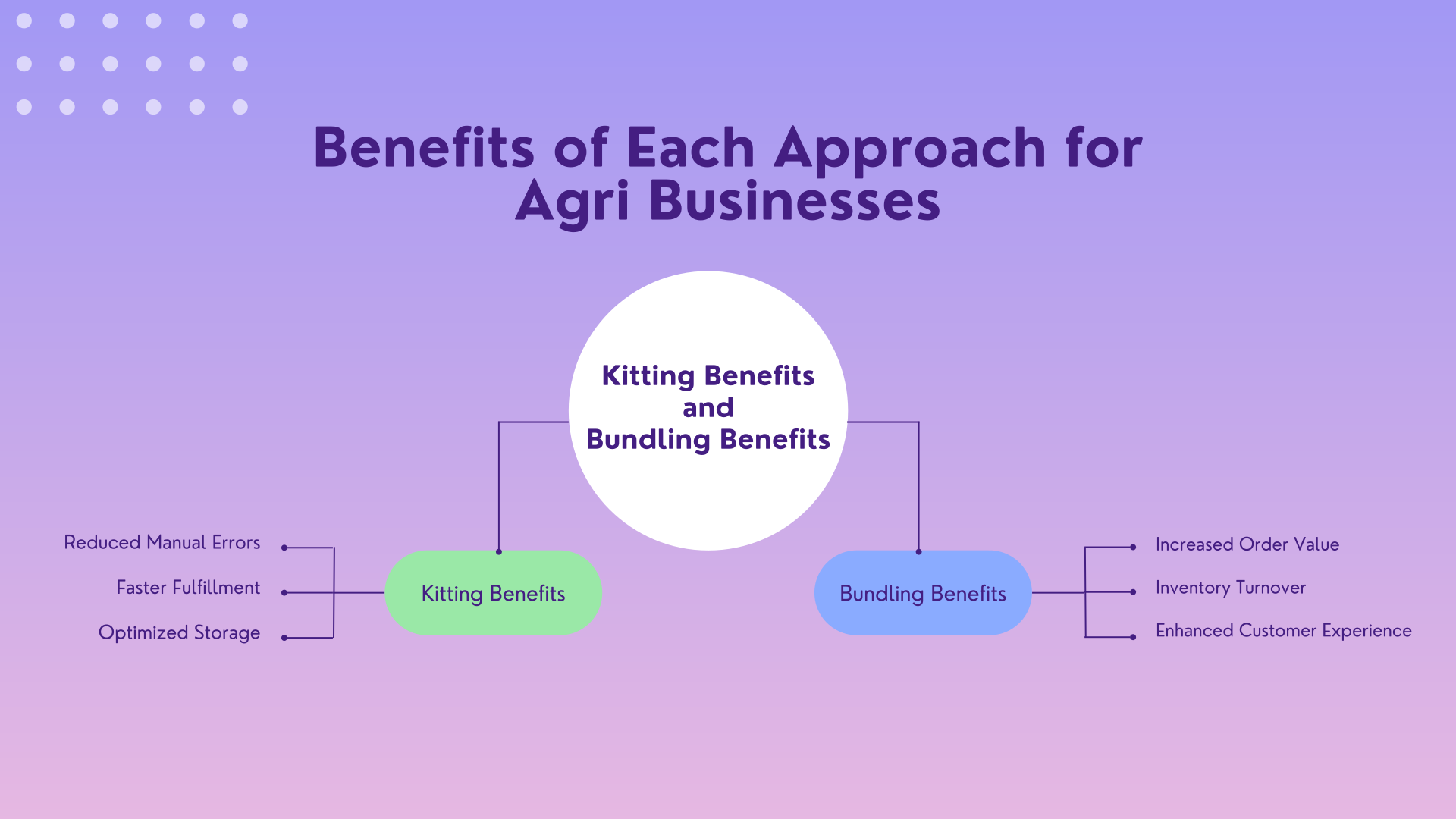 Whether you are managing a farm supply store or running a fulfillment center, there are many reasons to adopt these strategies.
Kitting Benefits
- Reduced Manual Errors:
There is less chance of mistakes because kits are pre-assembled. Warehouse workers do not need to pick multiple SKUs for a single order, which reduces the packing errors, which is very helpful during high-volume seasons.
- Faster Fulfillment:
Orders containing kits can be processed and shipped much quickly. Since each kit is treated as one unit, there is no need for time-consuming picking and sorting during dispatch.
- Optimized Storage:
The pre-packed kits can be stored smartly and take up less space than loose components. This results in better-organized storage areas and more predictable stock movement.
Bundling Benefits
- Increased Order Value:
Bundles motivate larger purchases. When customers see a value pack that meets many needs, there is a high chance of them buying more.
- Inventory Turnover:
Slow-selling products can be moved faster when bundled with high-demand items. It is a smarter way to manage excess inventory without giving heavy discounts.
- Enhanced Customer Experience:
Customers appreciate well-thought-out bundles that save them time and money. When products complement each other, they feel more confident in their purchases.
Both kitting and bundling offer a myriad of advantages when it comes to inventory planning.
They help you predict demand, plan stock efficiently, and reduce holding costs. Whether it is speeding up your deliveries or creating attractive offers, each method adds more value to your supply chain.
How to Decide Between Kitting or Bundling?
Let’s face the elephant in the room: how do you choose the right strategy for your agricultural business?
First of all, you must evaluate your operational capabilities. Do you have the required infrastructure and resources to create and manage pre-assembled kits?
If your team is already busy, the time and labor required for kitting might not be suitable for you. In that case, bundling, which requires less initial assembly, is more practical.
You must consider your marketing goals too. If your focus is on increasing sales through promotions, bundling is a good fit. You can highlight bundles in your marketing campaigns, especially during seasonal surges or clearance periods.
Now, analyse the product type that you are working with. Items like machinery parts, tools, or maintenance equipment are better suited for kitting because they are usually used together, and there is a lot of benefit in grouping them.
Consumable items like seeds, soil treatments, and feed supplements also work better in bundles that offer variety or encourage repeat purchases.
To simplify your decision, go through this checklist:
- Are the products regularly used together?
- Do you want quicker fulfillment or higher sales value?
- Can your warehouse support kit assembly and tracking easily?
By answering these questions, you will be guided towards the best approach for your business needs.
Conclusion
According to the Food Institute, inventory mismanagement due to overstocks and out-of-stocks is anticipated to cost businesses a massive $1.77 trillion globally in 2025.
This is an alarming figure, and inefficient processes in inventory tracking and order fulfillment bear the responsibility for this. When you apply targeted strategies like kitting and bundling, you are taking proactive steps that minimize such losses.
These methods are proven ways to align your operations with customer needs and seasonal cycles. Especially in agriculture, where timing is everything, being prepared can give you a massive competitive edge.
To wrap it all up, the difference between kitting and bundling is in how and why the items are grouped. Kitting boosts operational flow by creating ready-to-ship packages; on the other hand, bundling helps boost sales by offering complementary items in a promotional package.
If you are aiming to grow your business and enhance your inventory accuracy, then adopting the right method, or a smart combination of both, can kick-start your journey to success!
Solid and cost-effective platforms like AgriERP make it easy to implement these strategies with minimal effort and the most control.
Now is the right time to rethink how you organize your stock. With a few tweaks and smart changes, your agricultural business can prosper in no time!