Decline in U.S. Pollinator Populations and Its Implications for Agriculture
AgriERP Expert
July 23, 2025
Protecting pollinators has been a growing concern in recent years, but in 2025, the issue has escalated far beyond a trending phrase. In April, Project Apis m.., a leading nonprofit research organization named after the western honeybee Apis mellifera, released new survey data on pollinator loss, and the results are alarming.
The pollinator population decrease in 2025 has reached a critical tipping point threatens agriculture, especially almond production. Learn about the causes, impacts, and collaborative efforts to protect bees and ensure food security.
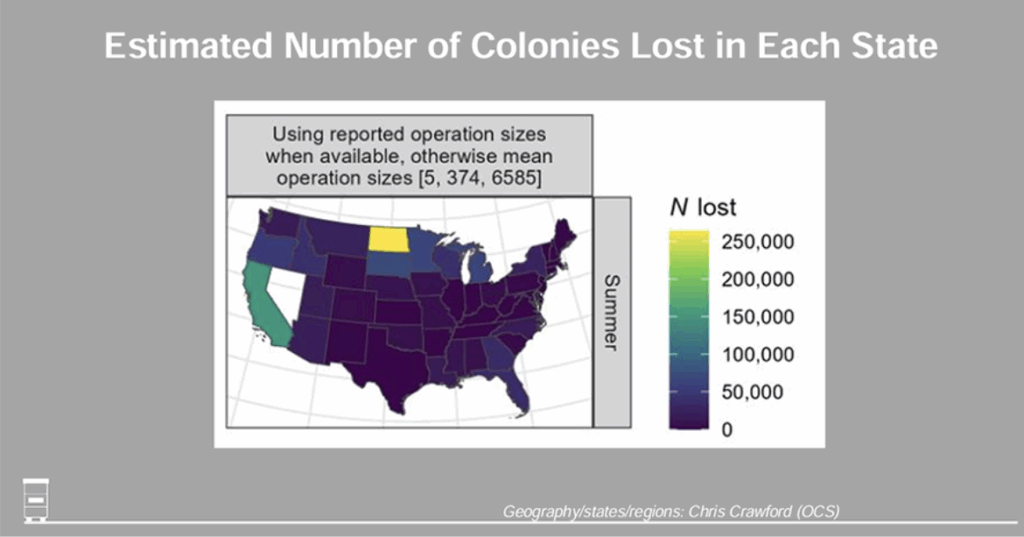
According to the survey, beekeepers across the country have been experiencing large-scale honeybee colony losses.
With more than 1.956 million colonies surveyed, representing a staggering 72% of the nation’s bees, commercial operations reported a catastrophic 62% loss of bees from June 2024 to February 2025. Experts are calling it the largest recorded loss in U.S. history, and critically, the cause remains unclear.
Scale of the Crisis
The sheer magnitude of this decline is difficult to overstate. When 62% of bees failed to emerge from overwintering in time for the crucial almond pollination season, it sent shockwaves through the agricultural community.
Matthew Mulica, senior project director at Keystone Policy Center and leader of the Honey Bee Health Coalition, warns that such extensive losses could weaken remaining colonies and spark ripple effects across grower operations. This isn’t just about honey, pollinators and food production are deeply intertwined, with bees playing a vital role in feeding the nation.
Impact on U.S. Agriculture, with a Focus on Almond
Nowhere is this crisis felt more acutely than in the almond industry. Almond crops are especially vulnerable, requiring more than two million colonies to ensure pollination each season.
The USDA ARS 2025 California almond forecast has already reported slower than normal crop development in the San Joaquin Valley, directly attributed to low temperatures and fewer bee flight hours.
While warmer weather in March did help accelerate the crop’s progress, researchers emphasize that it’s still too early to assess how the bee shortage will ultimately affect 2025’s final almond yield. This uncertainty is compounded by the fact that the precise cause of the massive bee die-off has yet to be identified.
Ongoing Investigation into the Causes of Colony Loss
In response to this unprecedented event, a concerted and collaborative investigation is rapidly unfolding. Project Apis m. moved swiftly, with researchers beginning to collect data from some of the country’s largest beekeepers.
Representatives from the USDA’s Agricultural Research Service (USDA ARS) soon joined, traveling to California to take samples from bees and hives to aid in the investigation.
This rapid response is bolstered by a pre-existing framework for collaboration: the Honey Bee Health Coalition. Founded in 2014, this coalition comprises 50 organizations, including Project Apis m. as a leading nonprofit research member, all dedicated to pursuing research-driven, cooperative solutions for maintaining pollinator populations across U.S. agriculture and diverse ecosystems.
As Matthew Mulica aptly puts it, “These are big system issues. We’re talking about bee health decline and the intersection of agriculture and bee health. The only way to work on the issues is to get people in the room and build an understanding and work together on solutions”.
Four Primary Areas of Investigation
The search for answers is being guided by historically known threats, drawing on Project Apis m.. ’s data. Researchers from USDA ARS and universities nationwide are exploring several potential causes for the massive bee die-off. Currently, their focus is on four primary possibilities
Varroa mites: Investigating whether these pervasive parasites are carrying a new disease or a stronger, more virulent version of a known disease.
Environmental stressors: Examining factors such as adverse weather patterns that may be impacting colony health.
Management factors: Looking into beekeeping practices like queen replacement or supplemental winter nutrition.
Chemical exposures: Considering the role of direct or indirect exposure to pesticides and their interactions with bee immunity.
Mulica acknowledges the complexity, stating, “Unfortunately, we’re still waiting for those answers. Several factors could be responsible. It’s most likely not just one thing, but many”. He cautions against premature conclusions, emphasizing that “without knowing the actual cause, I’m just conjecturing”.
The urgency remains high, with Mulica noting that “If the losses continue into next year, we could see more impacts”. In the interim, close collaboration continues with the Almond Board of California, the Almond Alliance, and other industry partners.
Pollinator-Friendly Farming Practices
Farmers are not powerless. Almond growers and other producers can implement relatively simple practices that can have a positive impact on bee health and the strength of remaining colonies.
Mulica suggests that providing supplemental forage crops on the side of fields or in between rows can lead to stronger colonies without impacting pollination services. Additionally, ensuring a clean water source can have a significant positive impact on bee health.
Environmental mindfulness, particularly concerning pesticide use, also plays a major role. Mulica advises growers to be “really mindful when using pesticides, and it’s important to follow the label very closely”.
He recommends avoiding spraying pesticides in the middle of the day when bees are actively foraging. Instead, if treatment with an herbicide, insecticide, or fungicide is necessary, growers should do it in the morning or the evening when the bees aren’t flying.
The Honey Bee Health Coalition also offers additional materials and information for almond grower pesticide applicators on how to protect bees.
Collaboration and Coexistence
The unprecedented bee losses of 2024-2025 present a formidable challenge, but the collaborative spirit among beekeepers, researchers, government agencies, and agribusiness offers a beacon of hope.
The ongoing investigation is critical to understanding the root causes, but in the meantime, proactive measures by growers can make a tangible difference.
As Matthew Mulica concludes, “Our notion is that you can have it all. You can have healthy crops and healthy bees, but we have to work together to do it right”.
This crisis underscores the vital, interconnected relationship between agriculture and our natural ecosystems, reminding us that the health of one is inextricably linked to the health of the other. Through sustained collaboration and mindful practices, the goal of healthy crops and healthy bees remains within reach.
AgriERP is a comprehensive farm management solution designed to empower farmers with streamlined operations and increased profitability. Powered by Microsoft Dynamics 365, AgriERP offers a single, straightforward platform that addresses the pain points of various farm types. With its user-friendly interface and intelligent automation, AgriERP is like having a trusted partner by your side throughout your farming journey.
For more information about AgriERP and its innovative farm management solutions.
Recognized as the top data analytics platform in agriculture at the 2026 AgTech Breakthrough Awards. Trusted by farm owners, processors, and exporters to turn operational data into better decisions.
 Data Analytics Solution of the Year” 2026 in Agtech Breakthrough Awards 2026


 AgriERP Expert
  July 23, 2025