Data Analytics Solution of the Year” 2026 in Agtech Breakthrough Awards 2026

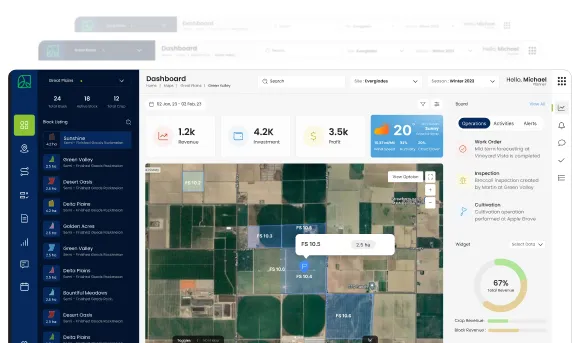
If your company grew the load that just arrived, half the answers your distribution system needs are sitting in your farm system. AgriERP puts them together, so liquidations, rejections, and repacks stop being reconciliation projects.


You bought a farm management tool for the growing side and a distribution system for the selling side. Both work. The problem is the seam between them, and everything that falls through it.
Pack-out, sales, and deductions live in different systems, and pooled lots need pro-rata allocation on top. A statement that should close in a week takes three.
A receiver rejects at delivery and you need to know instantly whose fruit it was, what it cost, and where to redirect it. If growing and shipping data are separate, so is the decision, while the product ages on someone else's dock.
Downgraded product gets repacked into a new grade, label, and pack size. In most systems the lot lineage stops there, so a case a retailer asks about a month later traces back to the repack line and no further.
Three things every grower-shipper does weekly, that a dock-forward ERP cannot help with: pricing next week's harvest, tracing a case back to its block, and knowing what a customer actually earned you.
Your sales team can commit to volume that has not been picked yet, because field forecasts sit alongside on-hand inventory. Forward contracts and standing orders stop being guesses.
When a retailer flags a case, the answer starts at the case and ends at the block, spray record, and harvest crew behind it. Repacks and pool allocations included. A dock-forward ERP stops at the pallet.
Growing cost travels with the lot, so margin by customer, variety, or grower is a report, not a spreadsheet. The unprofitable accounts show up before you sign next year's contracts.
Every capability below assumes the growing side is inside the software. Take that away and each one either breaks or becomes a spreadsheet.
Pack-out, grade, sales price achieved, and every deduction (packing, cooling, storage, freight, commission, promo allowance) update together. Pool allocations across multiple growers calculate pro rata from the actual pack data. The liquidation statement is already built when the grower calls.
Every load carries its origin, cost, and lot lineage forward into the rejection. Accept, reject, or price after arrival is a documented decision, not a phone call. Repacks keep the trail back to the block intact through the new label, grade, and pack size.
Live inventory by lot, grade, location, and days of shelf life. FEFO rotation enforced at picking. Shrink recorded by lot and reason as it happens, not surfaced at month end.
EDI, phone, standing orders, and walk-in enter the same system and check against live inventory. Price-after-arrival and open-price orders carry through to settlement without re-keying.
Pick, load, and dispatch driven by the order. BOL, ASN, and invoices generate from shipment records. Invoices carry the PACA trust preservation language required to hold your position if a customer fails.
A case traces forward to the customer and backward through the repack, the pallet, the pack date, the harvest crew, the block, and the spray record. One query, because the field data is not somewhere else.
Bring one of your own lots. We will walk it from field record through packing, sale, and settlement without switching screens. Fifteen minutes.
If you only distribute, plenty of good software starts at your dock. This page is for the operations that carry the cost and the risk of growing the product too.

You grow it, you pack it, you sell it, and right now you do it across a farm tool and a distribution tool that were never designed to meet. AgriERP covers both jobs, so the reconciliation between them stops being one.
If you pack fruit you did not grow, settlement is where the seam hurts. Pack-out, grade, sales, and deductions have to agree before a grower gets paid. When all four update in the same place, the statement is already built when the grower calls, and the disputes get shorter.
Running berries in California and citrus in Florida means two seasons, two labor pools, and two settlement calendars. Each program needs its own margin picture, and the group needs one consolidated view. AgriERP handles both, so a variety that quietly loses money in one region does not hide behind a strong quarter in another.
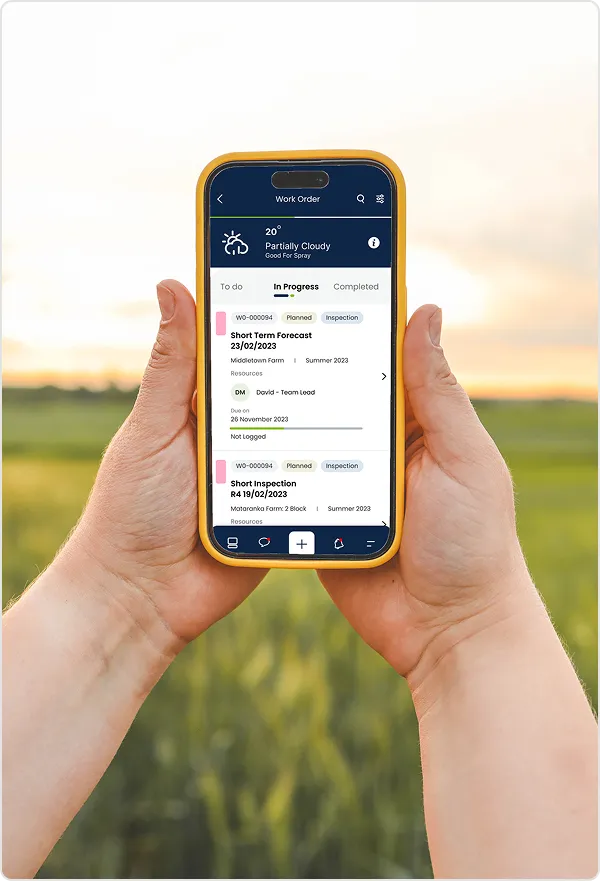
Rombola Family Farms moved to AgriERP on Microsoft Dynamics 365, digitizing processes that had previously been manual and fragmented. The result was data visibility across the operation that supported informed decisions at every stage, from input planning through harvest, rather than decisions made on instinct and end-of-season reports.


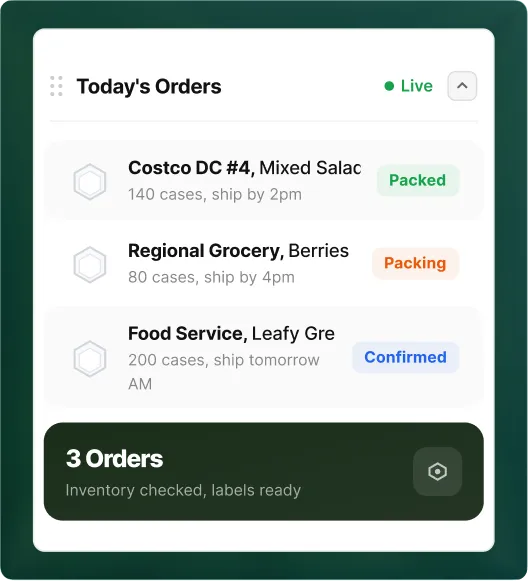
Orders from EDI, phone, email, standing orders, and walk-in sales all enter the same system and check against the same live inventory. There is no separate entry process per channel, and every order is validated against available stock at the point it is placed so overselling does not happen.
Yes. Picking is driven by shelf life remaining, so the product closest to expiry ships first. This is enforced at the pick list level, not left to warehouse staff to manage manually, which is where FEFO typically breaks down in produce operations.
Pack-out data, sales records, and deductions for packing, storage, freight, and commission all sit in the same system. Settlements calculate as transactions happen, so by the time the grower asks, the statement is already there. Contract pricing, consignment arrangements, and pool pricing are all supported.
Yes. GS1-128 case labels and SSCC-18 pallet labels are generated from the packing record, encoding GTIN, lot, batch, expiry, and weight directly from the data that drove packing. No re-keying, no separate label system.
Every lot traces forward to every customer that received it and backward to the grower, field, and harvest date it came from. A full trace takes minutes from one screen. Affected customer lists, in-storage inventory, and lot documentation are all retrievable immediately.
Those platforms are mature and good at what they do, and they begin at the receiving dock. AgriERP begins at the field: crop planning, input records, and harvest sit in the same system as orders, inventory, packing, and settlement. If your company grows the product it sells, that removes an integration and a reconciliation. If it does not, the advantage largely disappears and a dock-forward system may suit you better.
For most operations it becomes the financial core, since AgriERP runs on Microsoft Dynamics 365 Business Central. Australian operations can connect Xero and MYOB where those are already in place.

Agtech Breakthrough Award Winners'26
Recognized as the top data analytics platform in agriculture at the 2026 AgTech Breakthrough Awards. Trusted by farm owners, processors, and exporters to turn operational data into better decisions.