YUKON, OKLAHOMA — With no active cases of New World screwworm (NWS) in the U.S., federal leaders are moving quickly to prevent its spread north from Central America, U.S. Secretary of Agriculture Brooke Rollins said Friday during a stop at Express Ranch in Yukon.
Rollins, speaking alongside U.S. Sen. James Lankford, R-Oklahoma, highlighted the Department of Agriculture’s (USDA) multi-layered plan to safeguard livestock, protect ranchers, and secure the nation’s food supply.
“This is about preparation and resilience,” Rollins told producers and community members gathered at the ranch. “The American agricultural community deserves unwavering support in the face of critical threats like this one. We’ve defeated NWS before, and we will do it again.”
What Is New World Screwworm?
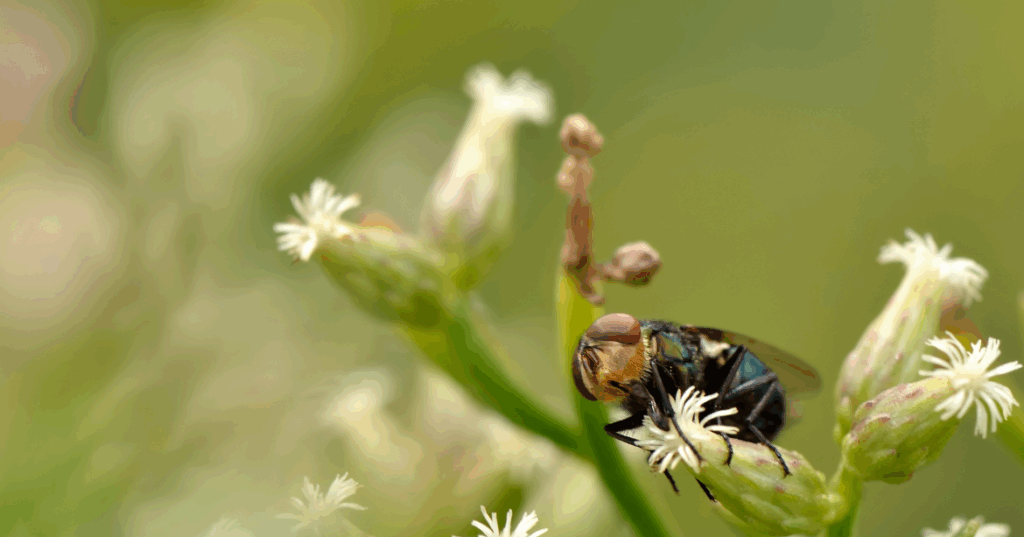
The New World screwworm is a parasitic fly whose larvae burrow into the wounds of living animals, feeding on tissue and often leading to illness or death. While most common in South and Central America, the pest poses a danger to cattle, deer, and other wildlife.
Earlier this summer, U.S. health officials confirmed a rare human case in a traveler returning from El Salvador. And in June, Mexican authorities reported an outbreak roughly 370 miles south of the U.S. border.
That news prompted immediate precautions. The USDA temporarily halted live cattle crossings at the Texas border and deployed additional monitoring resources to ensure the pest does not cross into American herds.
Four-Tiered Defense Strategy
Rollins emphasized that USDA is not leaving anything to chance.
“We’ve got Plan A, Plan B, Plan C, and Plan D,” she said. “We are getting fully prepared at every level for whatever comes.”
Among the measures outlined:
Sterile Fly Facilities:
$750 million to construct a new facility in South Texas capable of producing hundreds of millions of sterile flies weekly.
$21 million to renovate an existing production center in Metapa, Mexico.
Research & Innovation:
Up to $100 million will be directed toward developing new technologies and tools to combat NWS.
Border Security & Monitoring:
Deployment of “Tick Riders” on horseback and canine inspection teams along the U.S.–Mexico border to identify and isolate infested livestock.
Cross-Border Cooperation:
Mexico has waived duties on eradication equipment and authorized U.S. aerial drops of sterile flies within its territory.
History Repeating Itself
The U.S. eradicated NWS in the 1960s using sterile fly releases, a technique still considered the gold standard. By flooding affected regions with sterile males, reproduction cycles are disrupted, leading to rapid population collapse.
The USDA hopes its dual facilities in Mexico and Texas will generate up to 400 million sterile flies per week, providing the scale needed to suppress outbreaks before they reach American ranchlands.
Rollins added that full operation of the Texas plant may take 12–18 months, though the Mexican site is expected to be back online much sooner.
Voices From the Field
For many ranch families, the threat of NWS stirs painful memories.
U.S. Representative Frank Lucas, R-Oklahoma, recounted the stories passed down from his father and grandfather, who worked cattle during the height of the pest’s spread in the 1950s and 60s.
“This was a daily battle,” Lucas said. “They carried bottles of disinfectant all summer long to paint wounds and treat calves. Wildlife populations were also devastated before eradication. Preventing the return of NWS is the single most important battle we face in the livestock industry today.”
Oklahoma Secretary of Agriculture Blayne Arthur echoed the concern, emphasizing that vigilance and preparation remain critical to protecting producers across the region.
The Bigger Picture
Agricultural experts caution that a widespread NWS outbreak could cost billions in livestock losses, emergency treatments, and trade disruptions. Beyond economic fallout, it poses risks to rural livelihoods, food security, and animal welfare.
Rollins noted that prevention is far less costly than response. “Investing now, in research, sterile fly technology, and partnerships with Mexico, ensures we don’t find ourselves scrambling later.”
For ranchers and agri-businesses, the push underscores the need for strong biosecurity protocols, detailed livestock health records, and rapid response systems, areas where digital agriculture and ERP platforms can play a supporting role.
A Cross-Border Partnership
Rollins praised the strengthened collaboration with Mexico, describing it as “the strongest and most transparent in decades.”
By aligning strategies, waiving duties, and facilitating cross-border operations, the U.S. and Mexico aim to block NWS at its source rather than wait for it to spread north.
“This is not just about American livestock,” Rollins said. “It’s about building resilience across the region to keep agriculture safe.”
While no U.S. cases have been detected in livestock, USDA leaders made clear that complacency is not an option. Surveillance, early detection, and producer awareness will be critical to staying ahead of the pest.
“The fight against NWS is a fight for the future of American agriculture,” Rollins said. “And we are ready.”
Key Takeaways
No active U.S. livestock cases of NWS, but outbreaks in Mexico are raising alarms.
USDA is committing $871 million+ to research, sterile fly facilities, and cross-border eradication efforts.
Partnership with Mexico is central to prevention, with joint aerial releases and equipment sharing.
Producers urged to stay vigilant and report suspicious livestock wounds immediately.
AgriERP is a comprehensive farm management solution designed to empower farmers with streamlined operations and increased profitability. Powered by Microsoft Dynamics 365, AgriERP offers a single, straightforward platform that addresses the pain points of various farm types. With its user-friendly interface and intelligent automation, AgriERP is like having a trusted partner by your side throughout your farming journey.
For more information about AgriERP and its innovative farm management solutions.
Recognized as the top data analytics platform in agriculture at the 2026 AgTech Breakthrough Awards. Trusted by farm owners, processors, and exporters to turn operational data into better decisions.
 Data Analytics Solution of the Year” 2026 in Agtech Breakthrough Awards 2026


 Tasbia Tahir Ali
  September 17, 2025